The Dunlop Cry Baby Line
The most famous wah pedal in history comes in dozens of versions — from the bare-bones classic to touring-grade rack systems. We break down every series in the SoundsGood catalog, explain how they differ, and help you pick the right one.
Official Dunlop dealer in Ukraine
SoundsGood is an official Dunlop dealer. Every Cry Baby product in the catalog is official: genuine pedals with the official warranty and service support. No grey-market imports, no counterfeits.
The rocker sweeps the frequencies — that's where the «wah» comes from.
How the Cry Baby line is organized
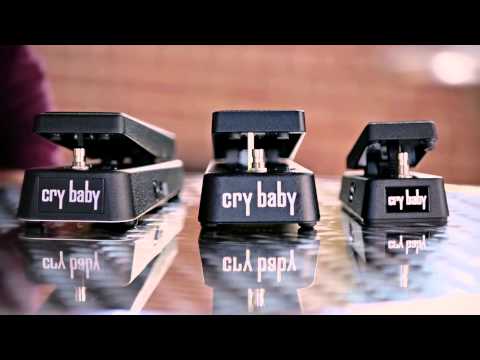
Every Cry Baby is built on one idea: the rocker treadle drives a moving band-pass filter, sweeping frequencies from low (heel) to high (toe) — that's where the vocal «wah» comes from. The differences between series come down to voicing (modern-aggressive vs. vintage-smooth), housing size, bypass type and the amount of control you get.
A simple rule of thumb: for your first wah or a bulletproof classic, get the Standard or Classic. Tight pedalboard — look at the Mini and Junior. Want to tweak everything — 535Q Mini, 95Q or the Dimebag. Playing bass — Mini Bass or Justin Chancellor. Chasing your hero's tone — the signature series.
Classic Series
The two pillars of the line: the modern benchmark GCB95 and its vintage-voiced twin, the Classic. This is where every wah journey should start.
Dunlop Cry Baby Standard Wah

The pedal that started the Dunlop Cry Baby story back in 1982. An aggressive modern voice with a focused high end: red Fasel inductor, Hot Potz potentiometer rated for a million cycles, die-cast housing. No knobs to tweak — toe down and play. The best first wah and a bulletproof workhorse for rock, blues, funk and metal.
Dunlop Cry Baby Classic Wah

Same shell, different soul: Dunlop's engineers re-tuned the circuit for a lower frequency center and a subtler effect — the tone, voice and sweep of early-'60s Cry Baby pedals. It adds a Fasel inductor and true bypass switching for tone purists. The pick for blues, classic rock and anyone who finds the GCB95 too aggressive.
Compact Series
The same sound in real-world pedalboard formats: the half-size Mini, the low-profile Junior with top-mounted jacks, and the fully-loaded 535Q in a mini shell.
Dunlop Cry Baby Mini Wah

Half the size of a standard Cry Baby with zero compromise: a proper Fasel inductor inside, full sweep range, true bypass and a 3-way voice switch — Low, Vintage or Modern (GCB95-style). Effectively three pedals in one mini housing. Perfect for crowded pedalboards and travel rigs.
Dunlop Cry Baby Junior Wah

An 8-inch housing with front-mounted jacks (input, output and power on the front edge) — the Junior was designed specifically for pedalboard rows (notably Pedaltrain Metro, Classic, Novo and Terra): cable runs stay clean and no space is wasted. Three voices on a side switch: H for the aggressive modern GCB95 sound, M for midrange vintage growl, L for a dark, rich tone. Status LEDs included.
Dunlop Cry Baby Mini 535Q Wah

The legendary 535Q multi-wah squeezed into half the footprint. A frequency-range selector, adjustable Q (from a narrow vocal quack to a wide smooth sweep), a built-in boost, plus switchable operation between classic click-style and auto-return mode, where the effect disengages the moment you lift your foot. For players who want to sculpt their own wah.
Advanced Series
For players who need more than one voice: auto-return, Q control, boosts, built-in fuzz — and even the rack system used on stadium tours.
Dunlop Cry Baby 95Q Wah

The standard Cry Baby voice with stage-friendly convenience: the auto-return system engages the effect the moment your foot lands on the treadle and disengages when you lift off — no clicking mid-solo. A Q control shapes the sweep character, and a variable boost of up to +15 dB pushes solos above the mix. A favorite for players who dip into wah for just a few bars.
Dunlop Dimebag Cry Baby From Hell

Co-designed with Pantera's Dimebag Darrell on the 535Q platform — then hot-rodded to the limit: an extended sweep range, 6-way frequency selector, Q control, a Fine Tune knob for the toe-down frequency, a kick-in boost with its own volume level, a second output for splitting your signal to a separate FX chain, and rear-mounted wah/boost LEDs. The rubber tread is replaced with skateboard grip tape so your foot never slips. A no-compromise metal machine.
Dunlop Cry Baby Daredevil Fuzz Wah

A collaboration with Chicago boutique builder Daredevil Pedals: a nasty, saturated fuzz built right into the Cry Baby chassis, ready to run together with the sweep. The result is that acid-psychedelic late-'60s solo sound — a wah chewing through fuzz — in one pedal instead of two. For fans of Hendrix, stoner and garage rock.
Dunlop Cry Baby Rack Module

The rack solution for big stages: the sound module lives in your rack while up to six foot controllers, placed anywhere on stage, drive it — exactly how Metallica and Muse run their rigs. On board: a 6-position sweep-range selector, variable Q, boost up to +10 dB and two outputs for flexible routing. The most control over a wah tone in existence.
Bass Series
Wah engineered for bass: the filters leave your low-end foundation untouched, so the groove stays put.
Dunlop Cry Baby Mini Bass Wah

The mini-format bass version built on the cult-classic 105Q: the filter processes only the mids and highs, so the foundation of your bass tone stays untouched. Q and Volume controls, convenient auto-return switching and a lightweight aluminum housing at half the standard size. A must for funk and rock bassists with compact boards.
Dunlop Justin Chancellor Cry Baby Wah

The Tool bassist's signature model — effectively three effects in one housing. Two rocker voices: U.K. Filter, a thick, throaty filter inspired by the tone circuit in Justin's bass, and Wah, an aggressive modified Cry Baby with the red Fasel inductor — each with its own Volume and Q controls. Plus a vintage U.K.-style fuzz that rides the rocker by default or runs independently via a side switch. The circuit blends in your clean signal at 400 Hz to keep the low end thick. A Pedal Topper is included for one-motion control.
Signature Series (Artist)
The voices of legends, lifted from their personal pedals: from the very first 1967 Clyde McCoy to Eddie Van Halen's «Holy Grail».
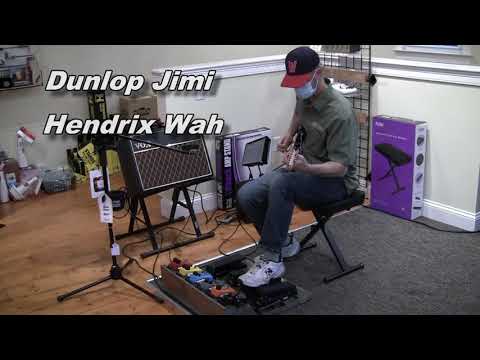
Dunlop Jimi Hendrix Cry Baby Wah

A pedal voiced after the late-'60s wahs Jimi Hendrix actually played: a darker, more vocal vintage sweep — the very character you hear on «Voodoo Child (Slight Return)». The psychedelic housing artwork honors the most influential wah player of all time. For those chasing the authentic sound of the era rather than modern aggression.
Dunlop Slash Cry Baby Wah

The Guns N' Roses guitarist's signature model, voiced with Slash himself for his trademark singing solos: a dense vocal midrange, a smooth expressive sweep and unmistakable housing artwork. It sits perfectly in hard rock and blues rock with thick overdrive — exactly where Slash's sound lives.
Dunlop EVH Wah (Eddie Van Halen)

Developed in close collaboration with Eddie Van Halen, based on his personal «Holy Grail» — a standard Cry Baby customized in the early '90s with a high-Q inductor and a wider frequency sweep. The result is a more vocal, dramatic effect wrapped in the legendary Frankenstein-stripe housing. A pedal for virtuosos and VH devotees.
Dunlop Joe Bonamassa Signature Cry Baby

The signature model of today's leading blues-rock guitarist recreates the voice of Joe's favorite vintage wahs: a darker, lower sweep with a rich midrange that works beautifully into tube stacks on the edge of breakup. A sleek black housing with copper-gold accents to match Bonamassa's stage aesthetic.
Dunlop Clyde McCoy Cry Baby Wah

History comes full circle: the very first wah pedal of 1967 was named Clyde McCoy, after the trumpeter whose muted horn it imitated. The CM95 is a meticulous recreation of that original sound — a soft, vocal, tube-like vintage sweep heard on classic late-'60s recordings. A pedal for tone collectors and anyone who wants to hear where it all began.
Every model in one table
| Model | Voice / character | Key features | Best for |
|---|---|---|---|
| Cry Baby Standard WahGCB95 | Modern, aggressive | Red Fasel · Hot Potz 100 kΩ · Aggressive sweep · Buffered bypass | First wah, all-rounder |
| Cry Baby Classic WahGCB95F | Vintage, smooth | Fasel · Lower sweep center · True bypass · True bypass | Blues, classic rock |
| Cry Baby Mini WahCBM95 | 3 voices: Low / Vintage / Modern | Half size · 3 voices · True bypass · True bypass | Crowded pedalboards |
| Cry Baby Junior WahCBJ95 | 3 voices: L / M / H | Front-mounted jacks · 3 voices H/M/L · Status LEDs · True bypass | Tidy Pedaltrain boards |
| Cry Baby Mini 535Q Wah535Q Mini | Adjustable | Range selector · Adjustable Q · Boost + auto-return · True bypass | Fine-tuning + compact |
| Cry Baby 95Q Wah95Q | Standard + Q | Auto-return · Q control · Boost up to +15 dB · Buffered bypass | Wah for a few bars |
| Dimebag Cry Baby From HellDB01B | 6 ranges, extended sweep | 6 ranges + Fine Tune · Boost & dual outputs · Grip tape · Buffered bypass | Metal, maximum control |
| Cry Baby Daredevil Fuzz WahDaredevil | Wah + fuzz | Built-in fuzz · Psychedelic sweep · 2-in-1 · — | Psychedelia, stoner |
| Cry Baby Rack ModuleDCR-2SR | Adjustable (rack) | Up to 6 controllers · Q + 10 dB boost · Dual outputs · — | Tours, big stages |
| Cry Baby Mini Bass WahCBM105Q | Bass (mids/highs only) | Preserves low end · Q & Volume · Auto-return · — | Bassists (funk, rock) |
| Justin Chancellor Cry Baby WahJCT95 | 2 voices + fuzz (bass) | 2 voices + fuzz · Separate Volume/Q · Low-end blend (400 Hz) · — | Experimental bassists |
| Jimi Hendrix Cry Baby WahJH1D | Dark late-'60s vintage | Late-'60s voicing · Psychedelic artwork · Legendary · — | Hendrix devotees |
| Slash Cry Baby WahSlash | Vocal midrange | Vocal midrange · Slash-approved voice · Signature artwork · — | Hard-rock solos |
| EVH Wah (Eddie Van Halen)EVH95 | High-Q, wider sweep | High-Q inductor · Wider sweep · Frankenstein stripes · — | Virtuosos, VH fans |
| Joe Bonamassa Signature Cry BabyJB95 | Dark, lower sweep | Lower, darker sweep · Made for tube stacks · Bonamassa style · — | Blues rock, tube stacks |
| Clyde McCoy Cry Baby WahCM95 | The 1967 voice | The 1967 voice · Soft vocal sweep · Collector-grade · — | Tone collectors |




FAQ
What's the difference between the Standard and the Classic?
The GCB95 Standard has a modern aggressive voice with a higher sweep center and buffered bypass. The GCB95F Classic is re-tuned for a vintage character: a lower frequency center, a subtler effect and true bypass. Visually the two are almost identical.
What is true bypass and do I need it?
True bypass physically disconnects the pedal's circuit when the effect is off — your signal passes straight through with no buffer. Purists value it for transparency in long chains. The Standard uses a buffered bypass; the Classic, Mini and Junior are true bypass.
What does auto-return mean?
On the 95Q and Mini 535Q, the effect engages the moment your foot lands on the treadle and disengages when you lift off — no click required. It's ideal when you only dip into wah for a few bars of a solo.
Which Cry Baby should I choose for bass?
The Mini Bass (CBM105Q) if you want a compact classic bass wah that preserves your low end. The Justin Chancellor (JCT95) if you want an effects studio: two filter voices plus a vintage fuzz, just like Tool's bassist.
How are Cry Baby pedals powered?
Typically by a 9V battery or a 9V DC center-negative adapter, sold separately. The exception is the DCR-2SR rack module, which runs on its own 24V adapter.
The full Cry Baby line at SoundsGood
Every card above links to the corresponding product page at SoundsGood — with current pricing, availability, photos and delivery terms across Ukraine.