GUITARS / BUYING GUIDE
For players who want to hear their own touch: from a clear chord to a blues phrase on the edge of breakup. Here is what makes the PRS SE Silver Sky worth considering, and how to decide whether it suits your playing.
SoundsGood editorial · 5 September 2026
Why the Silver Sky keeps coming up
John Mayer’s name attracts attention, but sustained interest in the instrument is more useful. Guitar World’s report on Reverb’s 2025 results places the Silver Sky second in the overall electric-guitar list, up from third the previous year. These are sales on one marketplace, not a measurement of the entire global market.
A signature guitar still has to suit your own music. If your favourite parts depend on dynamics, clean chords and expressive bends, this is a model to audition. If your main task is dense, high-gain rhythm, compare it with a humbucker-equipped guitar before choosing.

Construction: a familiar outline with its own feel
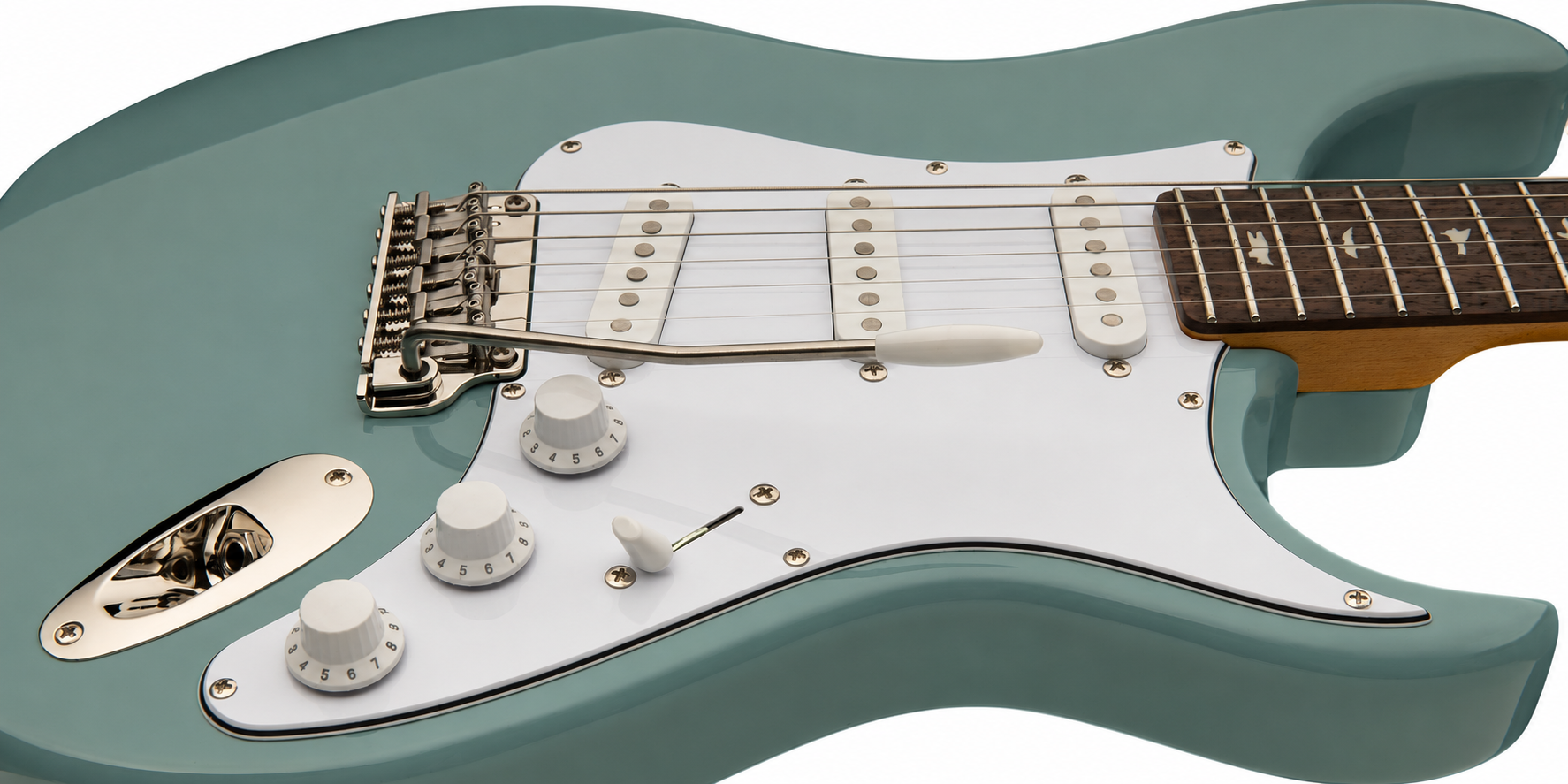
The SE Silver Sky combines a straightforward layout with details that matter under your hands. A solid body, bolt-on neck and three single-coils provide a clear starting point. There is no complicated bank of modes to learn before rehearsal. Most of the interaction happens between the player, the pickup selector and the amplifier. That is why a photograph or a list of woods cannot tell the whole story.
The 25.5-inch scale matters when you move from another guitar. With the same string gauge and tuning, a longer scale requires more tension than a shorter one. You may feel a firmer response, although bending comfort also depends on action and setup. If you normally play a different scale, give yourself time with familiar phrases. One open chord is not enough to judge the transition.
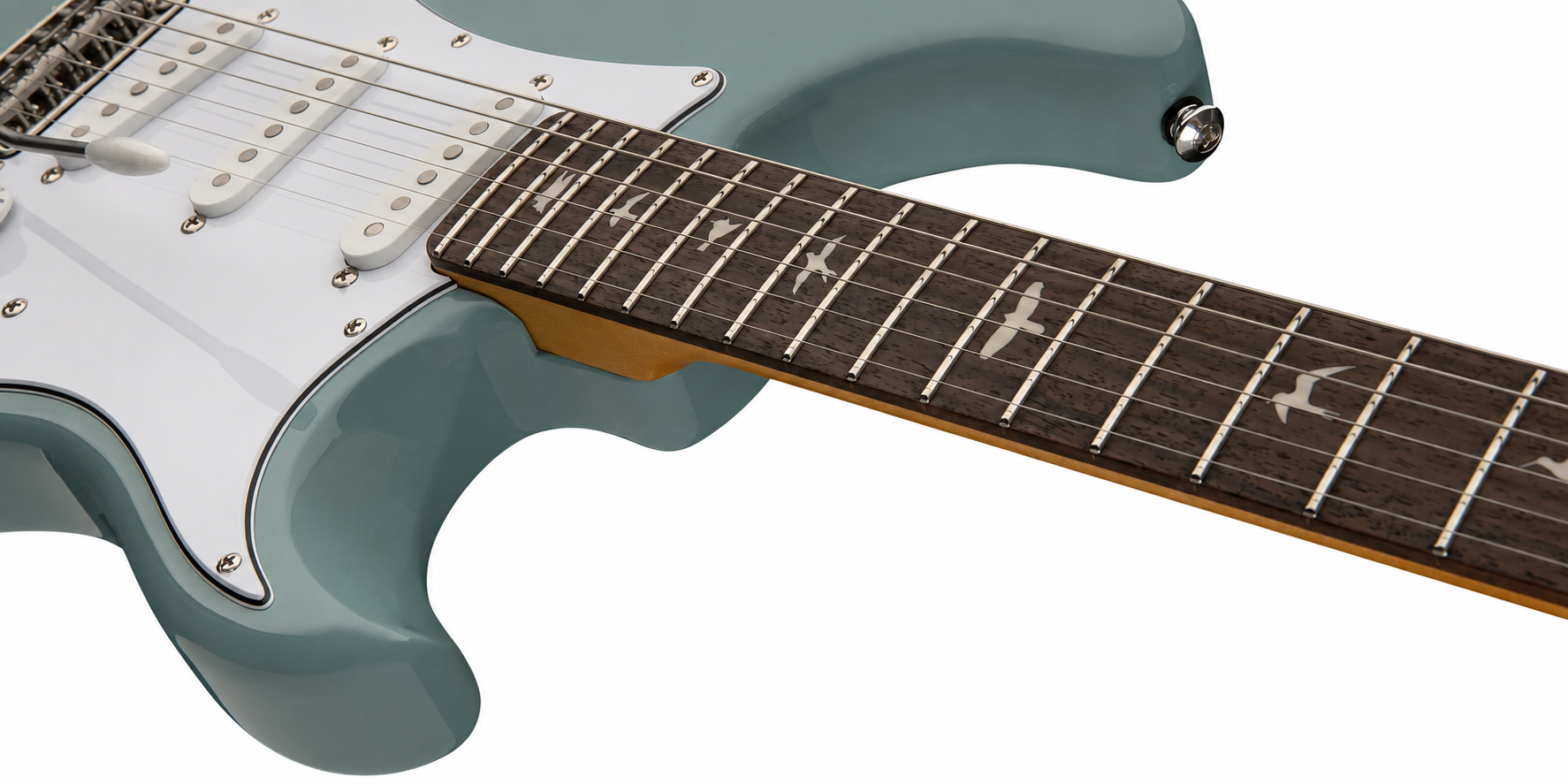
Fingerboard radius and neck profile describe different things. The 8.5-inch radius is the curve across the surface beneath the strings; the 635JM profile describes the shape behind the neck. One does not substitute for the other. A neck can sit comfortably in your palm while still needing a different action for your widest bends. Try chords near the nut as well as sustained notes higher up the fingerboard.
The inverted PRS headstock, with three tuners on each side, is a distinctive Silver Sky detail. During a purchase check, smooth tuner operation, return to pitch and nut condition matter more than the silhouette. Even a good guitar benefits from a setup for the chosen strings and playing style. Separate the underlying design from adjustments a technician can make before deciding that an instrument is wrong for you.

Audition the sound, not somebody else’s preset
Start on a clean channel without compression or a long reverb. Play the same short passage in all five selector positions. This makes it easier to identify your core sound and the alternatives you might use for particular arrangements.
Next, add a little overdrive. Instead of changing presets, soften your picking and turn the guitar’s volume control down gradually. Listen for clarity and how comfortably your picking hand controls the amount of breakup. This tells you more about everyday use than one impressive lead run.
Single-coil pickups can pick up electromagnetic interference. Check noise in your actual playing space with your own power supply and equipment. The Silver Sky name does not itself imply noiseless electronics.
PRS SE Silver Sky — official sound demonstration
Official manufacturer video. Manufacturer page · Watch on YouTube
Five selector positions, five useful starting points
The SE Silver Sky has three pickups but five main combinations. The lowest selector position activates the bridge pickup; the next combines bridge and middle; the centre uses the middle alone; the fourth combines middle and neck; and the upper position selects the neck. The official PRS page provides this switching map. It offers quick access to individual and blended voices without menus or extra switching layers.
Begin with a slow melody and open chords on the neck pickup. Listen to how clearly the low strings remain separated. A fuller sound in isolation is not automatically more useful in a busy arrangement. The bridge pickup, closer to the bridge, changes the balance of the attack. Try it with some tone adjustment as well as with the control fully open: a small tonal change may help more than extra gain.
The combined positions deserve attention for muted notes, rhythmic patterns and short accents. Listen beyond descriptions such as “glassy” and consider how each strike sits beside the snare and bass. Play a passage with complete chords, then reduce it to the upper two or three strings. You may discover that a different chord voicing does more for the part than changing the pickup.
It is easy to overlook the middle pickup when concentrating on the two extremes. Give it a separate role in a verse or a second guitar part. For home recording, keep one dry example from each selector position and compare them at similar playback levels. This reveals differences without the distraction of an attractive reverb tail or a louder preset.
Specifications: the rosewood-board version
This table follows PRS’s official 2022 specification for the rosewood-board SE Silver Sky, matching the pictured Ever Green version. Check the individual product listing for other years, finishes and fingerboard options.
| Specification | Detail |
|---|---|
| Body | Poplar |
| Neck / joint | Maple / bolt-on |
| Fingerboard / radius | Rosewood / 8.5″ |
| Scale / frets | 25.5″ / 22 |
| Pickups | 3 × 635JM “S” |
| Controls | Volume, 2 tone controls, 5-way selector |
| Bridge | Two-point steel tremolo |
Amplification, pedals and recording
A clean amp with headroom makes changes in picking strength and tone control easier to distinguish. An amp on the edge of breakup turns those same changes into variations in saturation. These are different ways of using the same instrument. Before buying, decide which job occurs most often: controlled rhythm in a band, expressive blues leads, or layered parts recorded at home.
With overdrive, begin at moderate gain and a similar volume when the effect is on and off. A large level boost can make the louder sound seem better before you have assessed its tone. Once levels are comparable, listen to the lower midrange, the initial attack and the decay of a note. A lead part sometimes needs space in the arrangement more than another stage of distortion.
A compressor can even out short funk accents, but too much compression conceals the difference between soft and hard picking. Delay and reverb add space; bring them in after choosing the basic voice. If every selector position seems almost identical, temporarily bypass the effects. This makes it clearer which part of the result comes from the guitar and which comes from the rest of the rig.
When recording through an audio interface, use its instrument input and leave room below clipping. Set the level with your hardest expected attack rather than a quiet picked chord. One amp plug-in and an unchanged cabinet setting are enough for a useful comparison. Changing the guitar, preset, volume and part simultaneously makes conclusions about the instrument much less dependable.
SE Silver Sky — John Mayer / PRS Guitars
Official manufacturer video. Manufacturer page · Watch on YouTube
Who should try it
Blues, pop and funk players. Check whether rhythm chords stay clear and whether you enjoy the single-note response with mild drive. For funk parts, audition the in-between pickup positions separately.
Home recording. Record a dry passage, then place it alongside a backing track. A sound that seems lean in isolation may fit better beside bass and keyboards. Make the final decision in the arrangement rather than judging the guitar alone.
A first serious electric. Keep room in the budget for an amp or audio interface, a cable, a strap and setup work. A comfortable complete rig is more useful than spending the whole budget on the guitar itself.
Tremolo and the final decision
The two-point tremolo allows gentle vibrato on chords and melodies. It is also a mechanical system balanced by string and spring tension. A different gauge, a lower tuning or a change in action may call for adjustment. Do not assess stability with one movement of the arm. Play a phrase, use the tremolo in your normal way and check the tuning again.
If you rarely use the arm, explain that during setup. A fixed bridge may be simpler for a player who changes tuning frequently; delicate tremolo movement may be the very reason another guitarist chooses the Silver Sky. The useful question is whether the design supports your habits, rather than whether you can adapt those habits to a famous model name.
Treat the SE Silver Sky as a working instrument in its own right. This configuration provides five accessible voices, dynamic control and a familiar playing layout. Consider single-coil noise in difficult environments, tremolo setup and the difference from a dense humbucker sound as part of the decision. When those characteristics suit your music, the case for the guitar is stronger than an artist association alone.
Five checks before ordering
- Exact version. The SE and American-made Silver Sky are separate models. Do not transfer pickup names or construction details between them.
- Neck feel. Try barre chords, chord changes and bends higher up the neck. An 8.5″ radius describes geometry, not a universal comfort rating.
- Tuning and strings. Explain whether you want standard tuning, a lower tuning or a different string gauge. A change in tension can require tremolo adjustment.
- Included accessories. PRS lists a gig bag in the specification, but confirm the contents of the particular shipment before paying.
- Finish and condition. Ask for a photograph of the actual guitar. Studio lighting and screens can change the apparent shade.
Common questions
Is the SE Silver Sky suitable for a beginner?
Yes, if the full scale length, neck and complete-rig budget work for you. An artist’s name does not replace a comfort check.
Can it cover heavier music?
Yes, but compare attack and background noise with humbuckers for dense high-gain rhythm. Choose for your target sound rather than a genre label.
Do different colours sound different?
Finish colour alone is not a reliable buying criterion for sound. The version, electronics, setup, strings and playing technique matter.
Find your SE Silver Sky
Open a finish below to check its current price, availability and supplied accessories. SoundsGood can also help schools, studios and institutions select equipment and prepare a quotation.
- Official manufacturer or importer warranty
- PrivatBank and monobank instalment options
- Ukraine delivery; free from UAH 4,000
- Equipment selection for your needs
Check the selected product page for current price, stock, warranty terms and instalment eligibility. Payment and delivery terms.