The 56 rue Lepic profile, strength gradations and comparison with V•12: a practical approach to response and mouthpiece matching.
Key details
| Series | Vandoren 56 rue Lepic |
|---|---|
| Instrument | B♭ clarinet |
| Example strength | 3 |
| SoundsGood item code | Vandoren-CR503 |
Identifying 56 rue Lepic
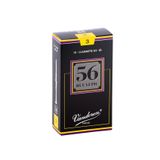
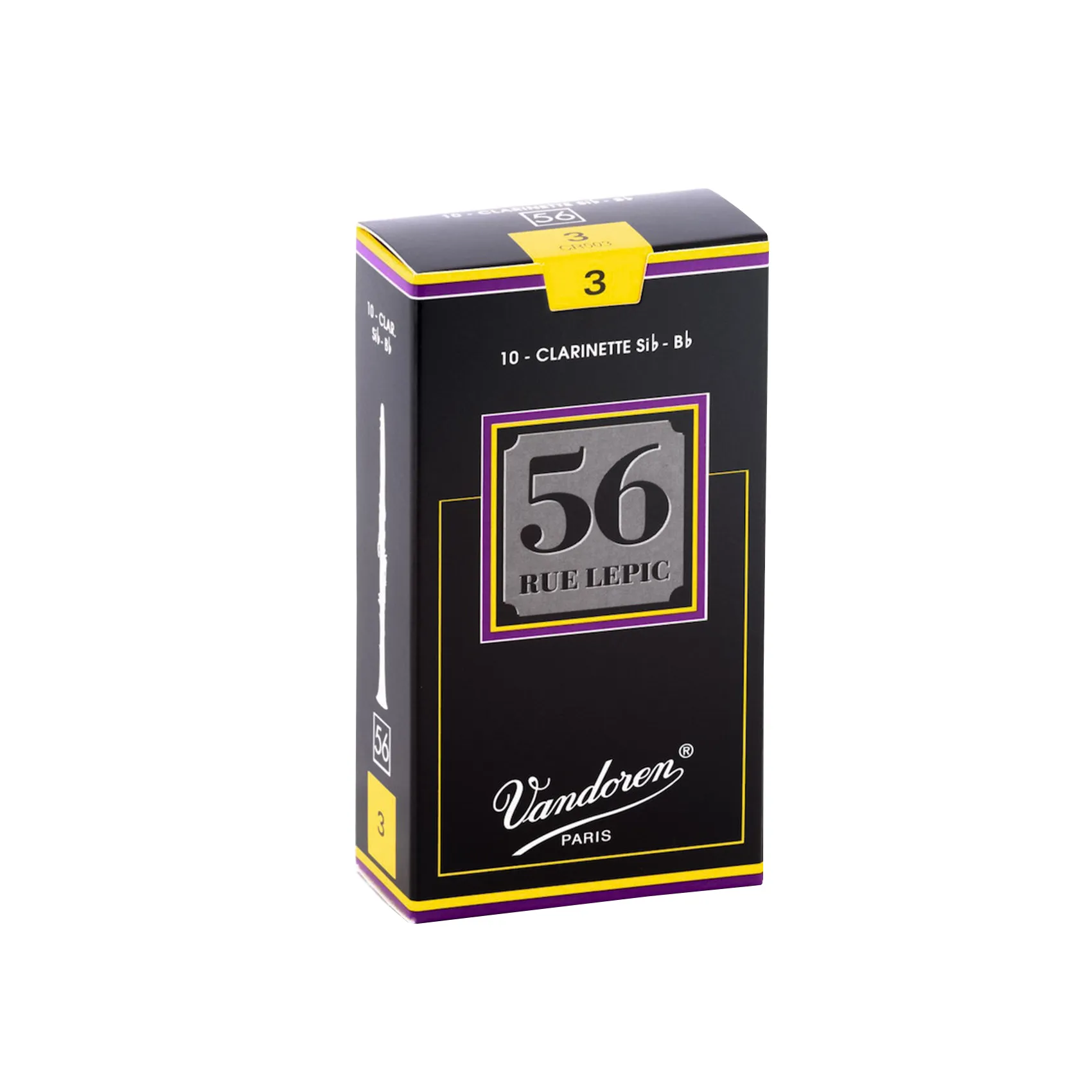
56 rue Lepic is a distinct Vandoren natural-cane series for B♭ clarinet. Its black box and prominent 56 distinguish it from silver V•12 packaging, but colour does not replace a reference-code check. The example here is CR503 in strength 3. The series name is neither a length measurement nor the number of reeds supplied. When reordering online, copy the complete marking from your previous packaging. Pay particular attention to the plus sign: 3½ and 3½+ are different options despite their similar names.
The heel and profile
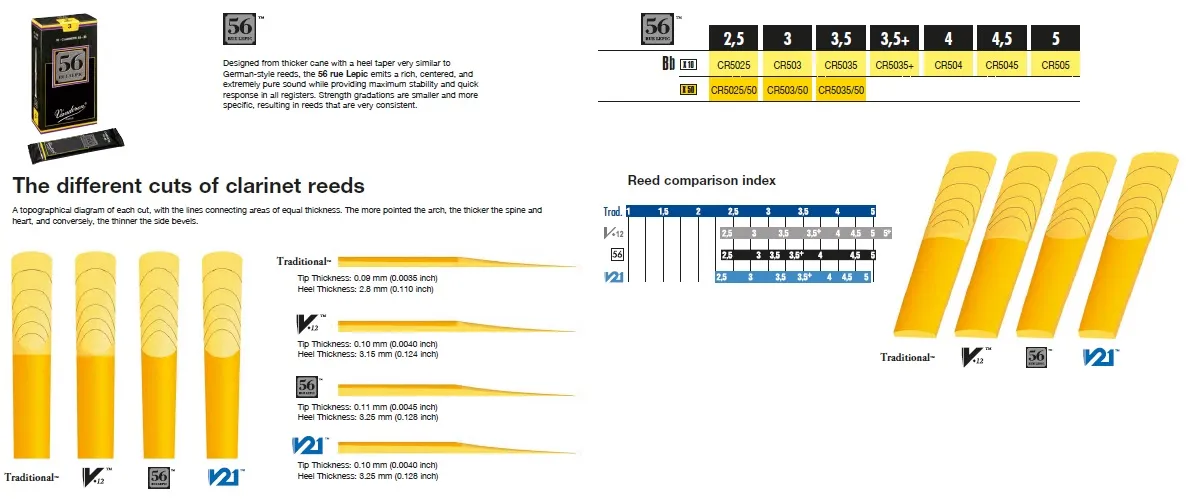
Vandoren describes thicker cane stock and a heel taper resembling German-style reeds, with an intended focused sound and prompt response. A similarity in shape does not make this a universal replacement for specialised reeds on every German mouthpiece. Check compatibility first. In a trial, pay attention to resistance at a moderate dynamic and whether reducing the volume leaves note beginnings reliable. These observations connect the design description to a useful personal decision without assuming that every player will experience the same tone.
Refining strength selection
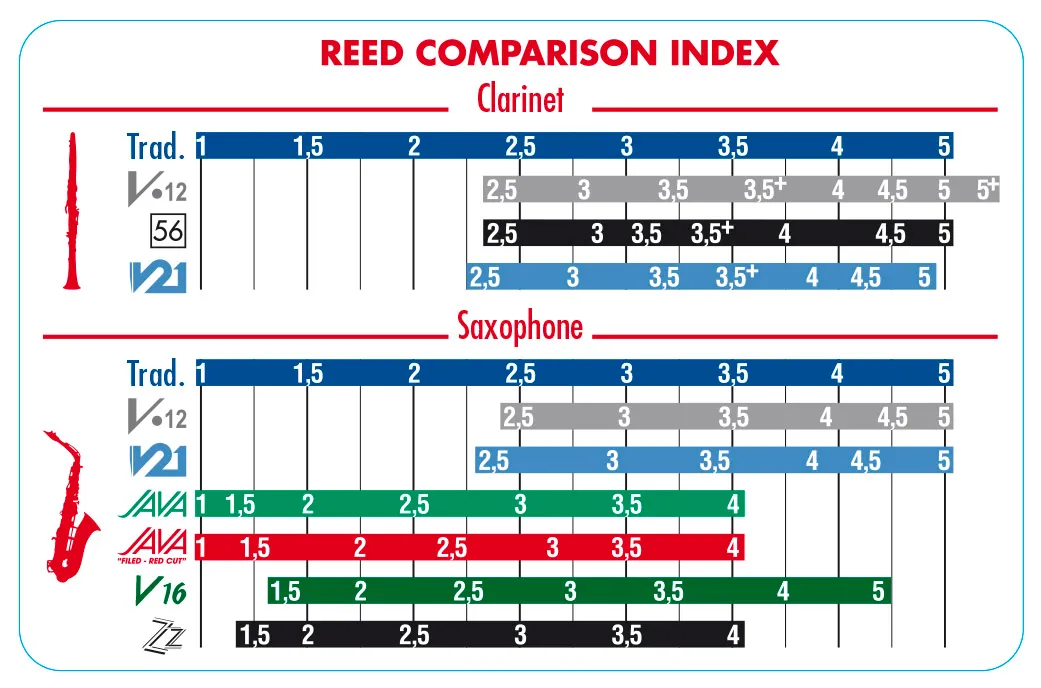
The series includes an intermediate 3½+ option for refining resistance. It is not an automatically more professional choice. Start with mouthpiece recommendations and the comparison chart, then test the result. A reed that is too resistant for your setup may encourage unnecessary tension, while one that is too soft may not offer the dynamic headroom you want. Consider these symptoms alongside lip pressure, air delivery and reed condition. Avoid stocking up on an unfamiliar strength because one specimen worked well during a brief initial trial.
A fair comparison with V•12
Compare V•12 and 56 rue Lepic with the same programme, but not necessarily the same printed number. Find a comfortable example of each, then test soft entrances, sustained phrases and register changes. For chamber music, include a passage where you join an existing voice without a sudden accent. For solo work, add contrasting articulations. Ask a listener to assess the continuity of the phrase while you note how controllable the response feels. A successful setup should support a repeatable musical result rather than merely impress on its first note.

When this series may suit your needs
Include 56 rue Lepic when you want to explore a different response on a familiar clarinet mouthpiece and can evaluate it in your own repertoire. It cannot automatically correct intonation or guarantee stability on every note; those outcomes depend on the complete setup and the player. Students benefit from testing with a teacher. Experienced clarinettists should assess behaviour after rests and near the end of a session. If a reed feels comfortable only at the beginning, review preparation, moisture and strength before judging the series.
How to compare reeds
Compare reeds on the same mouthpiece, with the same ligature and in a familiar room. First check alignment and inspect the tip for damage. Play sustained notes, several quiet attacks, slow legato across a register change and a short passage you know well. Repeat that sequence on the other reed. Record both your impression of the tone and the effort needed to start notes, sustain phrases and change dynamics. Recordings made from the same distance can help: a louder take is easily mistaken for a better one. Avoid judging an entire series from a single specimen, because natural cane varies. If the same difficulty persists with several undamaged reeds, ask a teacher to help check the mouthpiece, instrument sealing and playing setup.
Preparation, rotation and storage
Moisten the playing surface evenly with clean water before playing and allow the cane to adjust; there is no single preparation time that suits every reed and environment. Begin with a short, gentle trial. Afterwards, remove the reed carefully, remove excess moisture without pressing on its delicate tip, and place it in a suitable holder that supports its flat surface. Avoid leaving a wet reed clamped to the mouthpiece inside a closed case. Rotate several prepared reeds and note when each entered use, making gradual changes easier to recognise. Keep them away from heat and abrupt humidity changes. A split tip or distortion is a reason to replace a reed; trimming or sanding without experience can damage its profile. Judge service life by condition and reliable response rather than a promised number of days.
Checking an order
For the example reviewed here, look for B♭, 56 rue Lepic, strength 3 and CR503 together. Check the sale unit, minimum quantity and current availability in the SoundsGood listing. A full-box photograph illustrates packaging; it does not by itself establish how many reeds the displayed price includes. Do not confuse CR503 with nearby references for other strengths. For a first trial, keep a familiar, undamaged reed for comparison. It provides a useful baseline and a reliable option for rehearsals while you assess the new series.
View the product, sale unit and availability at SoundsGood
Editorial review based on manufacturer documentation, without a claim of personal testing. The cover is an illustration; packaging photographs and diagrams come from the catalog and manufacturer.