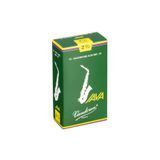

Green JAVA reeds: construction, strength selection and comparison with Red Cut and V16, using the SR2625 strength 2½ as an example.
Key details
| Series | Vandoren JAVA |
|---|---|
| Instrument | Alto saxophone |
| Example strength | 2½ |
| SoundsGood item code | Vandoren-SR2625 |
Identifying the original JAVA
This review concerns natural-cane JAVA reeds in the green packaging for alto saxophone. JAVA also appears on mouthpieces, while the red JAVA Filed – Red Cut is a separate reed series. Check the instrument, full product name and reference code together. SR2625 identifies an alto JAVA in strength 2½; it is a specific example, not a universal recommendation. A similar-looking tenor box contains a different reed size. Matching packaging colour and strength numbers does not make tenor and alto reeds interchangeable.

The cut and vibrating area
Vandoren describes JAVA as having a thicker tip and a more flexible vibrating area than Traditional, with a design aimed at jazz and popular music. That construction explains the intended response; it does not guarantee a particular tone on every mouthpiece. During a trial, focus on control of note beginnings and changes in intensity. The reed works with the mouthpiece geometry, air delivery and embouchure. Changing one element can alter perceived resistance even when the printed strength remains unchanged.

Choosing a strength
Start from a reed you already find comfortable and the guidance for your particular mouthpiece. A comparison chart helps shortlist adjacent strengths, but it is not an exact conversion formula. If quiet attacks consistently demand excessive effort, investigate a softer option. If the reed closes easily as you increase intensity, consider a harder one while also checking lip pressure and alignment. Increasing the number is not a measure of musical progress. The useful outcome is a controlled phrase and predictable dynamics without continually struggling to make the reed respond.

JAVA, Red Cut or V16
Compare the series against a clear task: short articulation, flexibility within a phrase, a quiet start or the feeling of support. Red Cut has a transverse bark removal at the shoulder, hence the Filed designation; green JAVA is unfiled. That visible distinction alone cannot predict every tonal difference. Treat V16 as another cut to investigate rather than an automatically better or darker JAVA. Use the same musical passage and find a comfortable strength for each series independently before drawing conclusions.

When a trial makes sense
JAVA is worth including in a trial for jazz, pop or funk when you want a different response to phrasing. A musical style label does not override ensemble requirements: blending with a section can matter more than making one voice stand out. Test the reed at normal rehearsal volume as well as alone. A beginner benefits from a teacher who can hear articulation and observe the setup. An experienced player should identify the particular problem the alternative solves compared with the reed already in regular use.
How to compare reeds
Compare reeds on the same mouthpiece, with the same ligature and in a familiar room. First check alignment and inspect the tip for damage. Play sustained notes, several quiet attacks, slow legato across a register change and a short passage you know well. Repeat that sequence on the other reed. Record both your impression of the tone and the effort needed to start notes, sustain phrases and change dynamics. Recordings made from the same distance can help: a louder take is easily mistaken for a better one. Avoid judging an entire series from a single specimen, because natural cane varies. If the same difficulty persists with several undamaged reeds, ask a teacher to help check the mouthpiece, instrument sealing and playing setup.
Preparation, rotation and storage
Moisten the playing surface evenly with clean water before playing and allow the cane to adjust; there is no single preparation time that suits every reed and environment. Begin with a short, gentle trial. Afterwards, remove the reed carefully, remove excess moisture without pressing on its delicate tip, and place it in a suitable holder that supports its flat surface. Avoid leaving a wet reed clamped to the mouthpiece inside a closed case. Rotate several prepared reeds and note when each entered use, making gradual changes easier to recognise. Keep them away from heat and abrupt humidity changes. A split tip or distortion is a reason to replace a reed; trimming or sanding without experience can damage its profile. Judge service life by condition and reliable response rather than a promised number of days.
Before ordering
Check the Alto marking, strength 2½ and SR2625 reference. The SoundsGood listing shows a minimum order of five units; consult the live product page for current terms. A photograph of a ten-reed box does not automatically mean the displayed price covers that box. Confirm the unit of sale and basket quantity before payment. For an initial trial, finding the right resistance matters more than building a large stock. Keep the packaging and reference details so a successful mouthpiece-and-reed combination can be ordered accurately again.
View the product, sale unit and availability at SoundsGood
Editorial review based on manufacturer documentation, without a claim of personal testing. The cover is an illustration; packaging photographs and diagrams come from the catalog and manufacturer.