Explore the V16 cut, articulation and strength selection through alto SR7025 reeds in strength 2½, with a practical JAVA comparison.
Key details
| Series | Vandoren V16 |
|---|---|
| Instrument | Alto saxophone |
| Example strength | 2½ |
| SoundsGood item code | Vandoren-SR7025 |
V16 as a distinct option
V16 is a natural-cane reed series from Vandoren; this review covers the alto version. The V16 name also appears on mouthpieces, but these reeds are not restricted to a matching V16 mouthpiece. Correct size and a suitable strength matter most. The SoundsGood example is SR7025, strength 2½. If you already use another series, view V16 as a potential change in how your setup responds. An unfamiliar box is not an obligatory upgrade or a substitute for developing technique.

Construction and articulation
Vandoren describes a thicker tip and a longer vibrating area than Traditional, highlighting a pronounced, percussive attack. Use that as a trial criterion rather than a promised personal result. Play repeated short notes at a comfortable tempo. Check whether their length stays consistent, whether the sound responds promptly after the tongue releases and whether you are adding unnecessary pressure. Follow with a connected phrase. An appealing short articulation should not come at the expense of control in legato or at low volume.

Does V16 necessarily sound darker?
Labels such as “the darkest jazz reed” simplify the choice too far. Players do not always mean the same thing by bright or dark. Mouthpiece chamber geometry, articulation and room acoustics affect what reaches the listener. For a useful comparison, ask someone to hear two recordings without knowing the reed names. Can they hear clear note beginnings, a full sound in quiet phrases and a tone that suits the ensemble? Choose a result you can repeat in your repertoire rather than an adjective in a product description.

Comparing it with JAVA
Do not transfer a JAVA strength number mechanically. Consult the comparison chart, then try nearby strengths on your own mouthpiece. Use a short set of tasks: an entrance after a rest, a rhythmic phrase, a wide interval and a sustained note with changing volume. If one reed impresses only during a loud attack, repeat the passage quietly. Reliable repetition can matter more than an exciting first impression in ensemble work. Also assess comfort near the end of a normal practice session, once the novelty of the setup has faded.

Who should consider a trial?
V16 is worth trying when you can describe the change you want in articulation or response. That might involve rhythmic precision in a jazz ensemble or a different feeling of support on a familiar mouthpiece. The series does not require a particular professional status, but a clear comparison reduces random purchases. If your current reeds are comfortable and reliable, the series name alone is no reason to replace them. When attacks are inconsistent, separate reed behaviour from alignment, playing technique and instrument condition before deciding.
How to compare reeds
Compare reeds on the same mouthpiece, with the same ligature and in a familiar room. First check alignment and inspect the tip for damage. Play sustained notes, several quiet attacks, slow legato across a register change and a short passage you know well. Repeat that sequence on the other reed. Record both your impression of the tone and the effort needed to start notes, sustain phrases and change dynamics. Recordings made from the same distance can help: a louder take is easily mistaken for a better one. Avoid judging an entire series from a single specimen, because natural cane varies. If the same difficulty persists with several undamaged reeds, ask a teacher to help check the mouthpiece, instrument sealing and playing setup.
Preparation, rotation and storage
Moisten the playing surface evenly with clean water before playing and allow the cane to adjust; there is no single preparation time that suits every reed and environment. Begin with a short, gentle trial. Afterwards, remove the reed carefully, remove excess moisture without pressing on its delicate tip, and place it in a suitable holder that supports its flat surface. Avoid leaving a wet reed clamped to the mouthpiece inside a closed case. Rotate several prepared reeds and note when each entered use, making gradual changes easier to recognise. Keep them away from heat and abrupt humidity changes. A split tip or distortion is a reason to replace a reed; trimming or sanding without experience can damage its profile. Judge service life by condition and reliable response rather than a promised number of days.
Reference codes and sale units
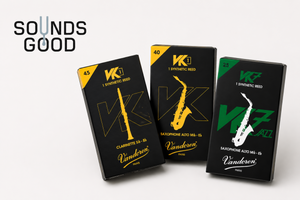
The reference used here is alto V16 SR7025, strength 2½. Match the package code to your order: the tenor version is a different product. Manufacturer pictures show boxes and individual wrapping, while the retailer determines the actual sale unit. Check whether the listing is for one reed, a set or a full box, including any minimum order quantity. Compare pack sizes before comparing prices. After a successful trial, retain the full code, strength and series name; remembering only the black packaging is not enough.
View the product, sale unit and availability at SoundsGood
Editorial review based on manufacturer documentation, without a claim of personal testing. The cover is an illustration; packaging photographs and diagrams come from the catalog and manufacturer.