```
```
```
How to Choose Violin Strings: Complete Guide for Musicians
From gut to synthetic: professional recommendations and secrets to achieving your instrument's perfect sound


Strings are the heart of your violin. They transform mechanical vibrations into that enchanting sound that captivates listeners. But among hundreds of models from dozens of manufacturers, how do you find the perfect set for your specific instrument?
This guide is created by musicians for musicians. We've analyzed the most popular string sets and compiled recommendations to help you make an informed choice—whether you're a beginner, conservatory student, or seasoned professional.
Three Core Types: Gut, Synthetic, and Steel
The string's core determines its fundamental acoustic properties. Understanding the differences between types is the first step toward choosing the ideal strings for your violin.
Gut Strings

Pirastro Eudoxa — the gold standard for gut strings
Made from sheep intestines (Latin "catgut"), used for over 400 years. The choice for Baroque music and historically informed performance.
Sound: Extraordinarily warm, soft, rich in overtones. Complex, noble timbre with natural depth.
Advantages:
- Unique tonal palette unachievable with modern materials
- Perfect for early music
- Soft response under fingers and bow
- Used by leading Baroque ensembles worldwide
Disadvantages:
- Unstable tuning (sensitive to humidity and temperature)
- Require frequent re-tuning
- Short lifespan (2-4 months)
- Need special care
Popular models: Pirastro Eudoxa, Pirastro Passione, Pirastro Oliv
Synthetic Core Strings
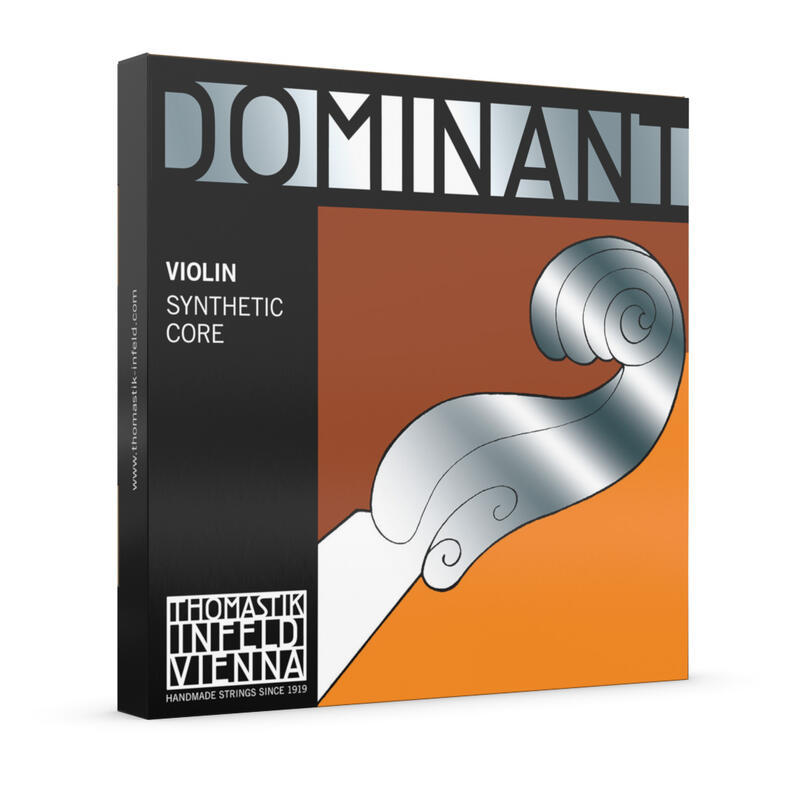
Thomastik Dominant — industry standard since 1970
Composite material core (typically nylon or perlon) with metal windings. Introduced in the 1970s and quickly became the industry standard.
Sound: Balanced, warm yet brilliant. Approaches gut quality with steel's stability.
Advantages:
- Excellent pitch stability
- Quick settling time (1-2 days)
- Versatile for different musical styles
- Long lifespan (6-12 months)
- Resistant to climate changes
- Choice of 85% of professional orchestras
Disadvantages:
- Slightly less complex than gut strings
- Some models can sound "synthetic" on very old instruments
Popular models: Thomastik Dominant, Pirastro Evah Pirazzi, Pirastro Obligato, D'Addario Helicore
Steel Core Strings
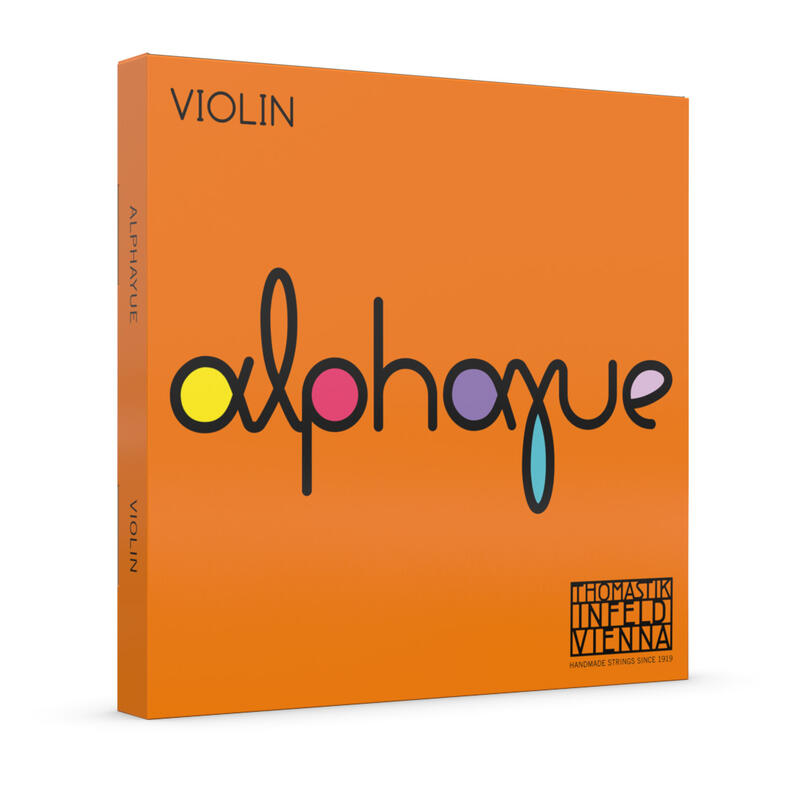
Thomastik Alphayue — perfect start for young musicians
Steel core with various windings. Traditionally associated with student instruments, though premium models exist for professionals.
Sound: Bright, penetrating, with clear attack. Fewer overtones but greater projection and focus.
Advantages:
- Maximum pitch stability
- Instant settling (playable immediately)
- Longest lifespan
- Affordable for beginners
- Ideal for teaching children
- Withstand intensive use
Disadvantages:
- Less complex timbre than synthetic
- Can sound harsh on some instruments
- Less flexibility in tone production
Popular models: Thomastik Alphayue, Thomastik Spirocore, D'Addario Zyex, D'Addario Prelude
Most professional musicians choose synthetic strings (about 85-90% of orchestral players worldwide). They offer the best balance of sound, stability, and convenience. Gut strings remain the choice for Baroque music and authentic sound enthusiasts, while steel strings are the ideal starting point for students, ensuring comfortable learning without constant retuning.
String Tension — Understanding Weich, Mittel, Stark
You'll often see tension markings in German on string packages. This is a critical parameter affecting both sound and playing comfort.
Weich (Soft Tension)
Characteristics: Less resistance under fingers and bow. Strings are easier to press, requiring less effort for sound production.
Sound: Soft, gentle, delicate. More overtones and timbral complexity, less volume and projection.
Best for:
- Young players and students (less strain on hands)
- Instruments with bright, harsh sound (to soften the tone)
- Chamber music, solo in small halls
- Musicians with tendinitis or hand problems
- Antique instruments with delicate construction
Mittel (Medium Tension)
Characteristics: Standard, universal option. If tension isn't specified on the package, it's always Mittel.
Sound: Balanced, with good projection and wide dynamic range. Universal for most situations.
Best for:
- Most musicians (80-85% of the market uses Mittel)
- Universal choice for different musical styles
- Orchestra musicians
- Conservatory students
- Those still determining their preferences
Stark (Heavy Tension)
Characteristics: High resistance, requires more effort in playing and well-developed technique.
Sound: Powerful, penetrating, with maximum projection. Fewer overtones, greater focus and volume.
Best for:
- Soloists in large concert halls
- Instruments with soft, muffled sound (to "open up" the tone)
- Experienced players with developed technique
- Musicians seeking maximum volume and projection
- Modern repertoire with large orchestras
| Parameter | Weich (Soft) | Mittel (Medium) | Stark (Heavy) |
|---|---|---|---|
| Volume | Low-medium | Medium-high | Maximum |
| Tonal Complexity | High (many overtones) | Balanced | Medium (focused) |
| Playing Effort | Minimal | Moderate | High |
| Settling Time | Short (1-2 days) | Medium (3-5 days) | Long (5-7 days) |
| Pitch Stability | Good | Excellent | Maximum |
| Sound Projection | Limited | Universal | Powerful |
Don't confuse string tension with tailpiece tension or string height over the fingerboard! These are different things. String tension is the string's stiffness at manufacture, a physical property of the string itself. Tightening Weich strings more won't make them Stark—it will only damage your instrument and may cause soundboard deformation. Choose tension based on your violin's character and your physical capabilities.
Matching Strings to Your Instrument's Character
Every violin is unique. Strings that sound magnificent on one instrument may disappoint on another. The key to success is understanding your violin's character and compensating for its qualities with the right string choice.
String Character Map
The Compensation Principle
The fundamental rule in choosing strings—compensate for your instrument's character with opposite string qualities:
- Bright and harsh → Choose warm, soft strings (Obligato, Tonica, Infeld Red)
- Dark and muffled → Need bright, projecting strings (Vision Titanium, Evah Pirazzi, Infeld Blue)
- Thin and "squeaky" → Strings with more mass and warmth (Obligato Stark, Peter Infeld)
- Unclear, "muddy" → Focused strings with clear attack (Evah Pirazzi, Vision)
- Too powerful → Soft strings for control (Tonica Weich, Dominant Weich)
- Weak → Heavy tension for increased projection (Dominant Stark, Evah Pirazzi Stark)
New vs Old Instruments
New violins (up to 5-10 years of active playing) typically sound bright, sometimes even harsh. The wood hasn't "played in" yet, the sound can be superficial. They benefit from soft synthetic strings with medium tension—Dominant, Obligato, Tonica.
Old violins (especially those long unplayed) may sound muffled, dark, without projection. They'll "wake up" with bright strings offering good projection—Evah Pirazzi, Vision Titanium Solo.
Don't hesitate to mix strings from different manufacturers! Most professionals don't use "pure" sets. For example, a very common combination: main set of Dominant, but with gold E from Pirastro (for softness) or silver D from Thomastik (for warmth). This allows precise tuning of each string's sound to your specific instrument and achieving perfect balance across registers.
Conclusion: Your Path to Perfect Sound
Choosing strings is a journey, not a destination. Even the world's most experienced professionals constantly experiment with strings depending on repertoire, concert hall, climate conditions, or simply the instrument's mood.
Key rules for successful selection:
- Start with the standard — Dominant for students, Alphayue for beginners. This is the baseline, proven by millions of musicians, from which you can explore.
- Listen to your instrument carefully — if it sounds bright or harsh, choose warm, soft strings. If muffled or lacking projection—bright and powerful. Compensation is key.
- Experiment wisely and gradually — don't change the entire set at once. First replace one string (usually E or G), assess the result for several days, then proceed to the full set.
- Give strings time to settle — new strings need 2 to 7 days to "settle" on the instrument and reveal their true potential. Don't make final judgments immediately after installation.
- Consider repertoire and conditions — for Baroque try gut or soft synthetic, for large orchestras—powerful Evah Pirazzi, for chamber music—warm Obligato, for studio recording—stable Dominant.
And most importantly—trust your ears. The best strings aren't the most expensive or most advertised, but those that bring you joy in playing and help reveal the unique, incomparable voice of your instrument. Every violin is a personality, and your task is to find strings that help that personality sing.
Ready to Find Your Perfect Strings?
Visit the SoundsGood catalog — official dealer of Pirastro, Thomastik-Infeld, and D'Addario
Browse String Catalog```