A closer look at Yamaha YAS-280 construction, keywork, a first playing setup and the checks that matter before buying.
Key specifications
| Model | Yamaha YAS-280 |
|---|---|
| Type | Alto saxophone |
| Key | E-flat (E♭) |
| Finish | Gold lacquer |
| Auxiliary keys | Front F; F♯ |
| Specified mouthpiece | Yamaha 4C |
| SoundsGood item number | 29492 |
Who the 280 is designed for
The YAS-280 is an E-flat alto in Yamaha’s student range. It is worth considering for regular music-school lessons, an adult beginner’s practice and amateur ensemble playing. Student describes its position in the range; it does not confine the instrument to introductory exercises. The choice depends on whether you can support it comfortably, reach the side keys and move your little fingers freely. When choosing for a child, assess that child’s actual playing position and reach. A photograph of an adult performer, or advice based only on age, cannot replace a fitting. Attending with the teacher makes that assessment more useful.

Neck, body and finish
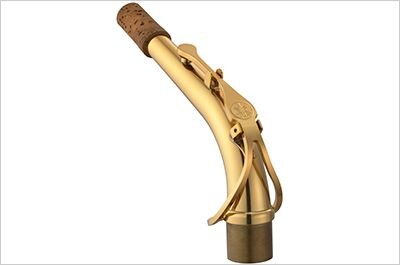
The standard YAS-280 has a gold-lacquer finish; YAS-280S identifies the silver-plated version. Its specification lists a 280-style neck and a two-piece bell. The neck is the curved removable tube between body and mouthpiece and belongs to the acoustic system, so its fit and the octave mechanism deserve attention during a first inspection. The close-up shows the neck receiver and clamp. They should hold the neck in its working position; excessive tightening should not be used to disguise looseness. Discussing the fit and condition of the individual instrument is more useful than judging quality from the shine of its finish.
Understanding Front F and high F-sharp
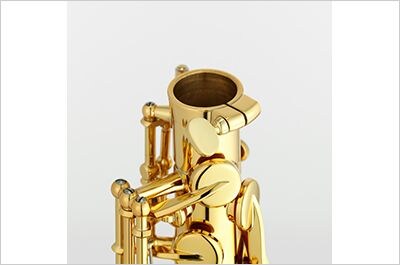
Yamaha specifies both Front F and a dedicated high F-sharp key for the YAS-280. They provide fingering options but do not replace sound-production technique. A beginner need not judge a saxophone by the highest note produced by chance. A clean start, a manageable octave transition and a repeatable short phrase reveal more. The dedicated high F-sharp key belongs on the comparison list when looking at models without it, but remains one consideration among several. Ask your teacher which fingerings your programme uses, then check that the relevant levers are accessible in a normal playing position.
The low register and B–C-sharp linkage
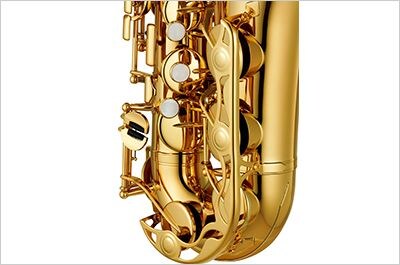
Yamaha highlights an improved connection between low B and C-sharp, designed around coordinated closure of the low C-sharp key. For a buyer, this is a reason to test quiet low-register entries and smooth movement between adjacent notes, rather than expect a mechanism to solve every breathing difficulty. If a note repeatedly fails to start, ask an experienced saxophonist to try it with the same setup. This helps identify the next step: technique work, another reed or a technician’s inspection. Pressing the keys progressively harder to compensate for a problem is not a useful test of an instrument’s condition.
A first mouthpiece and daily practice
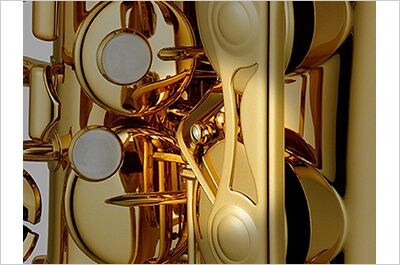
The factory specification lists a Yamaha 4C mouthpiece. It provides a straightforward starting configuration for following your progress. Buying several different tip openings immediately and switching every day makes it harder to understand what caused a change. Select a reed with your teacher, check its placement and allow time to become familiar with the setup. During the first weeks, recording the same short melody is more informative than searching for an accessory expected to create a desired tone instantly. Later, a specific goal such as a different resistance or attack will give a mouthpiece comparison a clear purpose.
A useful playing trial
Prepare a short programme to compare two saxophones: sustained middle-register notes, a slow scale, a few quiet low-note attacks and a familiar melody. Begin at a comfortable tempo rather than at the limit of your technique. Keep the same mouthpiece and a sound reed when they are compatible with both instruments. Changing several components together makes the result difficult to interpret. Record both trials from the same distance without reverb or automatic gain, if your recorder lets you disable it. Note how the keys feel separately: a listener will not hear an awkward little-finger movement, although it can matter greatly in daily practice. Finish by repeating the opening passage to distinguish the attraction of something new from a repeatable improvement.
When to compare it with the YAS-480
The YAS-480 offers different keywork details and broader neck options, making it worth trying when you can explain what your current instrument lacks. For a first purchase, assess the difference with a teacher using the same passages. If the YAS-280 is comfortable, mechanically sound and supports the teaching programme, a higher model number alone is no reason for an immediate replacement. When comparing a new 280 with a used higher-series instrument, include inspection and possible repair in the budget. Pads, keywork and joint condition directly affect practice, even when the other model’s name seems more persuasive.
Checks to make with the seller
Before paying, confirm the complete model designation, finish and contents of the particular package. Ask the seller to demonstrate how the instrument fits in its case, where the neck and mouthpiece are stored and whether closing the lid puts pressure on the keys. For a remote purchase, photographs of the actual instrument and confirmation of a mechanical check before dispatch are useful. Consult the product listing for price and availability, which can change independently of this review. Budget for reeds, an appropriate swab and a comfortable strap or harness. With a first instrument, lessons and a sound initial setup offer practical value from the first week; avoid spending the entire budget on a more expensive body alone.
View the product, price and availability at SoundsGood
Editorial review based on Yamaha documentation. The cover is an illustration; instrument and detail photographs come from the SoundsGood catalog and manufacturer materials.