





|
Quantity
|
Cost
|
||
|
|
|||
|
|
|||
Classical Guitars with Pickup
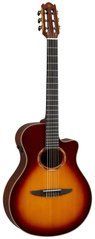
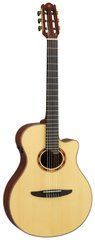
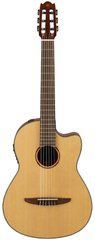
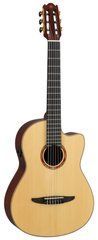
Classical guitars with pickup, also called electro-classical guitars, combine traditional nylon-string tone with connection to an acoustic amplifier, mixer, PA system, or audio interface. They suit live performance, ensembles, teaching, studio recording, cafés, worship settings, and players who need controlled amplified sound without giving up classical technique.
What Is an Electro-Classical Guitar?
Classical Construction
Nylon strings, a wide neck, and classical playing position retain the feel of a traditional instrument.
Integrated Pickup System
Signal may come from an undersaddle piezo, contact sensor, internal microphone, or hybrid system.
Unplugged Use
The guitar remains acoustic and can be played without amplification.
Amplified Use
The output can feed an acoustic amp, DI box, mixer, or audio interface.
Stage and Recording
Onboard electronics simplify consistent amplification and tone control.
Not a Steel-String Electro-Acoustic
An electro-classical uses nylon strings; a western electro-acoustic uses steel strings.
Pickup Types
Undersaddle Piezo
The most common live option, providing a stable signal, clear attack, and strong feedback resistance.
Contact Sensor
Captures bridge or soundboard vibration and can sound warm and natural.
Internal Microphone
Adds air and body resonance but is more feedback-sensitive.
Piezo + Microphone Hybrid
Blends piezo stability with microphone realism.
Passive System
Needs no battery but often benefits from a high-impedance preamp or DI box.
Active System
Includes a powered preamp and stronger controllable output.
Preamp, EQ, and Controls
Volume
Sets output level directly from the guitar.
Bass, Middle, Treble
Adapts tone to the room, amplifier, and ensemble.
Phase
Can reduce low-frequency feedback by reversing polarity.
Notch Filter
Cuts a narrow resonant frequency that is feeding back.
Built-In Tuner
Useful for silent tuning but not included on every model.
Battery Check
Helps prevent signal loss during performance.
Cutaway, Body, and Comfort
No Cutaway
Traditional shape and maximum internal body volume.
Cutaway
Improves access above the 12th fret for solo, jazz, flamenco, and crossover playing.
Thin Body
More comfortable standing and easier to control on loud stages, with less unplugged volume.
Full-Depth Body
Provides fuller acoustic bass and a traditional classical feel.
Crossover Neck
May be narrower or radiused for steel-string and electric-guitar players.
Strap Use
For standing performance, check strap-button placement.
Correct Connections
Acoustic Amplifier
A full-range acoustic amp preserves nylon-string tone better than an electric-guitar amp.
Mixer or PA
A DI box is useful for long cable runs and balanced output.
Audio Interface
Use an instrument-level Hi-Z input for DAW recording.
External Preamp
Improves impedance matching, EQ, and feedback control.
Instrument Cable
Use a reliable shielded cable with undamaged connectors.
Effects
Reverb, delay, chorus, looper, and compression can work well when dynamics remain natural.
Feedback Control
Speaker Position
Do not stand in front of the main speakers or aim a monitor directly at the body.
Phase Switch
Test both positions and keep the one with less low-frequency howl.
Notch Filter
Locate the resonant frequency and cut only that narrow area.
Avoid Excess Bass
Heavy low-frequency boost often triggers feedback.
Microphone Blend Level
On a loud stage, reduce the internal microphone and rely more on piezo.
Soundcheck
Set performance volume before the show begins.
Top, Strings, and Acoustic Tone
Spruce
Clear attack, transparency, and broad dynamics.
Cedar
Warmer and more immediate response.
Laminated Top
Practical and stable under climate changes.
Solid Top
More responsive and generally richer when played unplugged.
Nylon Strings
Use classical-guitar sets of suitable tension; never install steel strings.
Electronics Cannot Replace the Guitar
Acoustic quality still matters because electronics do not fix a weak instrument.
Choosing by Use Case
Solo Performer
A tuner, EQ, phase, acoustic amp, and separate vocal channel are useful.
Ensemble
Piezo or hybrid systems provide consistent attack and mix definition.
Live Flamenco
Fast attack, golpe response, cutaway, and feedback resistance matter.
Amplified Classical Concert
Natural tone, low noise, and subtle EQ are priorities.
Studio Recording
Combine the pickup output with an external microphone on separate tracks.
Teaching and Exams
Amplification fills a large room without forcing excessive right-hand attack.
What to Check Before Buying
String-to-String Balance
All six strings should be similar in amplified level; uneven piezo contact may need adjustment.
Noise and Crackle
Test controls, output jack, battery compartment, and cable.
Output Headroom
The signal should be strong without excessive noise or input clipping.
EQ and Phase Operation
Every control and switch should respond predictably.
Battery Access
The battery must be easy to replace and securely held.
Unplugged Sound
Listen for tone, sustain, fret condition, intonation, and playing comfort.
System Comparison
| System | Sound Character | Feedback Resistance | Best For |
|---|---|---|---|
| Piezo | Clear, direct, percussive | High | Stage, ensemble, loud monitoring |
| Contact | Warm and body-focused | Medium | Quiet stage, natural tone |
| Internal Microphone | Airy and spacious | Lower | Studio, quiet performance |
| Piezo + Mic | Flexible and natural | Adjustable | Professional live and recording |
| Connection | Advantages | Considerations |
|---|---|---|
| Acoustic Amp | Fast standalone solution with EQ and effects | Power, channels, anti-feedback |
| DI Box + PA | Balanced output and long cable runs | Input impedance, ground lift, power |
| Audio Interface | Direct DAW recording | Hi-Z input, gain, monitoring latency |
| Preamp + Mixer | Maximum tone control | Additional equipment and cables |
How to Choose
Choose the guitar first for acoustic tone and comfort, then evaluate its electronics.
For loud stages, piezo is usually practical; for natural tone, consider microphone or blend systems.
Test amplified balance across all six strings.
Piezo systems benefit from a Hi-Z input, acoustic preamp, or suitable DI box.
Remove the cable after playing when the output jack activates battery power.
Carry a spare battery and test it before every performance.
Avoid unnecessary bass boost because it reduces clarity and increases feedback risk.
For stage work, test the guitar, cable, DI box, amplifier, and mixer channel as one system.
Frequently Asked Questions
How is it different from a steel-string electro-acoustic?
A classical model uses nylon strings and a wider neck; a western electro-acoustic uses steel strings.
Which pickup is best for live use?
Undersaddle piezo is practical on loud stages; piezo plus microphone offers a more natural sound.
Will a magnetic soundhole pickup work with nylon strings?
A normal magnetic pickup does not respond to nylon. Use piezo, contact, microphone, or hybrid technology.
What should I connect it to?
An acoustic amplifier, PA through a DI box, or an audio interface with a Hi-Z input.
Is a cutaway essential?
No. It is mainly useful for regular playing above the 12th fret.
What do phase and notch controls do?
Phase can reduce low-frequency howl; notch removes a narrow resonant feedback frequency.
Why is one string louder than the others?
Uneven contact between the saddle and piezo element may require professional adjustment.
Can I record directly into an audio interface?
Yes. Use an instrument-level Hi-Z input and set gain correctly.
Related Categories
Why SoundsGood
Free delivery over UAH 4,000 · PrivatBank / monobank installments · Official warranty · Electronics and instrument inspection before dispatch