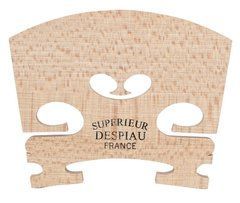
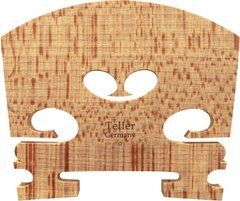
Choosing a bridge for a bowed string instrument
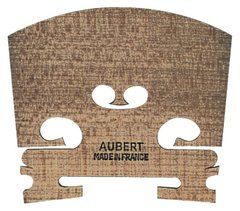
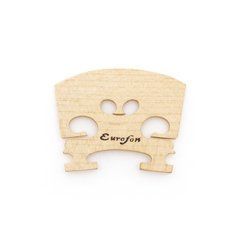
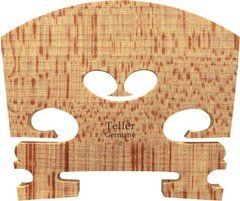
A bridge is the shaped component standing on the top of a violin, viola, cello or double bass, with the strings passing across its upper edge. It is different from the tailpiece nearer the lower end of the body. This distinction matters when shopping through translated category names: confirm the photograph and the purpose of the item, not just the search term. A bridge blank and a tailpiece are not interchangeable accessories, even when an informal name appears to suggest otherwise.
Start with the instrument and the reason for the purchase. You may need a blank specified by your luthier, a replacement for a damaged component, or an assessment of an uncomfortable setup. These are different situations. The price of the component should be considered alongside the work needed to select, shape and fit it. A higher price alone cannot establish that a bridge will suit your instrument or solve the particular difficulty you experience while playing.
How to choose a bridge
Its role in the complete setup
Bridge maker Despiau explains that the bridge carries string vibration to the instrument body and highlights the luthier's role in selecting and working the component. For a buyer, the useful conclusion is to judge the finished setup. A description promising warmth, clarity or brilliance is not a reliable prediction for every instrument on which a particular blank might eventually be used.
Describe your objective in practical terms before selecting a product. Perhaps a familiar string crossing now feels awkward, a visible change has appeared in the old bridge, or you want to retain the comfortable feel of the previous setup. When discussing tone, identify the register and playing technique involved. A specific observation gives the luthier something to investigate. It is more useful than asking a small replacement part to make the whole instrument sound professional.
Identify the instrument before comparing sizes
Choose the correct family first: violin, viola, cello or double bass. Then record the instrument size, number of strings and any unusual design features. A full-size designation does not make components interchangeable between instrument families. For an electric instrument or an uncommon model, include the exact maker and model name. Do not assume that a familiar outline or an approximate match in a photograph establishes compatibility with its existing bridge system.
Violin markings such as 4/4, 3/4 and smaller student sizes help narrow the selection. They do not replace the remaining checks. Ask for any missing product dimensions before ordering, and avoid borrowing specifications from a visually similar item by another manufacturer. An old bridge can help explain the instrument's service history, but it may be an unsuitable pattern to copy if it has warped or been altered unsuccessfully. Let the intended fitting work guide the choice of blank.
A blank is not an individually fitted bridge
Check what stage of preparation the listing describes. A blank, a component with a factory-shaped outline and a bridge fitted to your particular instrument are different things. The word ready can be ambiguous unless the seller explains what has been completed. Do not assume that the purchase price includes fitting unless the service is explicitly offered. This is especially useful when arranging work before a lesson, examination or performance with a fixed date.
In its string instrument care guidance, Yamaha describes individually fitted maple bridges and feet that sit flush against the top without gaps. Discuss this work with your luthier before purchasing. Copying an old component from a photograph does not establish a correct fit. A suitable blank is the starting material for the job; it is not evidence that the instrument has received a completed setup.
Compatibility checklist
| Parameter | What to check |
|---|
| Part | The bridge beneath the strings on the top plate, not the tailpiece. |
| Instrument | Violin, viola, cello or double bass; size and string count. |
| Preparation | Blank, factory-shaped part or individually fitted bridge. |
| Installation | Agree dimensions and shaping allowance with the luthier. |
Information to prepare for an enquiry
Provide the instrument type and size, its model where known, the number of strings and the exact string set currently used. Explain the reason for replacement and whether a luthier has already examined the instrument. If a particular blank has been recommended, supply its complete product code. Clear photographs from the front and side can help explain the enquiry. Product specification checks and an assessment of the instrument are complementary tasks, rather than substitutes for one another.
For a school or ensemble purchase, associate each component with the instrument it is intended for. Instruments carrying the same size label can have different repair histories. Keep removed bridges and new blanks labelled instead of combining them in an unidentified box. A short record containing the inventory number, size, agreed product code and repairer makes the handover clearer. It also creates a useful reference when the instrument next needs attention.
Materials, grades and the total budget
Compare material and grade descriptions within the documentation of the relevant maker. Grading names from separate brands should not automatically be treated as equivalents. A striking wood pattern, a stamp or a higher price does not allow a buyer to predict the finished sound independently. If your luthier specifies a series, ask whether that exact model matters or whether another blank meeting the required specification is acceptable. This avoids ordering an expensive substitute without knowing why it was chosen.
For a student instrument, consider the budget for the whole setup. For a performance instrument, agree on how the result will be assessed after fitting. If the previous arrangement worked well, explain which aspects you would like preserved. Changing several components at once solely because each promises an improvement can make the outcome harder to interpret. A clear sequence of decisions gives both player and repairer a more useful basis for discussing the result.
Strings, mutes and pickup compatibility
Tell the luthier about a planned string change before the bridge work is finished. Identify the actual series and version rather than only the brand. Bring the mute you regularly use and check its suitability on the finished instrument according to its instructions. Treat the bridge as part of the working equipment you really use, whether that involves practice, orchestral rehearsal, recording or amplified performance. Avoid selecting it around accessories you may never need.
A pickup deserves its own compatibility check. Give the exact model and explain how it is installed; an electric instrument may also have specific requirements for its original bridge assembly. A standard acoustic blank is not automatically a replacement for a specialised component. Drilling, cutting or transferring a sensor should be discussed separately with a qualified specialist. Establish what the instrument and pickup manufacturers permit before buying a part on the basis of similar external dimensions.
Inspection and checking the completed work
Yamaha advises expert inspection of a deformed bridge. A visible change in shape or position is a reason to arrange an assessment rather than immediately choose a more expensive replacement. Note when the change appeared: following tuning, a string change, transport or a period of storage. The sequence is useful information for the repairer and helps avoid treating a single observation as a complete diagnosis.
After fitting, use familiar playing material: a scale, a quiet passage, ordinary string crossings and positions you know well. Compare under consistent conditions instead of relying on one loud note. If something feels awkward, identify the movement and discuss it with the luthier. A student may benefit from trying the instrument with their teacher. Keep the component code and service date so that the next enquiry has a clear starting point even after the packaging is discarded.
Is a bridge the same as a tailpiece?
No. The bridge stands on the instrument top and the strings pass over it. The tailpiece is a separate component nearer the lower end of the body. When a translated name is ambiguous, confirm the photograph and functional description before ordering.
Is the violin size enough to select a bridge?
It is a useful first filter, but does not establish an individual fit. Check the blank against your luthier's requirements and clarify the work still needed. This is particularly important when the instrument's previous repair history is unknown.
Can a new blank be used straight from the packet?
Do not assume that a factory-shaped outline means the component is fitted to your instrument. Ask what preparation has been completed and arrange the remaining work. The supplied item and the completed setup should be treated as separate parts of the purchase decision.
How is bridge support retained during an ordinary string change?
Yamaha's violin guidance recommends changing strings individually. Replacing the bridge itself is a separate job whose procedure should be agreed with the luthier; do not treat it as an ordinary replacement of the string set.
Will a more expensive bridge necessarily improve the tone?
No price alone guarantees the result you want. Discuss the suitable blank, the fitting work and the criteria for trying the instrument afterwards. Use familiar music to judge the completed setup and describe any difference in specific playing terms.
Where should I start if the old bridge has no identifiable brand?
Start with the instrument type, size and reason for the enquiry. For a violin, browse the violin bridge category, then confirm the requirements with your luthier. Approximate visual resemblance is not sufficient evidence for the final selection.