Choose protection around the transport route
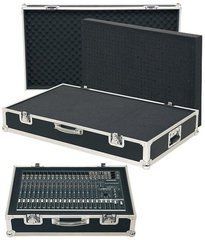
A mixer case should do more than contain the chassis. It needs to restrain equipment during handling and protect vulnerable knobs, faders, screens and connectors against the conditions its construction is intended to withstand. Controlled travel in a private car and repeated loading with other production equipment can require different solutions.
Describe the route: stairs, narrow doors, vehicle space, trolleys, storage and the venue. Consider who carries the console and how often it must be removed. A rigid case, padded bag and dust cover do not offer identical support. This category may include several formats, so evaluate the actual construction. The largest enclosure is not necessarily the safest choice: internal fit and external practicality both matter. Planning the route helps select a usable package rather than merely a container for storage.
Internal dimensions matter more than the format name
Measure width, depth and height with all protrusions that remain fitted during transport. Include rack ears, handles, rear connectors and the highest controls. Compare these measurements with usable internal space, not external or shipping dimensions. Check how each manufacturer defines length and width rather than assuming those labels follow the same orientation.
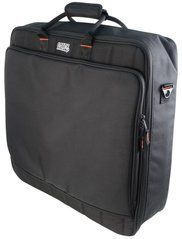
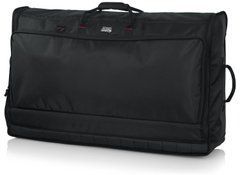
Gator G-MIX 24X36 identifies a format, but the model's actual internal-dimension table determines fit. Do not select a G-MIXERBAG or RockCase by approximate width alone. Controls need clearance without excessive chassis movement. For a sloping panel, assess the highest point and support shape. A mixer drawing or photographs of measurements help avoid mistakes caused by rounded dimensions in a product name. If additional hardware is fitted, measure the configuration you will actually transport rather than a bare standard enclosure.
Internal restraint and protection of the controls
The console should rest on appropriate chassis areas, not on buttons, screens or plugs. Inserts should restrict movement without distorting the panel. Gator describes padded lining and restraint components for G-MIX 24X36; those features do not eliminate the need to check your particular equipment. A universal case needs careful support adjustment.
Close the case without forcing compression. A lid pressing on knobs or faders is not a suitable restraint method. Power supplies, cables and adapters must not move freely over the panel. Use an intended compartment or a separate bag. A layer of fabric between a metal adapter and a screen should not be assumed to provide adequate protection. Check every item's position and remove the console without catching protruding parts. The packing arrangement should remain understandable when somebody else handles the equipment, not depend on one person's memory.
Operating inside the case, connections and cooling
Some designs allow the mixer to remain in the base after the lid is removed, but this requires verification. Check rim height, headphone access, power connections, rear-panel clearance and stability on a table. A good transport fit does not automatically create a comfortable working position.
Inspect the console's ventilation openings and manufacturer requirements. Padding must not obstruct necessary cooling. Leave room for cable bends without connector strain, but do not treat that clearance as permission to travel with everything plugged in. Disconnect cables unless the design specifically protects the connected plugs in transit. For a digital console, assess screen access and hand position: the rim or raised height should not force uncomfortable operation throughout an event. Plan somewhere suitable for the removed lid as well, keeping walkways and equipment placement clear.
Loaded weight, handles, wheels and the enclosure
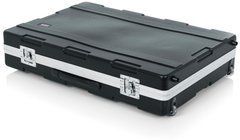
Count the mixer, case, power supply and accessories together. Wheels help on suitable surfaces but do not eliminate stairs or lifting into a vehicle. Gator specifies wheels and a pull-out handle for G-MIX 24X36; those are features of that model, not every bag or case carrying the brand.
Assess handle positions, grip, standing stability and opening space. Check latches before carrying. Do not infer waterproofing, arbitrary stacking loads or certification simply from a rigid shell. Such claims require documentation for the exact product. Arrange other equipment so loads do not bear on vulnerable areas. A practical design must suit the regular route as well as the console. Check that the closed case fits the vehicle and storage location, otherwise an internally suitable option may become inconvenient every time it is moved.
Information for selecting and checking a case
Provide the exact mixer name, dimensions including protrusions, weight and accessory list. Describe rack ears, operation inside the case and transport arrangements. Specify any need for wheels, power-supply storage and handling by one person. Confirm internal measurements and supplied accessories for the exact case version before ordering.
After delivery, check fit, restraint, lid clearance and handle access. Pack the complete working kit and make sure accessories cannot contact vulnerable controls. Keep a packing diagram for other users. Inspect inserts, handles and latches after travel, correcting shifted support before repacking. Follow the electronics manufacturer's storage conditions: a case does not regulate humidity or temperature. After a cold-to-warm move, allow adaptation according to the equipment instructions. For airline or third-party transport, check packaging and load requirements separately. Compare the loaded weight, support arrangement and serviceability rather than just the empty case price.
SoundsGood supplies sound equipment for educational institutions, studios, concert halls, conference rooms, and public and private organisations. A technical brief can be used to agree on system components, specifications, a commercial quotation, documentation and delivery arrangements.