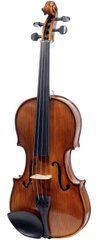
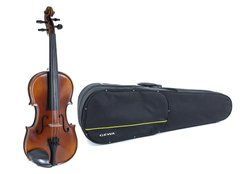
At SoundsGood, you can compare full size violins and outfits. A first purchase calls for a clear accessory list and guidance from a teacher; a replacement should address something identifiable that the current instrument lacks. This guide helps define those criteria, assess candidates and plan the complete setup without relying on vague promises of professional sound in every situation.
How to choose a full-size violin
Full size does not guarantee a universal fit
Even an adult player benefits from trying the instrument before buying. Body proportions, left hand comfort, shoulder position and the support arrangement all matter. Avoid compensating for an unsuitable fit by gripping harder. If 4/4 feels uncomfortable, discuss posture, accessories or another size with a teacher. A smaller option can be compared in the 3/4 violin category.
When moving from a smaller instrument, assess familiar playing movements as well as the ability to hold the body. Try string crossings, finger placement and a short passage. Make the final decision with the teacher's input after this check. Age, school year or the difficulty of the next piece does not by itself establish readiness for a full size violin.
Three different reasons for buying a 4/4 violin
For a first instrument, identify the basic tasks: regular lessons, practice between lessons and convenient transport. The priority is a usable complete setup and a clear preparation routine. Decorative details or a long list of materials cannot replace checks of the fittings, support and supplied accessories. If you have no previous experience, ask the teacher to help create a short essentials list.
When moving from 3/4, the main concerns are the new fit and accessory compatibility. When replacing one full size violin with another, describe the improvement you need: response, dynamic control, comfort in particular repertoire or mechanical reliability. If a problem appeared suddenly, have the existing instrument inspected first. Worn strings or a setup issue do not necessarily call for a new violin.
Acoustic or electric?
Size and sound production are separate characteristics. The 4/4 category may include both acoustic and electric models. An acoustic violin is assessed through its sound and response in the room; an electric instrument also needs assessment through the intended connection system. Decide whether the priority is ordinary lessons, amplified performance, recording or headphone practice. A single setup may not serve every task equally well.
Explore the electric violin category for stage connections and specific electronic features. A pickup does not automatically provide a headphone output. An acoustic instrument can also be amplified through suitable methods when that meets the requirement. Discuss expectations with the teacher or sound engineer before buying so that the equipment list is understood in advance.
Reading a specification carefully
Compare the top, back, ribs, fingerboard, pegs, tailpiece and fitted strings as separate items. Wood names identify materials but cannot fully predict how an individual instrument will sound. Assembly and playing setup need their own assessment. Distinguish a general series description from the exact article and package being ordered; a similar name does not guarantee identical fittings.
For example, the official Yamaha V3SKA specification lists a spruce top, maple back and ribs, and an ebony fingerboard. These provide verifiable comparison points. Another violin with a similar material list will not necessarily have the same playing feel or tone, so the specification should support a trial rather than replace it.
Catalogue series and outfits
Full size options include Yamaha V3SKA and Stentor Student Standard, Student I, Student II, Graduate, Conservatoire and Conservatoire II series. Confirm current availability and exact package contents on each product page. Series names help identify candidates but do not replace a personal comparison. Moving to full size does not in itself require buying the most expensive model available.
The manufacturer's Stentor Conservatoire description identifies Shellax finish, synthetic core strings and an oblong case. Compare such differences with practical needs. If a suitable bow is already owned, investigate separate instrument options; if everything is needed for a first purchase, compare total cost and contents, including any agreed preparation.
A trial before the final decision
Prepare a short trial programme: sustained notes, string crossings, a familiar melody and a task at soft dynamics. Keep conditions consistent between candidates where possible. Listen with the violin under your ear and ask another musician to play it for you. The listener's impression and the performer's experience complement each other; neither should be ignored.
Assess predictable note starts, left hand comfort, response across the strings and peg operation. Avoid deciding from one loud passage. If uncertain, write down specific differences and discuss them with the teacher. Saying that a violin makes a quiet phrase easier to control gives a useful selection criterion, whereas a promise of an instrument for life cannot be verified during the purchase.
Using demonstration videos
A video can show the violin and provide a performance example, but a recording does not replace a personal trial. The player, bow, room, microphone and processing affect the result. Even microphone placement changes the impression. Avoid treating separate recordings as a precise ranking of volume or tone. Use them to prepare questions about the individual model instead.
Ask which version is shown, which strings are installed and whether the demonstrated package matches the current offer. Detailed photographs and a clear preparation description also help with a remote purchase. Consider delivery and inspection arrangements as part of the decision. An impressive performance video cannot establish how comfortable the instrument will feel in your hands.
Bow, strings and supports
Try a bow with the violin, considering control, balance and the intended tasks. A supplied bow does not require automatic replacement. Establish what actually limits the work first. For strings, check size, tension, note and end type rather than choosing only by the reputation of a series. Record the article numbers of useful options.
Choose the shoulder rest and chin rest as parts of the playing position. More adjustments do not guarantee more comfort. Check attachment, protection at contact points and stability during movement. After altering one component, evaluate the result through familiar exercises before changing several other parts of the setup simultaneously.
Planning the complete budget
| Requirement | What to include |
|---|
| First lessons | Violin, bow, rosin, support and preparation |
| Transport | A suitable case with serviceable straps |
| Regular practice | Necessary consumables and care items |
| Amplification | Compatible equipment for the chosen connection method |
Separate immediate essentials from additions that can follow the teacher's assessment. A spare string may be more useful than an unplanned decorative accessory, but it must still be the correct article. An agreed equipment list prevents duplicate purchases and missing items before a lesson. Count existing equipment only when its compatibility has been confirmed.
Storage, care and inspection
Keep the violin in a suitable case, remove rosin dust with an appropriate cloth and follow the bow's instructions. Do not use household chemicals on varnished surfaces or leave the outfit beside a heater. Choose a regular storage place at home so that the instrument does not end up on an unstable chair between exercises.
A new noise, tuning difficulty or unusual string height calls for professional inspection. Altering the bridge or internal parts yourself can complicate diagnosis. For a consultation, describe when the issue appeared, the last string change and recent transport conditions. These observations are more helpful than trying a universal remedy based on someone else's general description of a symptom.
Buying a full size violin from SoundsGood
Confirm the full model name, size, supplied items and agreed preparation. Read current payment and delivery terms and use the store contact page for questions about an instrument. After receipt, check the delivery against the order before making changes. Retain the model reference and fitted string details for future maintenance.