What an active subwoofer simplifies
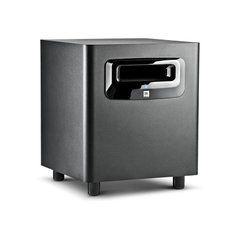
An active subwoofer includes amplification for its own low-frequency driver. A conventional connection requires a line-level audio signal and mains power. This allows compatible powered speakers to be expanded without a separate amplifier rack. However, its internal amplifier does not necessarily power external passive cabinets. Such outputs must be specifically provided, as they are in some complete package systems.
Before buying, identify your existing speakers and signal source. Establish whether the system operates in mono or stereo, which mixer outputs are available and where frequency division will happen. A subwoofer can serve DJs, live rhythm sections and music playback at events. For speech-only work, assess its benefit separately instead of adding unnecessary equipment to the setup.
Inputs, through outputs and filtering for the mains
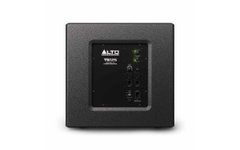
The rear panel may have two input channels and outputs feeding the main speakers. Check the instructions to establish whether inputs are summed, what each output carries and whether filtering is applied to it. THRU often indicates onward signal transmission, but the label alone does not confirm that bass is removed from the feed to the upper cabinets.
Several connection arrangements are possible. The signal may reach the subwoofer first and then the mains, or every component may receive a separate processor output. Available processing determines the choice. If the main speakers have their own subwoofer operating filter, coordinate it with the other settings. Accidentally stacking filters can change the result around the crossover region.
Assessing the bass headroom you need
The internal amplifier's advertised power is not a direct measure of loudness in the room. Compare operating bandwidth, available sound pressure and measurement conditions. Electronic music with deep low notes and an acoustic band at moderate volume may need different capabilities. Listen to material representative of your events rather than relying only on a demonstration track.
A bass-boost or low-extension mode can change the balance between depth and available output. It does not increase every capability without a trade-off. If the limiter frequently works hard, check the source, levels and selected preset. Achieving the intended result may require a different system configuration rather than further bass boosts with an equaliser.
Polarity, delay and crossover frequency
Configure the subwoofer together with the main speakers. A polarity switch changes signal polarity; it is not a universal distance adjustment. Delay and filters perform different functions. Begin with the manufacturer's recommended arrangement, then check the combined result in the relevant listening area. The best position for a switch cannot be established simply from a photograph of the setup.
Compare the same material with and without the subwoofer. Bass should complement the system while preserving rhythmic definition and balance rather than masking the voice. If output becomes weak around the transition region, check integration and geometry before raising the level. Larger venues and mixed components benefit from measurement-assisted setup to support informed adjustments.
Multiple cabinets and directional bass
Two subwoofers do not necessarily produce the same improvement at every audience position. Their signals interact, and the result depends on distances and frequencies. Plan placement around the audience, stage and available access routes. Compare several listening locations rather than only the mix position. Arbitrarily separating cabinets may increase differences between zones.
Where supported, cardioid operation must follow the manufacturer's particular arrangement. It may require identical models, a specified cabinet count, orientation and coordinated settings. A menu option does not mean that one conventional cabinet can independently create any desired directional configuration. Confirm the required system components before ordering and allow sufficient installation space.
Practical details for regular transport
Check weight, dimensions, handles, wheel options and cover availability. Powered subwoofers need access to mains power and ventilation; do not cover the amplifier panel with a transport cover during operation unless the manufacturer permits that use. If a main speaker is mounted above the sub on a pole, match the socket type, load and allowed height. Save the tested preset and label cables to reproduce the working arrangement at the next event. Include the complete setup in your transport plan, allowing for safe lifting, loading and access through the venue's doors.
Bandwidth and required output
Different programme material places different demands on bass reproduction. Compare the low-frequency limit with its measurement tolerance, sound pressure level and operating conditions. A larger driver can reflect different design priorities, so size alone is not a reliable guide.
Crossover integration
Identify which component provides filtering for the subwoofer and main loudspeakers. Check crossover adjustment, available outputs and recommended settings. Level, polarity and timing must be integrated for the individual system.
Placement and transport
Subwoofer position affects bass distribution around the room. Consider available space, cable access and handling, then compare weight, handles, wheels and covers. Use a pole mount only within its rated load and the manufacturer’s supported configuration.
Inputs and controls
Check supported input levels and compatibility with your sources. A line input does not necessarily accept a microphone without a preamplifier. Connector count and a LINK output do not establish separate mixing or independent channels.
Built-in processing and power
DSP, presets and remote control depend on the individual model. Choose features for the application rather than the number of menu options. Check mains power, panel access and cooling requirements in the manual before operation.
Complete budget
Include cables, stands, mounts, cases and power arrangements alongside the main components. Fixed installations may require design, installation and commissioning. Agree on the complete system and expansion needs before buying.
Buy sound equipment at SoundsGood
We can help match sources, channels, speakers, connections and budget. Provide a list of existing devices and describe where the system will operate. Confirm the warranty period and included accessories for each product.
Free delivery applies to online-paid orders from UAH 4,000. Promotional items, promo codes, special-order items and instalment payments are excluded. See the payment and delivery page for full conditions.
SoundsGood supplies sound equipment for educational institutions, studios, concert halls, conference rooms, and public and private organisations. A technical brief can be used to agree on system components, specifications, a commercial quotation, documentation and delivery arrangements.