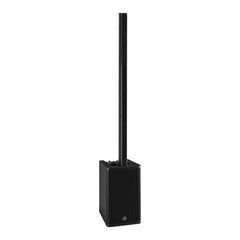
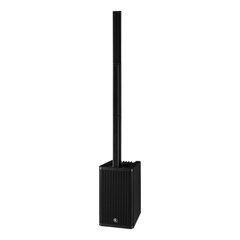
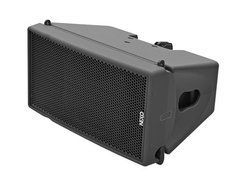
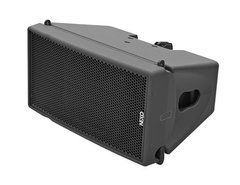
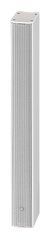
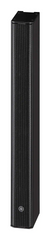
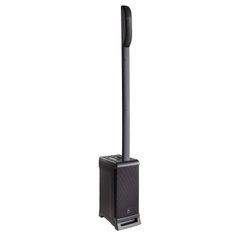
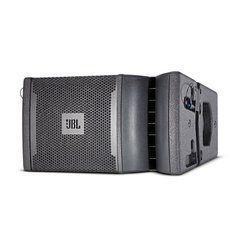
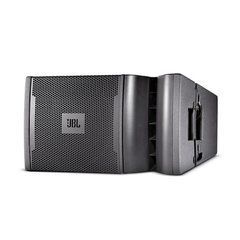
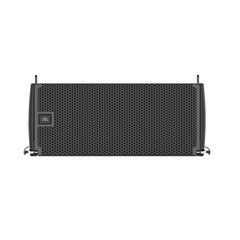
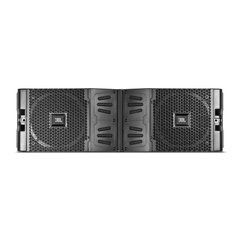
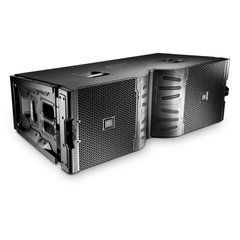
Choose a line array as a complete system
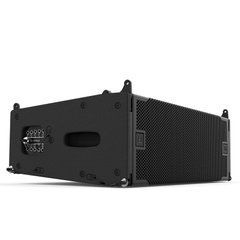
A line array consists of coordinated loudspeaker modules operating together in a defined configuration. Its capabilities depend on element count, geometry, height, processing and amplification. Buying one module is not equivalent to obtaining a complete concert-hall system. Before ordering, establish whether the project needs main arrays, additional coverage zones, subwoofers, system control and mounting accessories.
A rental company may need to assemble different approved configurations for different venues. A fixed venue may prioritise consistent coverage of particular seating areas. These create different requirements for transport, spare modules and installation. A small room does not automatically need an array: compare it with suitable point-source speakers as part of the complete project.
Information needed before selection
Prepare a venue plan showing the width, depth and height of audience areas. Mark the stage, balconies, walkways and available installation positions. Specify programme type separately: speech, theatre, live music or electronic dance material. Attendance is useful information, but it does not determine configuration by itself; the same number of people can occupy very different layouts.
For mobile events, describe several typical venues and the largest anticipated application. This helps establish which components will work regularly and which are needed for expansion. Allow for unloading, assembly and testing time, trained crew numbers and transport capacity. Even a capable system becomes impractical if it cannot be deployed correctly within the available setup period.
Element count, angles and coverage
Adding modules changes more than available output; it also changes the array's acoustic behaviour. Inter-element angles and overall aiming determine where sound is directed. Upper and lower sections may address different audience zones, but the particular solution depends on the system. Do not copy an array curve from another concert photograph or choose its length simply to achieve visual symmetry.
Manufacturers provide prediction software for supported models. It helps compare a configuration with audience geometry and check specified manufacturer limits. JBL Line Array Calculator, for example, provides acoustic prediction and mechanical validation for compatible systems. The model must match the actual deployment; changing height or angles on site requires the project to be checked again.
Amplification, DSP and channel allocation
Powered modules contain amplification, while passive designs need suitable external channels. Both rely on appropriate system settings, including filters, limiters, routing and permitted device counts on each circuit or feed. Do not assume that any amplifier with sufficient total wattage suits any array. Verify manufacturer-recommended components and operating modes.
Plan signal connections and power distribution separately. Establish amplifier or power-feed locations, module numbering and the cables serving each zone. For network control, check compatible interfaces and how system status can be monitored. Clear labelling helps isolate a fault without changing the parameters of the entire package.
Subwoofers and supplementary coverage
The main array does not necessarily cover every seat near the stage, beneath a balcony or off to the side. Such areas may require additional speakers with coordinated level and delay settings. Choose them after assessing coverage rather than simply increasing cabinet count. Transitions between zones should preserve intelligibility without abrupt changes in balance.
The low-frequency section also needs its own plan. Subwoofer quantity, placement and processing depend on programme material and venue geometry. An arbitrary mixture of models can complicate integration. After installation, check the complete system with subwoofers and supplementary coverage operating, using measurements and representative listening material.
Installation and operational readiness
A flown array requires the frames and hardware specified by the manufacturer and professional installation. Permitted loading depends on the actual configuration; do not transfer limits from another series. Ground deployment also has rules governing its base, stability and element count. Acoustic prediction does not replace assessment of the venue's supporting structures by competent professionals.
Before accepting the package, check specifications, cabling, transport provisions, documentation and the availability of required training. Save the final design and settings, and document the actual connections. The operator needs to understand which configurations are approved and which changes require a fresh calculation. This makes the next deployment manageable and supports consistent use of the system's capabilities. Agree in advance who is responsible for design preparation, assembly, inspection and operation throughout the event.
Design for the venue
Prepare floor plans and room sections showing distances, heights and listening areas. These inform module quantity, inter-module angles and system position. Manufacturer-recommended software helps assess acoustic performance and supported configurations.
Modules, amplification and processing
Check compatibility between the individual modules, amplifier channels and system settings. Arrays may be powered or passive, with different cabling, processing and control needs. Use the supported settings for the range rather than combining similar-looking cabinets arbitrarily.
Suspended and ground-supported systems
Use only manufacturer-approved frames, connections and configurations. Qualified professionals must assess mechanical loads, suspension points and installation. Acoustic prediction does not replace assessment of the supporting structure.
The complete sound system
A main array may need subwoofers and additional speakers for near-field or other audience areas. Coordinate signal paths, timing, levels and control across the system. Include rigging, connections, transport and post-installation measurements in the budget.
Complete budget
Include cables, stands, mounts, cases and power arrangements alongside the main components. Fixed installations may require design, installation and commissioning. Agree on the complete system and expansion needs before buying.
SoundsGood supplies sound equipment for educational institutions, studios, concert halls, conference rooms, and public and private organisations. A technical brief can be used to agree on system components, specifications, a commercial quotation, documentation and delivery arrangements.