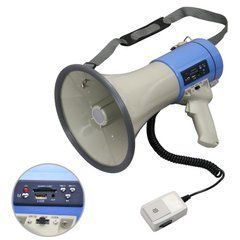
When a portable megaphone is appropriate
A megaphone supports short spoken announcements to a group when work must begin quickly without a separate mixer and installed speakers. It can help organise an outdoor event, sports practice, guided group or people working across a site. Before choosing, define the messages, operating period and whether the operator will move with the listeners.
This format should not automatically be equated with a complete concert or continuous music system. Multiple microphones, even coverage of a large area or fixed control may justify comparing other sound systems. For a megaphone, immediate access to speech, understandable controls and comfortable handling matter. Select for the working routine rather than the largest power figure in the description. Consider how easily the intended user can operate it while carrying other materials or supervising a group.
Intelligibility, direction and actual conditions
The purpose of an announcement is for listeners to understand it correctly. Background noise, wind, obstructions and horn direction affect the result. An advertised range is not identical in a quiet courtyard and on a busy street. Identify the most distant part of the group and any walls, vehicles or other obstructions between it and the operator.
Check clarity from the listeners' positions rather than only judging loudness beside the device. Changing direction can leave some people hearing less clearly. First establish a useful position and sufficient level instead of immediately turning the output to maximum. Short phrases with pauses can be more effective than rapid continuous speech. Prepare a clear sequence of actions for important messages so the wording remains easy to follow and repeat.
Built-in and hand-held microphones
The microphone arrangement affects convenience in different situations. A microphone in the body involves holding the device near the operator, while a cable-connected hand microphone permits a different layout. Check speech activation, level adjustment and whether controls remain practical while moving or reading a message.
Use the microphone as instructed for the selected model, maintaining a reasonably consistent distance and clear diction. Shouting does not necessarily improve intelligibility and may overload the signal path. Do not direct the horn towards the microphone or close to a person's ear. If feedback occurs, lower the level and change relative positions. Before the event, allow the operator to practise with the actual text rather than an unrelated test phrase. This reveals handling difficulties before announcements are needed.
Recorded messages, media and signalling modes
A prepared recording helps repeat a message consistently. For USB or SD playback, check media compatibility, file format and playback sequence in the instructions. Such a socket does not imply arbitrary computer-interface functions or phone charging. Confirm the required operation for the exact device.
Keep only the necessary material on the working medium in an understandable order. Check the recording's start, level and stop control. For a short built-in recorder, separately confirm permitted duration and whether the message is retained after switching off. A siren is a signalling mode rather than a replacement for spoken explanation. Agree when it should be used and what announcement follows so people understand the intended action. Make sure the operator can distinguish the relevant controls without searching during use.
Power, carrying and a full working day
Confirm the supported power arrangements and included accessories. A rechargeable pack, replaceable batteries and an external input may need different items. Do not choose an adapter merely because its plug fits; the specified electrical parameters and polarity matter. Charge a rechargeable battery by the manufacturer's method and establish readiness before departure.
Plan endurance around volume, pauses, modes and power-source condition. Required reserve depends on the real schedule rather than only the length of an announcement. Check ready-to-use weight, handle, strap and carrying comfort. For outdoor work, verify permitted environmental conditions separately: portability does not automatically establish rain protection or suitability for unattended outdoor storage. Include transport and waiting time when planning the day, particularly if charging will not be available at the venue.
Message preparation and checks before departure
Begin with the essential information: who is being addressed, what they should do and where. Avoid long complex sentences or several unrelated commands without pauses. Use consistent wording for repeated messages. Where several operators are involved, agree how the device is handed over so announcements do not compete with one another.
Before departure, test the microphone, level control, charge, recordings and package contents. At the site, make a short check with a helper in the audience area. Ensure the operator can stop playback quickly and return to live speech. Store the equipment as instructed after use and inspect cable and connector condition. This sequence helps reveal problems before the next event instead of during the first announcement.
For selection assistance, state audience size, site type, approximate distances, trip duration and whether recorded messages are required. If conditions vary, describe the most demanding routine scenario. Compare complete packages with the necessary power arrangements and accessories. Practical handling and demonstrated intelligibility matter more than features that will not be used in the actual task. A successful choice should make routine announcements easier for both the operator and the people listening.
SoundsGood supplies sound equipment for educational institutions, studios, concert halls, conference rooms, and public and private organisations. A technical brief can be used to agree on system components, specifications, a commercial quotation, documentation and delivery arrangements.