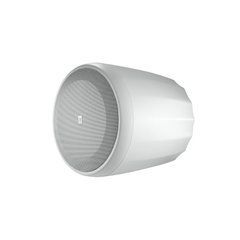
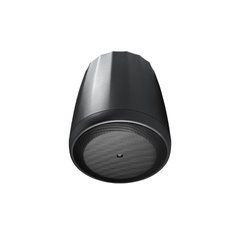
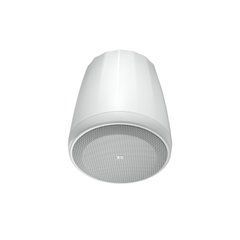
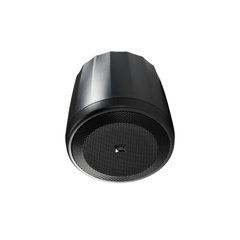
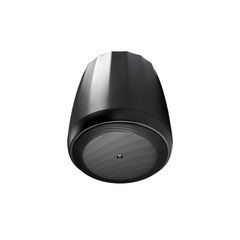
Where pendant speakers provide a practical advantage
Pendant installation speakers hang below the building structure using the suspension arrangement specified by their manufacturer. They suit open-ceiling shops, restaurants, atriums and venues without a continuous finished ceiling for recessed speakers. The format allows the sound source height to be coordinated with the listening area while leaving building services exposed. Resemblance to a decorative light fitting does not mean that the installation requirements are identical.
Define the application before selecting cabinet size. Retail background music, clear announcements and a more prominent music programme in an event area require different capabilities. A pendant shape does not guarantee sufficient bass or intelligible speech in a noisy room. Consider operating level, programme sources, visitor numbers and the acoustic properties of the space, rather than choosing only by finish and enclosure diameter.
Suspension height and coverage angle
The speaker’s position relative to listeners and its directivity jointly determine coverage. A narrower pattern may suit a high position or a specific area, while a wider pattern can work with another layout and a shorter listening distance. Compare the specifications of individual models: two similar-looking pendants can have different coverage patterns. Overall building height is not the same as the distance from the loudspeaker to the listening plane.
Choose spacing and quantity for the required consistency. Check positions directly below speakers, between adjacent units and around the edges of the zone. Lowering an enclosure changes its coverage, so do not adjust its height solely to align visually with light fittings. In a difficult room, a preliminary coverage plan helps avoid excessively loud positions beside areas where announcements are unclear.
Music, speech and the acoustics of an open room
An exposed ceiling does not eliminate reflections: glass, concrete, walls and flooring all influence the result. If a space has strong reverberation, more amplifier power will not necessarily improve announcement intelligibility. Coordinate directivity, loudspeaker locations and level settings with the room’s acoustic behaviour. For important speech applications, evaluate the result at the listeners’ positions rather than only close to the source.
For music, establish the required low-frequency extension as well. A compact pendant may be sufficient for background use, while another application may need a subwoofer or speakers with greater capability. Adding a subwoofer still requires level and crossover integration. During evaluation, use familiar vocal and instrumental recordings alongside the material that the venue will actually play in everyday operation.
Amplification, distributed lines and zoning
Pendant construction describes the mounting format, not the electrical arrangement. A model may support low-impedance operation, a distributed line or both; verify the exact variant. For a distributed system, account for each loudspeaker’s transformer tap, the combined branch load and amplifier capability. Changing suspension height does not change the permitted electrical connections, while adding more speakers requires the load to be reassessed.
Zoning helps manage entrances, the main room and separate activity areas according to their use. Establish which announcements must reach every area and where music should operate independently. If pendant, wall-mounted and recessed speakers are combined, check the balance between them. Identical transformer tap ratings do not guarantee identical perceived loudness at different distances and in different acoustic conditions.
Suspension, cables and building services
Use the manufacturer’s specified suspension components and mounting arrangement, with the supporting structure assessed by the responsible qualified installer. Do not treat an ordinary speaker cable as a load-bearing suspension unless the documentation explicitly specifies a combined system designed for that purpose. Confirm the primary and secondary retention provisions for the particular model. A supplied accessory kit does not automatically establish the strength of the chosen attachment point in the building.
Coordinate positions with ventilation, lighting, fire-protection equipment and maintenance routes. Preserve access to connections and a practical means of removing equipment for service. Decorative cable treatment should not prevent inspection of the specified suspension hardware. For humid locations or other demanding environments, check the product’s relevant ratings; a closed pendant enclosure is not automatically suitable for outdoor use.
Commissioning and information to prepare for selection
After installation, check coverage at visitor positions, correct zone operation, the balance of music and speech and the absence of unwanted vibration. Evaluate quiet and normal operating levels rather than relying on a brief maximum-volume demonstration. Record models, transformer settings, mounting heights and suspension accessories. This helps preserve the result after refurbishment, furniture changes or later expansion of the sound system.
When selecting pendant speakers with SoundsGood, prepare a room plan, structural and proposed loudspeaker heights, listening positions and amplifier details. Photographs of the exposed structure and a description of music and speech requirements are useful. Where installation is already designed, include suspension and cable-route specifications. These provide a basis for discussing compatibility, coverage, maintenance and appearance together instead of choosing solely by the shape of the enclosure.
Height and even coverage
The number of pendant speakers depends on their coverage pattern, height above listeners and room geometry. One high-powered speaker does not necessarily replace several properly positioned units. Speech calls for intelligibility, while music also benefits from consistent tonal balance across the listening area.
Full-range loudspeaker or subwoofer
Similar-looking pendant enclosures can serve different purposes. Full-range models reproduce the main signal, while a pendant subwoofer extends low-frequency coverage and must be integrated with the other speakers. Check the frequency range, recommended filtering and connection method.
Connection mode
Some models support both low-impedance operation and distributed 70/100 V lines. For example, the JBL Control 64P/T provides 8-ohm and 70/100 V modes. This example does not establish the same capability for every pendant speaker: confirm the exact version you are considering.
Suspension and mounting hardware
Confirm the supplied hardware, approved suspension points, cable length and secondary-retention requirements. A signal cable must not replace a load-bearing suspension. Qualified installers should carry out overhead installation according to the manufacturer’s instructions and site conditions.
Appearance and operating environment
Compare enclosure size, finish, cable visibility and service access. An open ceiling does not imply outdoor suitability: moisture, dust and unheated spaces require a model with documented suitability. After installation, assess levels and coverage in the actual listening zones.
SoundsGood supplies sound equipment for educational institutions, studios, concert halls, conference rooms, and public and private organisations. A technical brief can be used to agree on system components, specifications, a commercial quotation, documentation and delivery arrangements.