


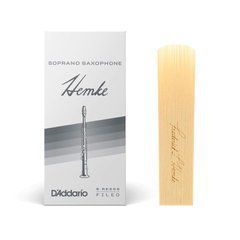

|
Quantity
|
Cost
|
||
|
|
|||
|
|
|||
Soprano saxophone reeds
Soprano Saxophone Reeds — buy from SoundsGood
Natural and synthetic reeds for soprano saxophone: for music school, classical playing, ensemble, jazz, studio and stage. We help confirm mouthpiece, strength, cut, family and pack format.
SoundsGood is an official Vandoren dealer in Ukraine.
Official warrantyFrom the manufacturer or importer
Installment paymentsPrivatBank and monobank
Delivery across UkraineNova Poshta and pickup
Professional selectionFor your level and playing style
The high register needs a precise setup
What is special about soprano saxophone reeds
The soprano saxophone is most commonly in Bb, but reed format is determined by the soprano mouthpiece. Its smaller geometry makes poor fit, excessive pressure and incorrect resistance especially noticeable. Alto, tenor and baritone reeds are not substitutes.
Straight or curved soprano
Body shape does not change reed size when a standard soprano mouthpiece is used. Mouthpiece model and tip opening matter.
Clean attack
In the high register the reed tip must start sound without delay, squeaks or excessive embouchure pressure.
Intonation control
A reed that is too soft or hard can make pitch stability harder. Assess it together with mouthpiece and air support.
Dedicated size
Choose packaging explicitly marked soprano saxophone. Similar appearance does not make other reed sizes compatible.
Match the profile to the task
Classical, jazz and versatile soprano reeds
Classical families often offer a centred tone, piano control and even registers. Jazz families may provide faster attack, more projection and freer articulation. The complete reed-and-mouthpiece pairing determines the result.
Classical and ensemble
Vandoren Traditional, V12, V21, D’Addario Reserve and Grand Concert Select provide different core and resistance profiles.
Jazz and solo
JAVA Green, JAVA Red, V16, Select Jazz, La Voz and Rigotti Gold offer different attack and tonal flexibility.
Studio and pop
Predictable response, microphone stability and intonation control in both soft and bright dynamics are priorities.
Versatile option
Seek enough core for clean playing plus freedom for vibrato, accents and tonal changes without losing stability.
A number is a guide, not a standard
How to choose soprano reed strength
Perceived strength depends on tip opening, facing curve, mouthpiece chamber, embouchure, air support and family profile. Equal Vandoren, D’Addario, Rigotti or Légère numbers do not mean equal resistance. Comparison charts only narrow the test range.
First lessons
A manageable, moderately soft resistance helps sound start without excess pressure. The teacher confirms the exact strength.
Open mouthpiece
Often needs a softer reed, although facing length and player technique can change the expected balance.
Closed mouthpiece
May work with a harder reed for more core when embouchure and air can sustain the resistance.
Changing brands
Compare official charts and test adjacent values. Do not judge a natural family from one piece.
Geometry defines response
Filed, unfiled, tip, heart and blank
Tip, rails, heart, vamp and blank thickness define attack, resistance and tonal core. Filed reeds have bark removed below the vamp shoulder; unfiled reeds retain it. The same term does not guarantee equal behaviour across makers.
Filed cut
Can support quick response and flexible articulation on some mouthpieces. Compare the exact family.
Unfiled cut
Often feels more centred or resistant; the result depends on heart, tip and blank thickness.
Thin tip
May respond quickly but does not define strength alone. Its balance with heart and rails is decisive.
Thick blank
More cane mass can alter core, projection and dynamic range. Assess the complete profile.
Natural character or repeatability
Natural and synthetic soprano saxophone reeds
Natural Arundo donax reeds offer traditional feel and individual tone but respond to humidity and vary between pieces. Synthetic and composite models are chosen for consistency, durability and rapid readiness.
Natural cane
Needs a short break-in, even moistening, rotation and a flat ventilated reed case.
Synthetic reed
Usually sold individually, less climate-sensitive and potentially reliable for stage and travel.
Composite materials
Technologies and scales differ. Do not transfer a natural-reed number automatically to a synthetic model.
Working backup
Even a dedicated cane player benefits from a tested stable reed for a concert, cold stage or quick replacement.
Every range has a distinct character
Vandoren, D’Addario, Rigotti, Gonzalez, Légère and more
Vandoren Traditional, V12, V21, JAVA, V16 and ZZ, D’Addario Reserve, Select Jazz, Rico, Royal, La Voz, Plasticover and Hemke, plus Rigotti, Gonzalez and Légère use different cuts, response and strength scales.
Vandoren Classic
Traditional, V12 and V21 differ in blank, heart, attack and resistance for classical and versatile setups.
Vandoren Jazz
JAVA Green, JAVA Red, V16 and ZZ offer different combinations of brightness, projection, flexibility and tonal core.
D’Addario Woodwinds
Reserve, Select Jazz, Rico, Royal, La Voz, Plasticover, Grand Concert Select and Hemke cover student and professional needs.
Other makers
Rigotti Gold, Gonzalez, MARCA, Légère, Forestone, Fiberreed and boutique makers broaden natural and synthetic options.
A practical sequence before ordering
How to choose a soprano saxophone reed
Start with the exact mouthpiece model, current reed and desired change. Adjust one parameter at a time, test several pieces under stable conditions and rotate working reeds.
1. Identify the mouthpiece
Brand, model, material, tip opening and facing help narrow compatible families and strengths.
2. Record the current setup
Note brand, family and strength that works now plus the desired change in attack, resistance, core or brightness.
3. Define the style
Study, classical, ensemble, jazz, pop or studio changes priorities but never replaces testing on your mouthpiece.
4. Compare adjacent strengths
Test several equally moistened reeds and do not jump multiple strength steps at once.
5. Choose the format
A natural-reed box supports rotation; a synthetic reed is usually purchased individually.
Factors instead of quickly stale sums
What determines soprano reed price
Price reflects cane grade and ageing, cut precision, material selection, family, synthetic technology and pack quantity. Current price, discount, availability and installment options appear on the product card.
Standard box
A practical study and rotation format. Compare reed quantity, exact family and strength.
Premium grading
Additional cane selection and geometry control may reduce variation, although every natural reed still needs testing.
Synthetic model
A higher single-reed cost can be offset by service life, consistency and reduced climate sensitivity.
Single-reed trial
Useful for trying a new family when available. Keep brand, family and strength markings for reordering.
Rotation extends service life
Preparing, storing and replacing reeds
Moisten a natural reed evenly with clean water or according to maker guidance. After playing, remove it from the mouthpiece, clear excess moisture and dry it on a flat ventilated surface. Do not leave it permanently under the ligature.
Short break-in
Introduce a new cane reed through several short sessions without overloading its thin tip on day one.
Reed case
Flat support, ventilation and tip protection matter more than decoration. Do not seal a wet reed airtight.
Rotation
Label and alternate several working reeds. Wear becomes more predictable and the reserve more reliable.
When to replace
Cracks, a wavy edge, loss of spring, unstable attack or persistent intonation problems indicate replacement.
Broad global reference
Soprano saxophone reed brands and families
This broad reference includes international natural and synthetic reed makers, known families and setup specialists. It is not absolutely exhaustive; not every brand or profile is made in soprano size. Listing does not imply permanent SoundsGood stock of every item.
Natural-cane reed makers
VandorenD’Addario WoodwindsRicoRigottiGonzalez ReedsMARCASteuerAW ReedsAlexander ReedsPilgerstorferLeuthnerPisoniGlotinOlivieriPrestiniDonatiLupifaroRoberto’s WindsBoston Sax ShopWoodwind Company
Classical and jazz reed families
Vandoren TraditionalVandoren V12Vandoren V21Vandoren V16Vandoren JAVA GreenVandoren JAVA RedVandoren ZZJUNO by VandorenD’Addario ReserveD’Addario Select JazzD’Addario RicoD’Addario RoyalD’Addario La VozD’Addario PlasticoverD’Addario Grand Concert SelectFrederick L. HemkeRigotti Gold JAZZRigotti Gold CLASSICGonzalez ClassicGonzalez Local Jazz
Synthetic and composite reeds
LégèreVandoren VK1D’Addario VENNForestoneHarry Hartmann’s FiberreedFibracellSilverstein ALTABari WoodwindBravo ReedsCarbonissimoLégère American CutLégère French CutLégère SignatureLégère ClassicLégère European CutForestone Black BambooForestone HinokiForestone White BambooFiberreed Natural ClassicFiberreed Carbon Onyx
Boutique, jazz and setup specialists
Boston Sax Shop Blue LabelBoston Sax Shop Black LabelBoston Sax Shop Silver LabelBoston Sax Shop Red LabelRW ReedsRoberto’s Winds JazzMARCA UNIC ClassicMARCA UNIC EliteMARCA UNIC JazzMARCA UNIC StudioMARCA American VintageMARCA ExcelMARCA Jazz FiledMARCA Jazz UnfiledMARCA PremiumMARCA PriMoMARCA R57MARCA SuperiorIshimori Wood StoneReedGeek
For institutions and organisations
Soprano reeds for tenders and institutions
SoundsGood supplies music schools, colleges, academies, orchestras, theatres and other organisations. Direct-contract and Prozorro specifications can define brand or equivalent, family, strength, material, pack quantity, documents and timing.
Technical specification
Soprano saxophone, brand or acceptable equivalent, family, strength, material and pack quantity.
Commercial quotation
Current price, discount, quantity, timing, warranty terms and delivery.
Documents
Invoice, contract, delivery notes, technical information and official-supply confirmation when required.
Batch supply
Classes and orchestras organised by family, strength, player count and usage schedule.
The essentials
Frequently asked questions about soprano reeds
Can an alto saxophone reed be used on soprano?
No. These are different sizes. Soprano saxophone reeds require correctly marked packaging.
Which strength should a beginner choose?
It depends on mouthpiece and teacher recommendation. Moderately soft resistance is common at first, but no number is universal.
Are Vandoren and D’Addario strengths equal?
No. Family geometry and scales differ. Comparison charts help, but final choice requires testing.
How does JAVA Red differ from JAVA Green?
They are different Vandoren profiles with distinct attack, resistance and tonal core. The result depends on the mouthpiece.
Should I buy a synthetic reed?
Yes when consistency, service life or a reliable stage and travel backup matters. Test its tone on your setup.
How can a school place an order?
Provide families, strengths, pack quantities and document requirements so the store can prepare a specification and quotation.
SoundsGood
Buy soprano saxophone reeds with professional matching
Provide mouthpiece model, current reed family and strength, player level and desired response. A specialist can compare compatible options, pack format, payment and delivery.
+380 (73) 060-01-01