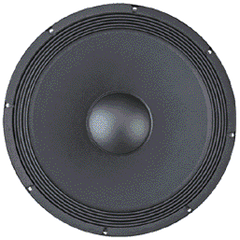
Repairing an existing system or building a new one
An HL Audio low-frequency driver is a separate component rather than a complete loudspeaker. It needs an appropriate enclosure, amplification and the filtering required by the design. Before ordering, establish whether the task is restoring a factory system or developing a new one. Restoration prioritises a confirmed replacement; a new design needs calculation data and subsequent prototype testing.
This category includes PA120052156B and PA150075170B. Full identification matters, so do not shorten it to the brand and approximate diameter. When requesting selection assistance, provide the cabinet model, intended use and existing amplifier. Include previous replacement details if the system has been repaired. This allows the actual construction to be assessed instead of assuming the original factory configuration remains inside.
Mechanical compatibility involves more than diameter
Measure the baffle opening, outside basket dimensions, fixing-hole arrangement and available depth. Check clearance for the magnetic assembly, terminals and wiring. A driver may enter the cut-out yet conflict with an internal amplifier, brace or another component. Account for baffle thickness and the intended clamping arrangement as well.
The basket-to-cabinet seal should suit the enclosure design. Unintended gaps, misalignment or inappropriate basket loading can affect results. Altering the opening is not a trivial detail where the goal is a standard repair. Confirm suitability first if the dimensions do not match. Photographs from several angles and measurements referenced to clear points are more useful than only a general cabinet photograph. Include enough information to identify internal clearance restrictions before the replacement arrives.
Impedance, sensitivity and frequency-section balance
Match nominal impedance to the amplifier and loudspeaker circuit. A different load can change passive-filter behaviour and electronics requirements. DC resistance measured with a multimeter is not identical to nominal impedance, so one reading does not replace a component specification. A difference between those two numbers alone is not proof of a fault.
Sensitivity affects the balance between the low-frequency and other sections for a given input. A replacement that sounds louder in one band is not necessarily an improvement to the complete system. Check its operating range and integration with the existing high-frequency assembly. Channel consistency matters in a stereo pair. Different drivers on each side can alter tonal balance even where both fit mechanically and produce sound. Decide whether restoration of the original pair's behaviour is a requirement before choosing an alternative part.
The enclosure and low-frequency alignment
Bass behaviour depends on the driver's interaction with enclosure volume and construction. A group of parameters, including Thiele–Small data, supports the calculation. One resonance figure or advertised lower frequency does not establish a universal box volume. In a reflex design, port tuning also matters and does not become correct automatically when a different driver is installed.
Do not substitute a neighbouring model's parameters for missing documentation on the selected part. If data is incomplete, obtain clarification or arrange suitable measurements. A new design should include validation of calculations on the finished prototype. Repairs should aim to preserve the manufacturer's intended configuration. Changing one component without evaluating the rest can affect distortion, usable output and crossover-region behaviour as well as bass quantity. Treat the cabinet and driver as an interacting system rather than independent items.
Power handling and the cause of failure
A power-handling rating is meaningful alongside its test conditions and operating mode. Do not compare one product's peak figure with another's continuous rating. More watts in a description do not demonstrate that a part tolerates any signal in any enclosure. Check system settings and the reason the old component failed before replacement.
The driver may not be the only problem: contacts, cables, filters and amplification also need diagnosis. Leaving the original cause unresolved can damage the new component again. In powered cabinets, internal electronics and their settings should be checked through appropriate service work. Do not try to compensate for unexpected noise by increasing volume or applying arbitrary equalisation. First establish whether the cause is electrical, mechanical or related to routing. This distinguishes repair of the symptom from correction of the underlying fault.
Package contents and accepting the repair
Confirm sale quantity, exact part number and any required fixing or sealing items. Include diagnosis and installation in the quotation where needed. Agree the intended outcome: restoring original performance, matching the retained second channel or validating a new design. Clear criteria make the work easier to assess than the general request to make the cabinet sound better.
After installation, test progressively at low level with familiar material. Listen for unwanted vibration, intermittent contacts and channel differences. Then evaluate the agreed operating range and mode. Keep the installed component identification, repair date and changed settings. That record supports future servicing and prevents the actual replacement being confused with the original factory parts list.
For mobile equipment, also test the usual cables and sources before the first event. If compatibility or unexpected noise remains uncertain, return to diagnosis. Music playback alone does not establish that the complete loudspeaker has been correctly restored and is ready for its normal workload. A documented test with the intended signal chain provides a more useful handover than simply confirming that the driver moves.
Buy sound equipment at SoundsGood
We can help match sources, channels, speakers, connections and budget. Provide a list of existing devices and describe where the system will operate. Confirm the warranty period and included accessories for each product.
Free delivery applies to online-paid orders from UAH 4,000. Promotional items, promo codes, special-order items and instalment payments are excluded. See the payment and delivery page for full conditions.
SoundsGood supplies sound equipment for educational institutions, studios, concert halls, conference rooms, and public and private organisations. A technical brief can be used to agree on system components, specifications, a commercial quotation, documentation and delivery arrangements.