




|
Quantity
|
Cost
|
||
|
|
|||
|
|
|||
Lute Thomann Renaissance Lute Deluxe 7C
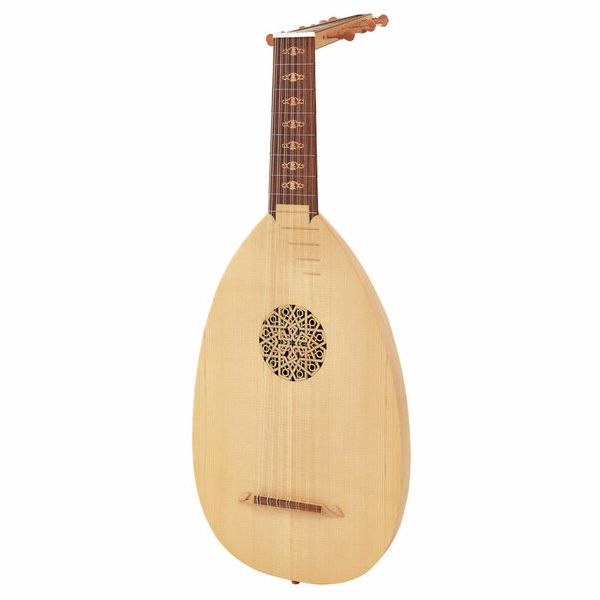
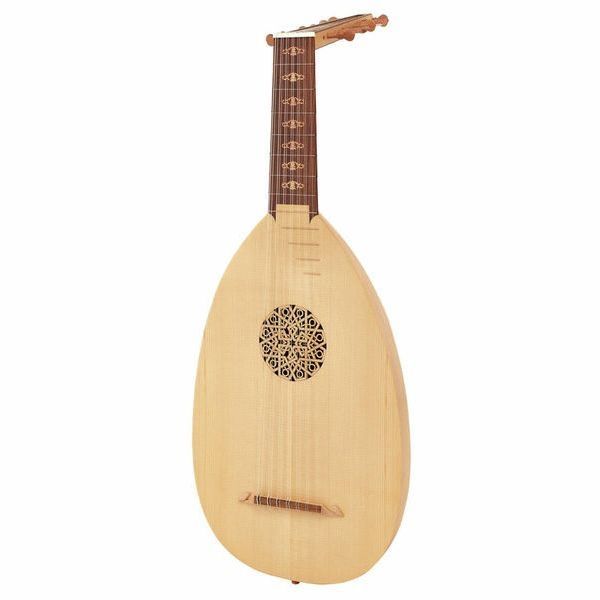
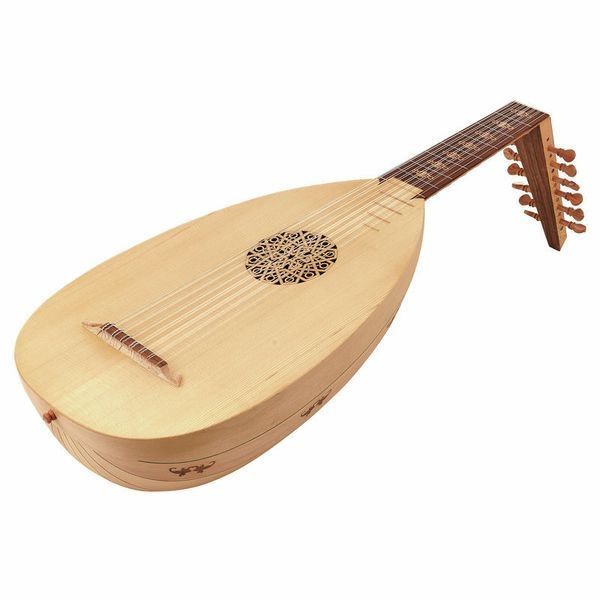
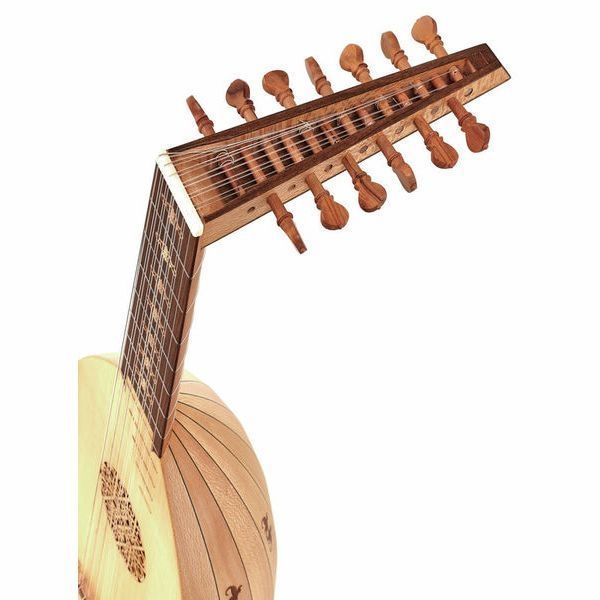
The Thomann Renaissance Lute Deluxe 7C is a renaissance lute with 7 courses, crafted from natural platanus and walnut. The instrument reproduces the authentic sound and appearance of renaissance lutes from the 16th and 17th centuries. It is suitable both for beginners discovering early music for the first time and for experienced players seeking a reliable instrument for practice and study.
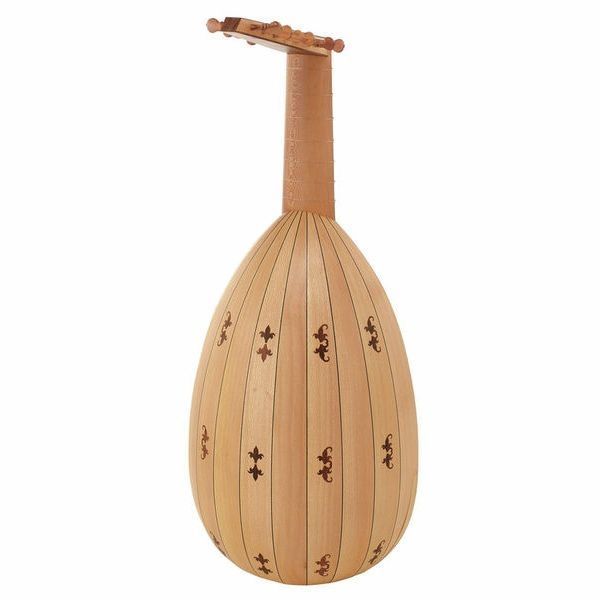
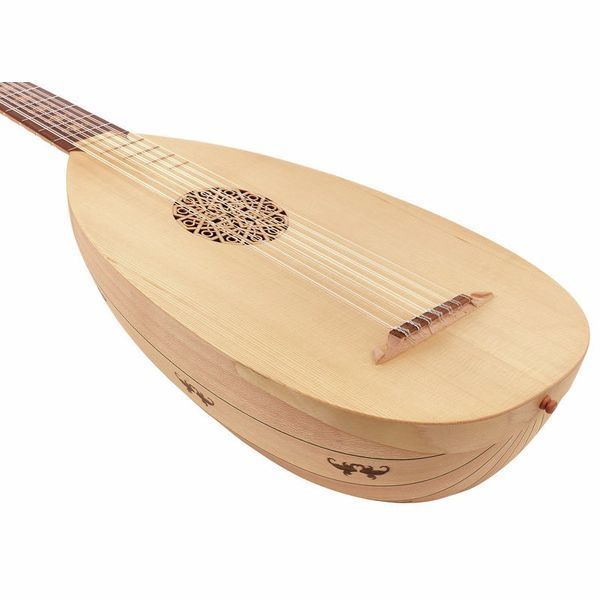
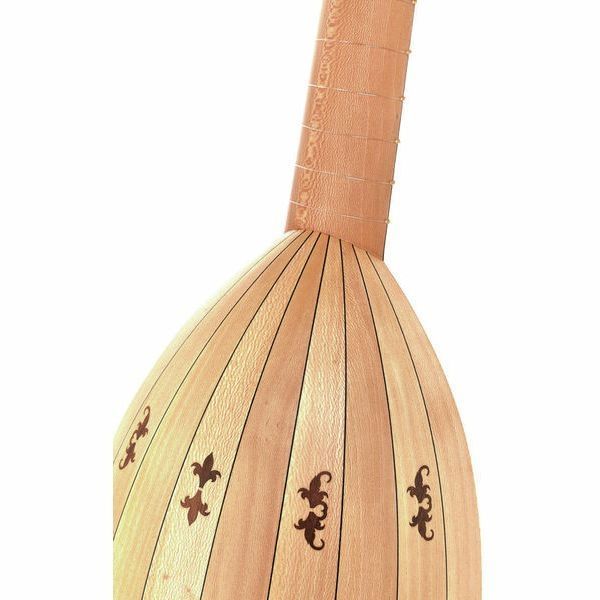
The body is made from platanus, decorated with walnut and platanus inlays. The fingerboard is walnut, the pegs are coconut wood, and the upper nut is made from bone. A soft bag is included.
🎵 Sound Characteristics
- ✔️ Warm, rounded tone — the characteristic sound of a renaissance lute with a platanus body
- ✔️ 7 courses — the standard configuration for Renaissance repertoire
- ✔️ Authentic tuning FF – GG – CC' – FF – AA – D'D' – G'
- ✔️ Natural resonance of platanus — a light, open sound quality
🔧 Materials and Construction
The body and neck of the lute are made from platanus (Platanus) — a lightweight wood with characteristic figuring, traditionally used in the construction of early instruments. The body is decorated with walnut and platanus inlays. The fingerboard is made from walnut with platanus inlays; the upper nut is carved from bone for optimal vibration transfer. The bridge is made from platanus with a walnut veneer. Pegs are turned from coconut wood.
📊 Technical Specifications
| Parameter | Value |
|---|---|
| Brand | Thomann |
| Model | Renaissance Lute Deluxe 7C |
| Type | Renaissance lute |
| Number of courses | 7 |
| Body material | Platanus |
| Neck and pegbox material | Platanus |
| Inlays | Walnut and platanus |
| Fingerboard | Walnut |
| Fingerboard inlays | Platanus |
| Pegs | Coconut wood |
| Upper nut | Bone |
| Bridge | Platanus with walnut veneer |
| Tuning | FF – GG – CC' – FF – AA – D'D' – G' |
| Included | Soft bag |
📊 Tuning of the Thomann Renaissance Lute Deluxe 7C
| Course | Note | Register |
|---|---|---|
| 1 (highest) | G' | High |
| 2 | D'D' | Middle-high |
| 3 | AA | Middle |
| 4 | FF | Middle |
| 5 | CC' | Middle-low (octave course) |
| 6 | GG | Low |
| 7 (lowest) | FF | Low bass |
🎯 Who Is This Instrument For
- ✔️ Beginners in early music — an accessible entry point into the world of the renaissance lute
- ✔️ Students at music schools and early music courses
- ✔️ Enthusiasts of renaissance and baroque music
- ✔️ Musicians seeking an authentic instrument for home practice
- ✔️ Guitarists and lutenists looking to expand their repertoire into early music
🏭 About Thomann
Thomann is one of Europe's largest retailers and manufacturers of musical instruments and equipment. Under the Thomann brand, a wide range of accessible instruments is produced — from guitars to strings and winds, including early instruments in the Renaissance series. Thomann instruments are aimed at beginners and enthusiasts looking for a quality starting point without a major financial investment.
❓ Frequently Asked Questions (FAQ)
What is a "course" on a lute?
A course is one or two strings tuned in unison or an octave apart and played together as a single voice. On a 7-course lute, the first (highest) course is typically a single string, while the rest are double courses. This produces a richer, fuller sound than single strings.
How does a renaissance lute differ from a baroque lute?
A renaissance lute (16th–17th century) typically has 6–8 courses and a straight neck. A baroque lute (17th–18th century) has more courses (usually 11–13) and a distinctively angled, swan-neck pegbox. Tuning and repertoire also differ significantly between the two.
Is this lute suitable for complete beginners?
Yes. The Thomann Renaissance Lute Deluxe 7C is a good choice for beginners. The instrument comes set up in the standard renaissance tuning. To learn, finding a teacher or using specialised lute method books is strongly recommended.
What does the tuning FF – GG – CC' – FF – AA – D'D' – G' mean?
This is the standard renaissance tuning for a 7-course lute, written from the lowest (bass) course to the highest. Capital letters without primes indicate the lower octave of a course; a prime (') marks the higher octave. The vast majority of renaissance lute repertoire is written for this tuning.
Is a bag included?
Yes. The Thomann Renaissance Lute Deluxe 7C comes with a soft bag for storage and transport.
Why are the pegs made from coconut wood?
Coconut wood is a hard, dense material that resists wear and holds peg dope (lubricant) effectively. Lute pegs have no mechanical gearing — the strings are held by friction alone — so the material and surface finish of the peg are critical to achieving stable tuning.
How does platanus differ from walnut as a tonewoood?
Platanus is a lighter, more accessible wood with characteristic mottled figuring. Walnut is denser and darker, with a slightly deeper tonal quality. In lutes the two are often combined: platanus for the body (for its lightness) and walnut for the fingerboard (for its hardness and wear resistance).
🚚 Delivery and Payment
🏪 In-store pickup at SoundsGood Kyiv — free of charge.
🚚 Delivery across Ukraine — Nova Poshta, Ukrposhta, Meest. Free shipping on orders from 4,000 UAH.
💳 Installment plan — from 25 UAH/month (Privatbank, Monobank, OschadPay).
✅ Official manufacturer warranty.
📦 Ships in original manufacturer packaging.