Alto Horn and Euphonium —
two brothers of Adolphe Sax
The euphonium — "the cello of the brass." The alto horn — rare but irreplaceable in wind orchestras. Both descended from the saxhorns of 1843–1855, and both deserve recognition.
🔗 Table of Contents
From Adolphe Sax to Two Brothers
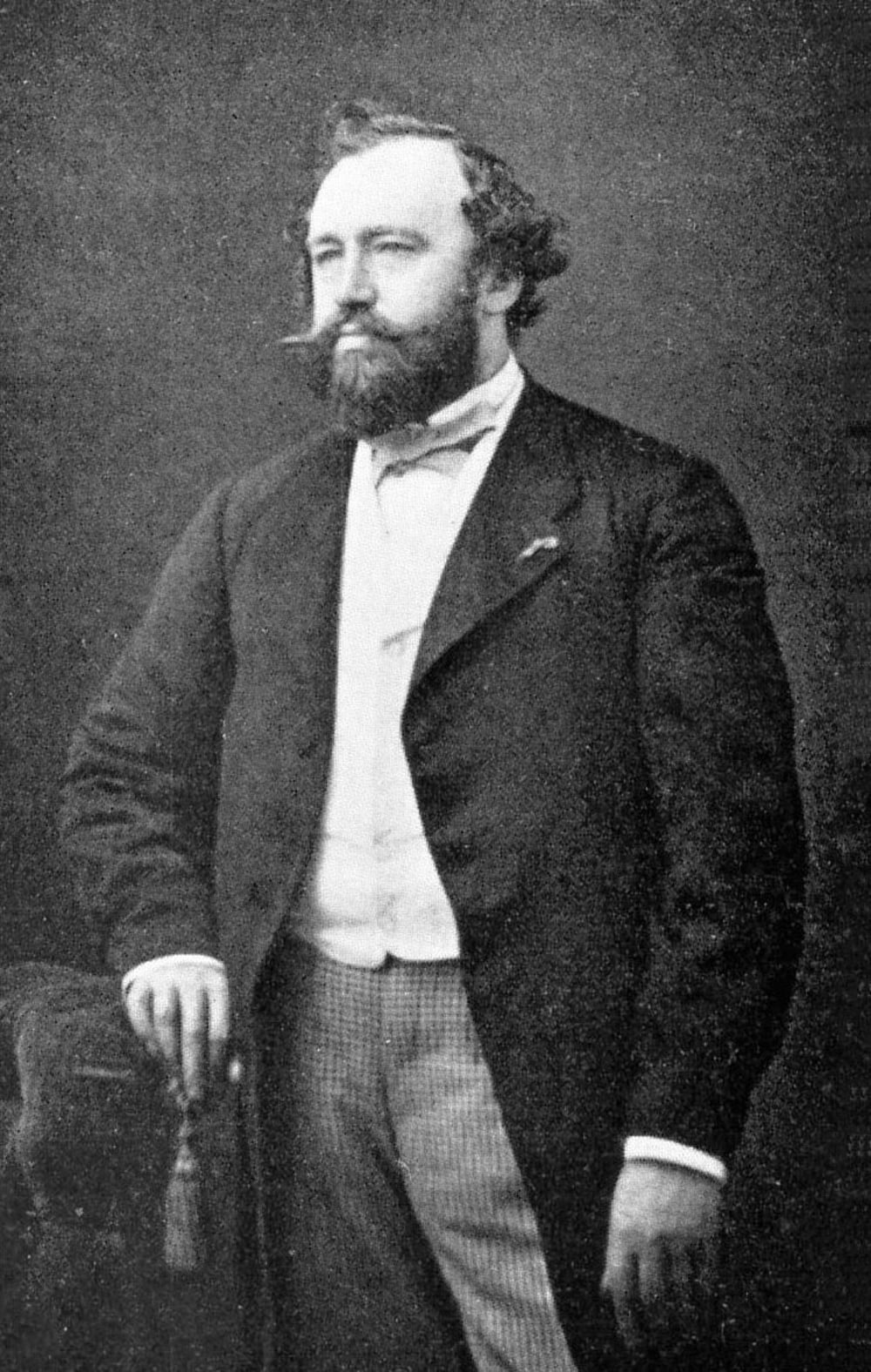
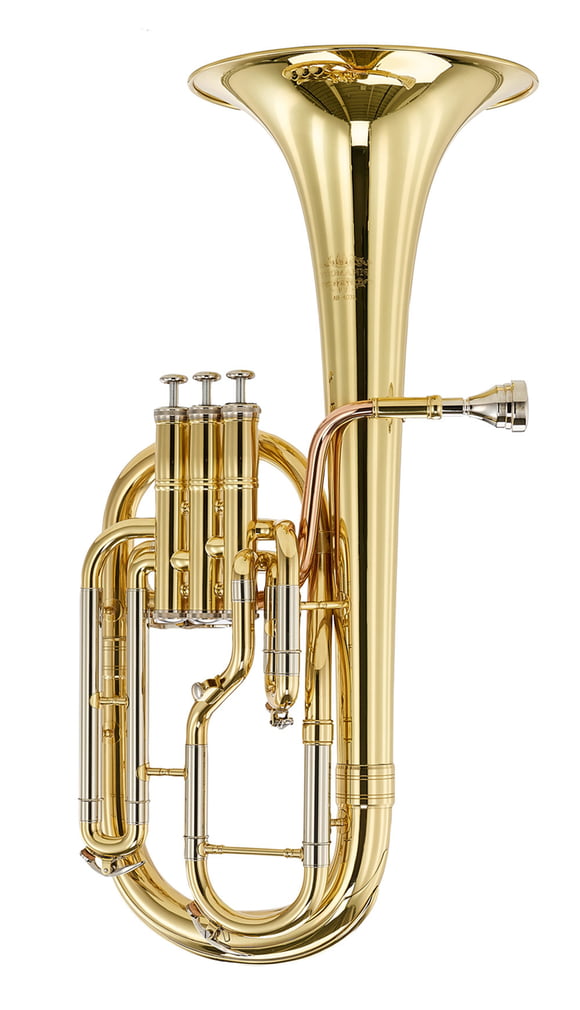
Both the alto horn and the euphonium trace their roots to Adolphe Sax — the very same Sax who invented the saxophone. Between 1843 and 1855 he developed a complete family of brass instruments known as saxhorns, in seven pitches from sopranino (Eb) to subcontrabass (Bb). The alto horn is a member of this family.
The Distin family played a decisive role in bringing the saxhorns to the world. John Distin had already been performing with his "family band" in the early 19th century, effectively inventing the brass band single-handedly. After meeting Adolphe Sax, the Distin quintet became the first saxhorn ensemble — giving a powerful impulse to the brass band genre as a whole.
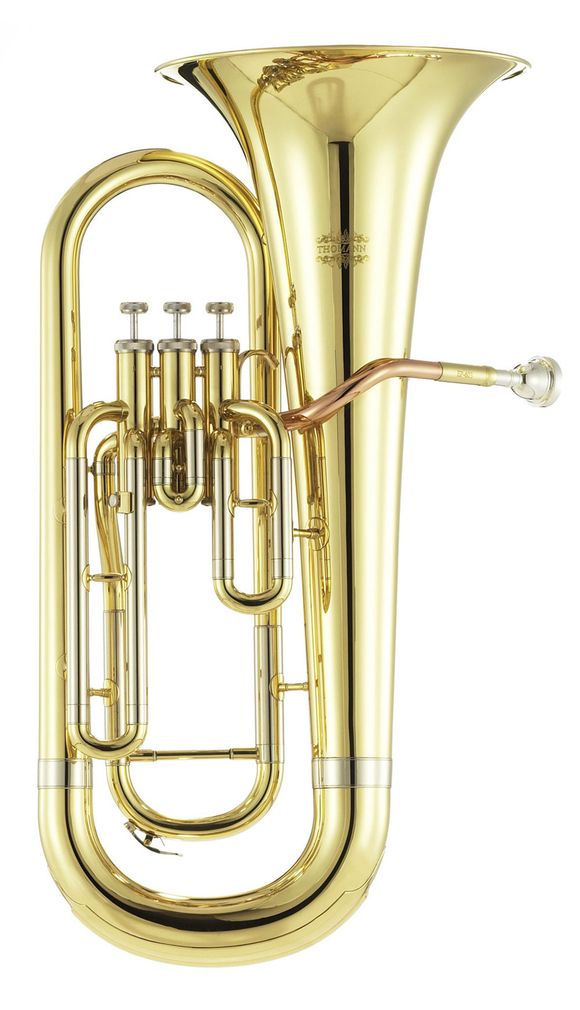
The euphonium was originally called "corno basso cromatico". It was renamed for its beautiful, gentle tone — the Greek word "euphonium" means "of excellent sound." This is why the euphonium is frequently described as "the cello of the brass."
Construction and Differences
| Feature | Alto Horn | Euphonium |
|---|---|---|
| Pitch | Eb (between trumpet and euphonium) | Bb (octave below trumpet, above tuba) |
| Bore | ~11 mm | 15–16.2 mm (model dependent) |
| Bell diameter | ~18 cm — pointing upward | ~28 cm — pointing upward |
| Valves | Always 3 Périnet | 3 or 4 Périnet (compensating) |
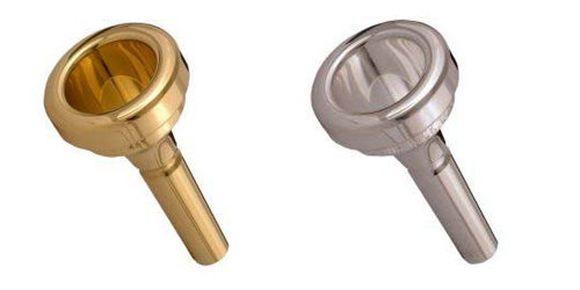
| Mouthpiece | Cup-shaped | Cup-shaped — check shank size! |
Important re mouthpieces: The alto horn and euphonium require different mouthpieces — they are not interchangeable. The euphonium shank, like the trombone, comes in three sizes (German, American, Yamaha). Always verify compatibility before buying a mouthpiece.
Both instruments use Périnet (piston) valves, unlike tenor and baritone horns which typically feature rotary valves. The alto horn always has 3 valves. The euphonium may have 3 or 4 — the fourth compensating valve markedly improves intonation in the lower register.
Applications
Alto Horn (Eb)
Plays in wind and marching bands between the trumpets and euphoniums. Rarely featured in concert solo settings but indispensable in its orchestral niche. Particularly common in Central European wind orchestras.
Euphonium (Bb)
"The cello of the brass" — expressive, full tone and wide dynamic range. A fixture of British and Irish brass bands, wind orchestras and symphonic ensembles. Has a strong and growing solo tradition.
In Common
Both have an upward-pointing bell. Both use cup-shaped mouthpieces. Both feature Périnet valves. Both fit naturally into wind ensembles of all kinds.
Key Differences
The euphonium is larger, lower and has a wider bore — richer, fuller sound. The alto horn is more compact and higher in pitch. The choice depends on the repertoire and ensemble.
Materials
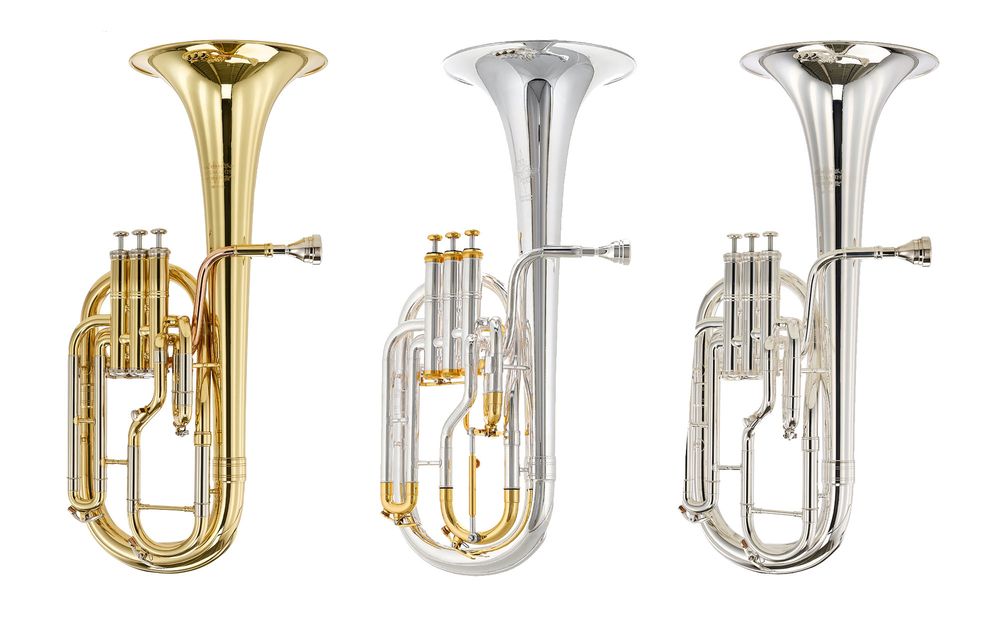
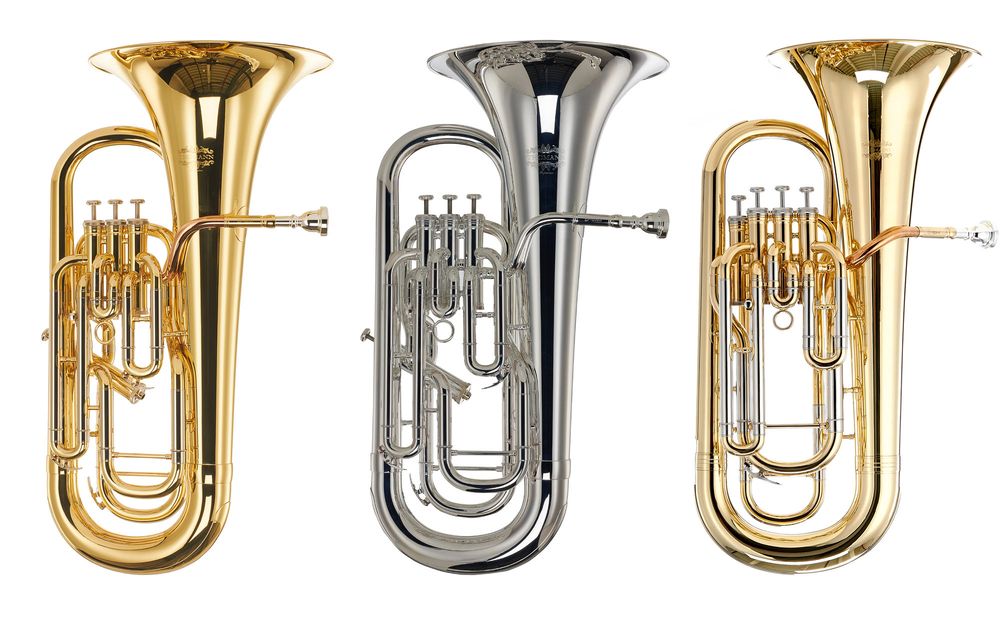
| Material | Characteristics |
|---|---|
| Lacquered brass | The standard. Bright, clear tone. Affordable. |
| Silver-plated | Softer feel. Slightly warmer tone. More distinguished appearance. |
| Gold brass | 85% Cu, 15% Zn. Warm, mellow tone; more corrosion-resistant. Euphonium only. |
Tip: The euphonium offers a far wider choice of models and materials than the alto horn. If you plan to develop as a player, the euphonium provides considerably more room to grow.
Accessories
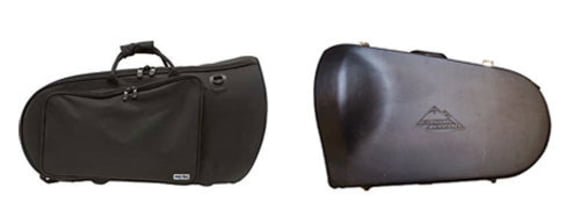
- Case or gig bag — essential for transport. A backpack gig bag distributes the weight evenly
- Separate mouthpiece pouch — if the case has no dedicated mouthpiece compartment
- Stand — at home or during a short break. Prevents the instrument from falling
- Sweat protectors — keep aggressive perspiration off the lacquer and improve grip
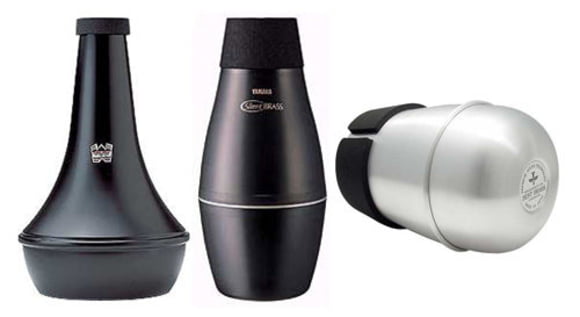
- Mute — for quiet practice or to achieve a specific tonal colour
Care
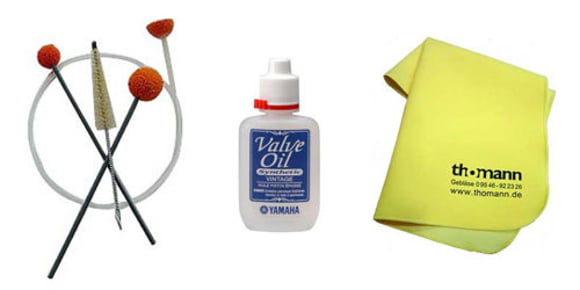
- Clean the mouthpiece after every session — with a mouthpiece brush and snake brush
- Apply valve oil to the pistons before every playing session
- Lubricate the tuning slides with dedicated slide grease
- After playing, drain condensation through the water keys
- Once a month, flush the bore with warm water to remove acidic residue
- Polish the exterior with a soft polishing cloth — perspiration attacks the lacquer finish
- Store in a case or sturdy gig bag
Can I use a trombone mouthpiece on a euphonium?
Partly — the cup sizes are similar, but shank sizes differ (German/American/Yamaha). Always verify compatibility with your specific instrument.
How many valves does a euphonium need?
Three valves are perfectly adequate for beginners. A compensating 4th valve markedly improves intonation in the lower register — recommended for advanced players and those performing classical music.
What is the difference between a euphonium and a baritone horn?
The euphonium has a wider bore and a larger bell — a darker, fuller sound. The baritone horn is narrower and brighter. The distinction is clear in British tradition; elsewhere the terms are sometimes used interchangeably.
From what age can you start on the euphonium?
The euphonium is a natural progression for trombone or baritone horn players. For children, typically from age 10–12. The front-action valve layout makes the instrument relatively comfortable to hold and operate.
🏆 Why Choose SoundsGood
Official Distributor
Direct supply from leading manufacturers
Manufacturer Warranty
Only genuine products with full documentation
Delivery Across Ukraine
Nova Poshta, Ukrposhta or transport companies
Flexible Payment
Cash, bank transfer, instalments, invoicing
Prozorro Tenders
Supply to music schools and orchestras
Wind Instrument Service
Repair and maintenance of wind instruments
Expert Advice
We help you choose the right alto horn or euphonium
100% Original
Yamaha, Besson, Thomann — genuine products only
📞 Order or Get a Consultation
📍 Showroom
15 Olzhycha St., Kyiv
Metro: Dorohozhychi
🕐 Hours
Mon–Fri: 11:00–18:00
Sat–Sun: closed