



|
Quantity
|
Cost
|
||
|
|
|||
|
|
|||
Care for the cork joints of clarinet, saxophone, oboe and bassoon
Cork Grease for Woodwind Instruments — Buy at SoundsGood
Cork grease reduces friction when assembling a woodwind instrument, helps prevent excessive twisting and protects sound cork from drying and premature wear. SoundsGood offers products by La Tromba, Vandoren, BG France and D’Addario in compact sticks and tubes. Select grease according to the instrument maker’s guidance, cork type, consistency and conditions of use.
Official warrantyFrom the manufacturer or importer
Installment paymentsPrivatBank and monobank
Delivery across UkraineNova Poshta and store pickup
Professional matchingFor your level and playing style
Cork grease formats available to buy
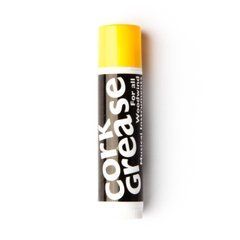
Stick
A compact format for controlled application without touching the product. Easy to keep in a case and use before rehearsal.
Tube
Dispenses a small amount that can be spread evenly over clean cork. Close the cap firmly after use.
Jar
Practical for a workshop, classroom or regular maintenance. Apply with a clean finger or separate applicator to avoid contaminating the contents.
Soft consistency
Spreads easily in a thin layer, including in a cool or dry room. Always check composition and temperature guidance on the label.
Firm consistency
Makes the quantity easier to control and resists running, but excess still must be removed. Do not use grease to compensate for damaged cork.
Institution packs
Several units are useful for a music school, orchestra or classroom. Match quantity and format to the instrument inventory.
Which woodwinds use cork grease
E♭, Bb and A clarinet; bass clarinet
Apply a very thin layer to clean joint corks. Assemble sections without pressure on keys or sudden sideways movement.
Soprano, alto, tenor and baritone saxophone
Grease is used mainly on the neck cork that receives the mouthpiece. It is not intended for the metal neck-to-body joint.
Oboe and cor anglais
Suitability depends on the corked joints of the particular instrument. Apply the minimum amount and keep it out of the bore and mechanism.
Bassoon and contrabassoon
Use only on corked joints where permitted by the maker. Thread wrapping or another joint seal requires different care.
Recorder and other winds
The product may be suitable for maker-specified cork joints. Instrument material and the technician’s guidance take priority.
New and professionally replaced cork
New cork still requires correct fitting. If the joint is excessively tight or loose, grease is not a substitute for workshop adjustment.
How to choose cork grease
The essential criteria are an explicit woodwind purpose, compatibility with the cork and materials of the specific model, a convenient package and controlled application.
Intended use
The package should say cork grease or specify cork joints on wind instruments. Do not use a generic household lubricant.
Compatibility
Check both instrument and product instructions. Natural and synthetic cork, wood, ABS, lacquer and metal may have different restrictions.
Consistency
A soft product spreads faster; a firmer one offers more control. Either way, only a thin, even film is needed.
Package
A stick is convenient in the case, a tube provides dosing, and a jar suits a classroom or workshop. Choose a package that stays clean and closed.
Storage
Do not leave the product beside a radiator, in direct sun or in a car. Follow the maker’s temperature limits and expiry guidance.
Order quantity
A compact pack suits one player; an institution should calculate units for its instrument count and individual hygiene policy.
Quick format comparison
| Format | Best for | Advantage | Remember |
|---|---|---|---|
| Stick | Player, student | Clean, controlled application | Do not press hard against the cork edge |
| Tube | Player, technician | Easy dosing | Close the cap and avoid squeezing out excess |
| Jar | Classroom, orchestra, workshop | Economical format | Use a clean, separate applicator |
| Multipack | Music school, ensemble | Stock for several instruments | Check quantity, composition and expiry dates |
How to apply cork grease
First remove dust and old excess from the cork with a clean, dry cloth. Apply the smallest amount and spread it into a very thin, even film. Assemble the joint smoothly while holding areas clear of the keys; never load the mechanism. Wipe away product squeezed outside. Reapply according to condition—not a fixed schedule—when clean, sound cork becomes dry and assembly is noticeably harder.
When a technician is needed instead of more grease
Cork grease is not an adhesive, sealant or repair material. It cannot fix cork that is torn, detached, compressed or too thin. If a joint remains tight after minimal application, becomes loose or requires force, stop and have the instrument inspected. Do not use petroleum jelly, lip balm, cooking oil or household grease unless the instrument maker explicitly permits it.
What determines the price
Price depends on brand, formulation and consistency, weight or volume, package format, country of manufacture and unit count. Compare not only pack price but also dosing control, storage requirements and compatibility with your instrument.
Cork grease and woodwind brands
The current category catalogue includes La Tromba, Vandoren, BG France and D’Addario. The broader reference list below covers international care-product, accessory and woodwind brands. Not every company makes cork grease, and the list does not mean every brand is stocked by SoundsGood. Current products, prices and availability appear above on this page.
La TrombaVandorenBG FranceD’Addario WoodwindsRicoYAMAHAHenri SELMER ParisBuffet CramponJupiterHercoSuperslickMusicNomadGEWAHodgeHetmanUltra-Pure OilsRoche-ThomasREKAYanagisawaKeilwerthP. MauriatBackunUebelSchreiberHowarth of LondonMarigauxF. LoréeRigoutatFossatiFox ProductsPüchnerMoosmannAdlerGonzalezMarcaLegereSilverstein WorksIshimoriJodyJazzTheo Wanne
Related categories
Supply for music schools, orchestras and Prozorro tenders
SoundsGood supplies music schools, colleges, orchestras, theatres and public institutions. We can align grease format, quantity, instrument compatibility, warranty documents and technical specifications. Bank-transfer supply and participation in Prozorro procurement are available.
Commercial and public Prozorro tenders→Frequently asked questions
How often should cork grease be applied?
Only when clean, sound cork becomes dry and the joint is harder to assemble. Excess attracts dust and can increase contamination.
Can I use petroleum jelly, lip balm or household grease?
It is not recommended. Their ingredients may be incompatible with cork, adhesive, wood, plastic or finish. Use dedicated cork grease approved for the instrument.
Why is the joint still tight after applying grease?
Wood swelling, a deformed or poorly fitted cork, contamination or a mechanical issue may be responsible. Do not add more product; have a technician inspect the instrument.
Can grease repair loose or detached cork?
No. It is not an adhesive or filler. Worn, compressed, torn or detached cork needs professional replacement or repair.
Does one grease suit clarinet, saxophone, oboe and bassoon?
Many specialist products have broad use, but suitability must be confirmed on the label and in the instructions for the specific instrument.
Can an institution order cork grease in quantity?
Yes. SoundsGood can calculate quantity, prepare a specification and arrange bank-transfer supply or Prozorro procurement.
Need to confirm compatibility?Call +380 (73) 060-01-01