``` ```
```

Professional Guide to Vandoren Tenor Saxophone Reeds
Expert review of all 7 reed series from the world's quality leader. Complete comparison, mouthpiece compatibility matrix, and professional recommendations from an official dealer in Ukraine
Vandoren is not just a brand, it's the world standard of reed quality since 1905. More than 95% of professional saxophonists worldwide choose Vandoren for their most important performances, studio recordings, and international competitions.
For tenor saxophone, the company offers 7 unique reed series, each created for a specific music style, sound type, and player level. From the classic European sound of Traditional to the aggressive rock sound of V16 — each series is the result of decades of research and refinement.
SoundsGood.com.ua is the official Vandoren dealer in Ukraine. We guarantee product authenticity, reed freshness (direct shipments from France every 2 months), and professional consultation from a team of saxophonist musicians.
This guide will help you understand the differences between series, choose the perfect reed for your mouthpiece and playing style, and teach you how to properly care for reeds for maximum longevity.
Vandoren Reed Anatomy: What Makes Them Unique
World-Class Manufacturing Technology
- Hand-selected cane — only the best cane from plantations in the Var region (Provence, France)
- 3-year natural drying — slow aging for perfect stability and resonance
- Precision processing — accuracy to the micron on automated machines under master control
- 100% quality control — every reed undergoes multi-stage inspection before packaging
- Individual packaging — protection from damage and moisture retention
Key Reed Parameters
Heel Thickness — determines overall reed stiffness and sound character. Thick heel gives darker, richer sound; thin gives brighter and lighter.
Cut/File Profile — filed reeds have a V-shaped cut near the tip, providing controlled, dark sound. Unfiled have a flat cut for brighter, more energetic tone.
Strength — marked from 1.5 to 5. Higher number means harder reed. Choice depends on mouthpiece opening, embouchure strength, and desired sound.
Sound Type — Vandoren classifies sound as dark, bright, or balanced. This helps quickly orient yourself in choosing a series for your musical style.
Complete Review of 7 Vandoren Tenor Saxophone Reed Series
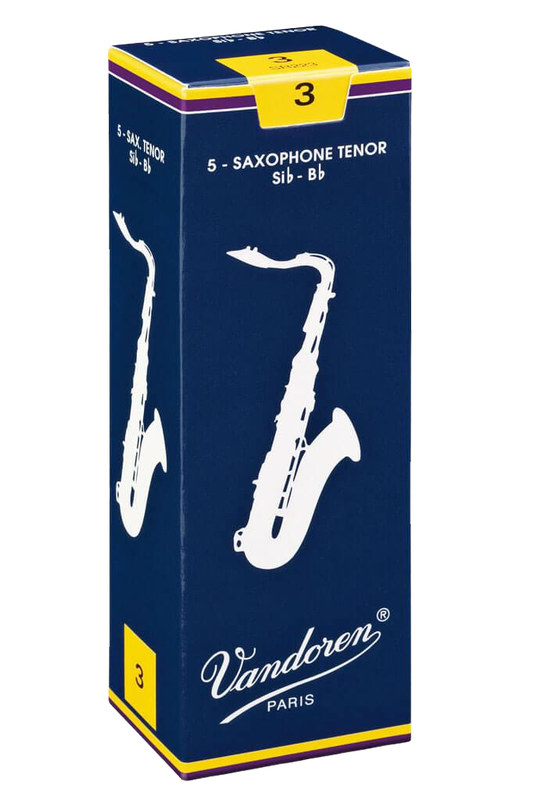
Vandoren Traditional (SR22x)
Classic European sound — the conservatory gold standard
Series Description
Traditional is the reed that started the Vandoren legend. Since 1905, it remains the unchanging choice for classical saxophonists worldwide. The thick heel and precisely calibrated cut provide warm, round sound that fits perfectly into a symphony orchestra or chamber ensemble.
The main advantage of Traditional is easy attack start and stability in all registers. You get controlled, noble timbre without excessive brightness. This is the reed for those who value the European school of tone production and seek maximum articulation precision.
Who it's for:
- Music conservatory and academy students
- Orchestral and chamber saxophonists
- Classical repertoire performers (concertos, sonatas)
- Musicians who value controlled, elegant sound
Advantages:
- Instant, clean attack start without extra effort
- Exceptional intonation stability in all registers
- Long lifespan (3-4 weeks of active playing)
- Perfect balance between darkness and articulation clarity
- Widest choice of strengths on the market
Mouthpiece Compatibility (best combinations):
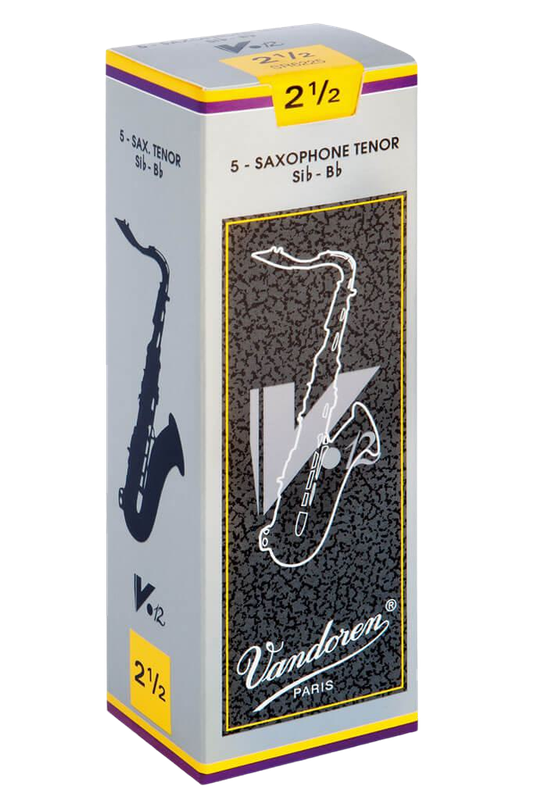
Vandoren V12 (SR26x)
Power and projection — the concert soloist's choice
Series Description
V12 is the reed for true professionals who need maximum sound projection. Thanks to the thickest heel among all Vandoren series, V12 gives incredibly rich, dark sound with powerful overtone spectrum that easily cuts through even a large symphony orchestra.
Created specifically for concert performances in large halls, V12 provides the same sound you hear in recordings by world masters. Deep low register, rich middle, and ringing high — V12 reveals your instrument's full potential.
Who it's for:
- Professional concert soloists
- Jazz musicians seeking dark, full sound
- Chamber music performers with projection in large halls
- Saxophonists with powerful embouchure (strong lips/jaw)
Advantages:
- Maximum sound projection without forcing
- Richest overtone spectrum among all series
- Deep, resonant low register
- Excellent dynamic flexibility (from ppp to fff)
- Professional stability even in extreme conditions
Mouthpiece Compatibility (best combinations):
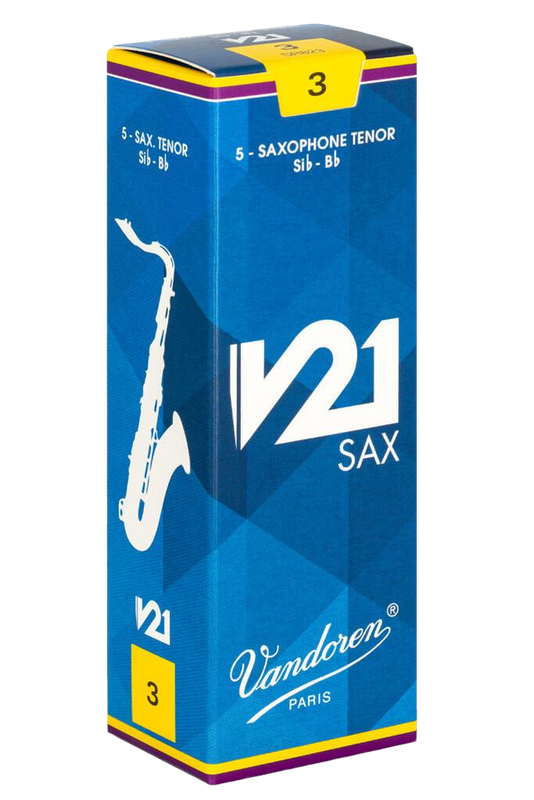
Vandoren V21 (SR81x)
Universal 21st century choice — balance between classical and jazz
Series Description
V21 is a revolutionary reed created for modern musicians who don't limit themselves to one genre. The unique conical profile combines the best traits of Traditional (control, darkness) and V12 (richness, projection), creating perfectly balanced sound.
Thanks to innovative geometry, V21 gives quick response and ease of play, making it a favorite of higher education students. It sounds equally good in a classical concert, jazz standard, or modern experimental piece.
Who it's for:
- Musicians playing different styles (classical + jazz + pop)
- Higher music education students
- Professionals who need versatility
- Saxophonists experimenting with contemporary repertoire
Advantages:
- Perfect balance between Traditional and V12
- Quick, easy response for technical passages
- Genre versatility without compromises
- Less lip fatigue during extended playing
- Wide compatibility with different mouthpiece types
Mouthpiece Compatibility (best combinations):
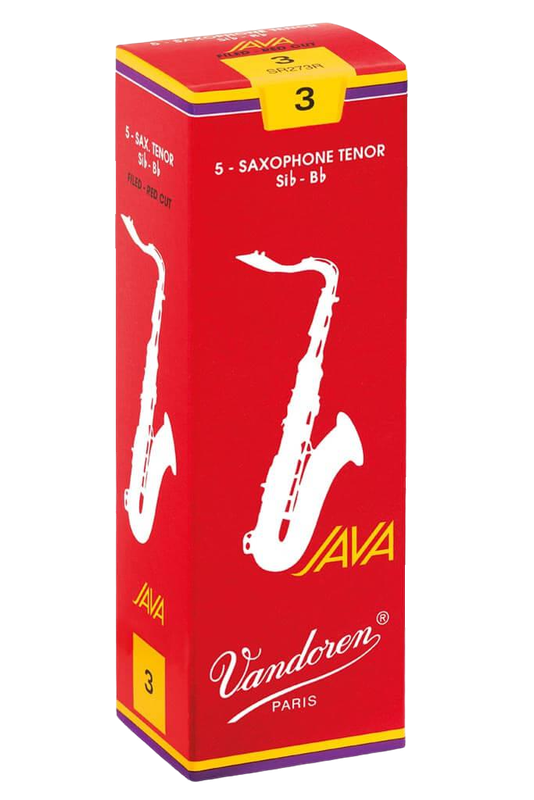
Vandoren JAVA Red Cut (SR27x)
Jazz standard with brightness — energy and power
Series Description
JAVA Red Cut is the evolution of the classic JAVA series for modern jazz performers. The unfiled cut gives bright, energetic sound with high projection that cuts through even the loudest big band or funk section.
Perfect for musicians seeking powerful attack, ease in subtone execution, and ability for expressive techniques (bend, growl, altissimo). JAVA Red is the choice of studio saxophonists and live performers of modern jazz.
Who it's for:
- Jazz saxophonists (modern style)
- Studio musicians (pop, R&B, funk)
- Fusion and jazz-rock performers
- Saxophonists actively using subtone and growl
Advantages:
- Powerful high projection for live performances
- Easy subtone execution without losing control
- Excellent for bend, growl, and other expressive techniques
- Quick attack for technical improvisations
- Bright, modern jazz timbre
Mouthpiece Compatibility (best combinations):
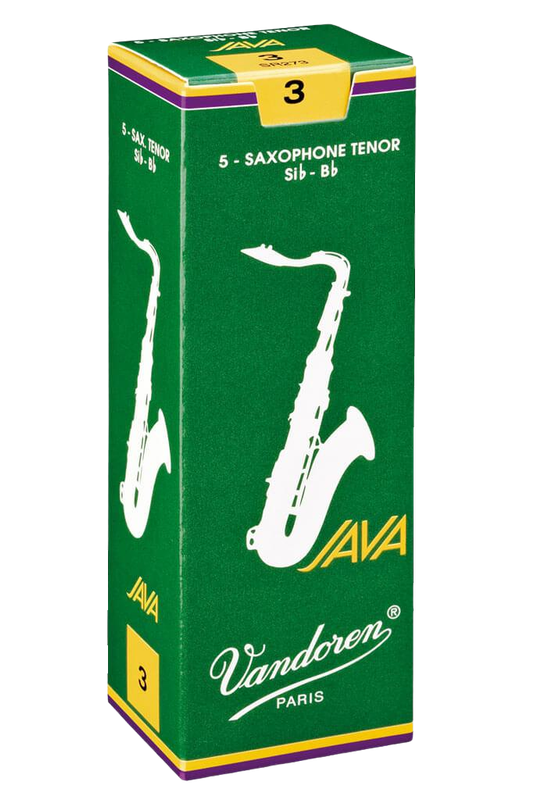
Vandoren JAVA (SR26x)
Foundation of jazz sound — big band classic
Series Description
JAVA is the original Vandoren jazz reed chosen by legends for decades. Thick heel combined with unfiled cut gives warm, full sound of classic jazz from the 50s-70s.
If you're looking for that same sound from recordings of Dexter Gordon, Sonny Rollins, or John Coltrane — JAVA is your choice. Ease in low register, dynamic flexibility, and noble dark timbre make it perfect for big bands and traditional jazz.
Who it's for:
- Jazz conservatory students
- Big band saxophonists
- Classic jazz enthusiasts (swing, bebop, hard bop)
- Musicians seeking traditional jazz timbre
Advantages:
- Warm, noble jazz timbre
- Exceptional ease in low register
- Dynamic flexibility (from pp to ff)
- Excellent vibrato control
- Classic sound of jazz's golden era
Mouthpiece Compatibility (best combinations):
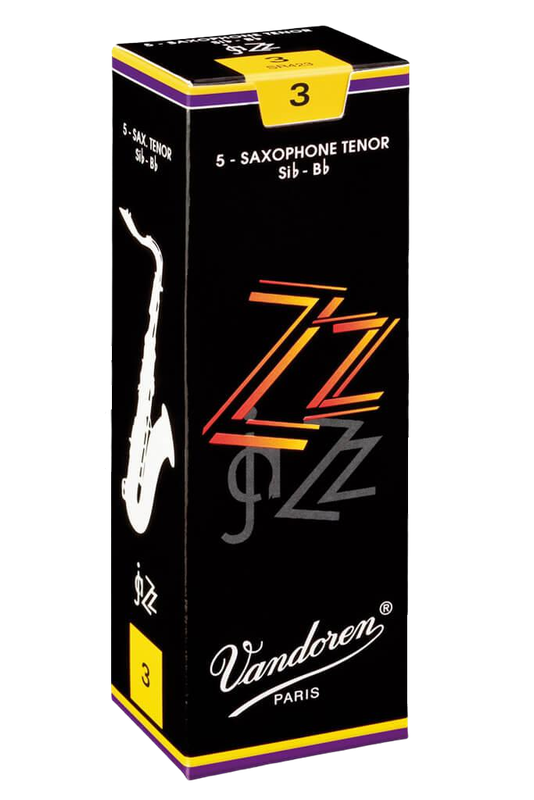
Vandoren JAZZ (SR28x)
Softest for improvisation — ease and comfort
Series Description
JAZZ is the reed for those taking first steps in jazz improvisation or seeking maximum soft, comfortable sound. Thin heel makes this reed the easiest among all Vandoren jazz series.
Perfect for jam sessions where ease of play without fatigue is needed, or for smooth jazz performers who value soft, unobtrusive timbre. Also an excellent choice for classical saxophonists who decided to try jazz.
Who it's for:
- Jazz improvisation beginners
- Musicians transitioning from classical to jazz
- Smooth jazz and easy listening performers
- Saxophonists seeking ease of play without fatigue
Advantages:
- Easy start for jazz newcomers
- Soft, comfortable sound without aggression
- Minimal lip fatigue during extended playing
- Affordable price for experimentation
- Easy transition between registers
Mouthpiece Compatibility (best combinations):
Tip: for first steps in jazz try combination JAZZ 2.5-3 + medium chamber mouthpiece
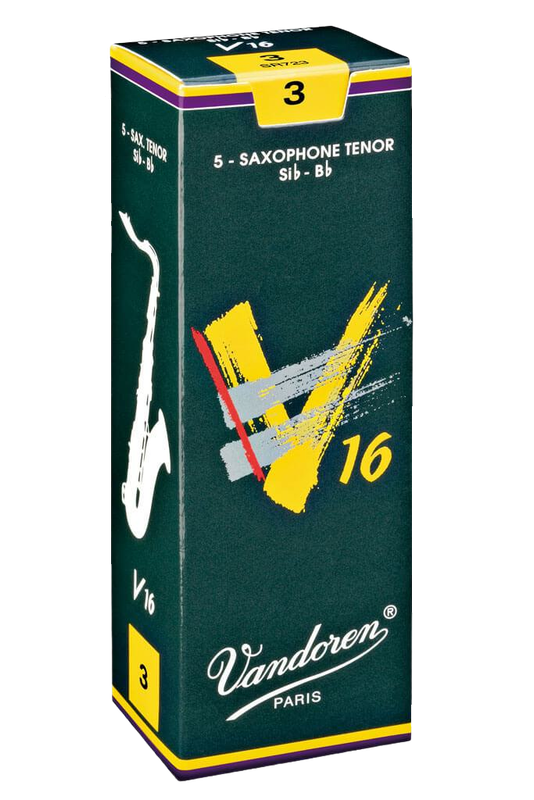
Vandoren V16 (SR71x)
Rock and funk power — maximum brightness and aggression
Series Description
V16 is the brightest, most energetic reed in the Vandoren lineup. Created for rock, funk, and fusion performers, it gives metallic, penetrating sound that cuts through the loudest guitar riffs and drum solos.
The V16 name comes from the legendary Meyer V16 mouthpiece played by jazz giants. This reed gives aggressive attack, high volume without effort, and ability for extreme techniques. If you need sound that "punches in the face" — V16 is your instrument.
Who it's for:
- Rock/funk saxophonists
- Fusion and jazz-rock performers
- Studio session musicians (contemporary music)
- Saxophonists seeking maximum brightness and volume
Advantages:
- Maximum brightness and cutting ability
- Aggressive, powerful attack
- High volume without forcing
- Excellent for screaming, altissimo, and growl
- Metallic timbre for rock and funk
Mouthpiece Compatibility (best combinations):
Note: V16 works best on powerful mouthpieces with large opening (.100"+)
Comparison Table of All Vandoren Series
| Series | Sound Character | Cut Profile | Main Genre | Strength | Level |
|---|---|---|---|---|---|
| Traditional | Dark, warm, round | Filed (thick) | Classical music, orchestra | 1.5-5 | Student-Professional |
| V12 | Very dark, rich, full | Filed (very thick) | Solo performance, classical/jazz | 2.5-5 | Professional |
| V21 | Balanced, bright | Conical (hybrid) | Universal (all genres) | 2.5-4 | Student-Professional |
| JAVA Red | Bright, energetic | Unfiled | Jazz, pop, funk, R&B | 2-5 | Professional |
| JAVA | Dark, full, traditional jazz | Unfiled (thick) | Traditional jazz, big band | 1.5-4 | Professional |
| JAZZ | Soft, comfortable | Unfiled (thin) | Smooth jazz, beginners | 1.5-4 | Student |
| V16 | Metallic, bright, powerful | Unfiled (medium) | Rock, funk, fusion | 1.5-5 | Professional |
How to Choose Reed Strength (Strength Guide)
Vandoren Numbering System
1.5 – 2.0: Beginners, junior students, light mouthpieces with small opening. Easy start, but wear faster and have smaller dynamic range.
2.5 – 3.0: Intermediate students, mouthpieces with medium opening (.070-.085"). Balanced choice for most performers.
3.5: Most popular strength among professionals. Universal for most mouthpieces, gives full sound with good control.
4.0 – 5.0: Powerful mouthpieces with large opening (.100"+), professionals with strong embouchure. Maximum projection and resonance, but requires stamina.
Strength Selection Factors
- Mouthpiece chamber: Large chamber = softer reed (for dark sound), small chamber = harder (for brightness)
- Mouthpiece opening: Wide opening (.100"+) = harder reed (4-5), narrow (.060-.070") = softer (2.5-3)
- Physiology: Lip strength, jaw, lung capacity — everything matters. Don't hesitate to experiment!
- Music genre: Classical often requires harder reeds (3.5-4.5) for control, jazz — variety (2.5-4)
- Playing time: Long concerts/sessions = slightly softer reeds (less fatigue), short performances = can go harder
Professional Life Hack
Buy 2-3 boxes of one strength and create a "team" of 4-6 reeds. Number them and rotate daily. Even within one strength there are micro-differences — find "your" reeds that play best.
If unsure between two strengths (e.g., 3 vs 3.5) — buy both and alternate depending on task: 3 for long rehearsals, 3.5 for concerts with maximum projection.
Compatibility Matrix: Mouthpieces × Vandoren Reeds
Important: Reed choice depends on many factors: mouthpiece opening (tip opening), chamber, music type, and individual physiology. Below are official Vandoren recommendations and general selection principles.
Official Vandoren Recommendations by Mouthpiece Type
| Mouthpiece Type | Recommended Reed Series | Characteristic |
|---|---|---|
| Vandoren Optimum (classical) |
Traditional, V12, V21 | Dark, controlled sound for classical music |
| Vandoren V16 (jazz ebonite) |
JAVA, V16, ZZ, V21 | Bright jazz sound with projection |
| Vandoren V16 Metal (jazz metal) |
JAVA, V16, ZZ | Powerful metal sound for jazz/rock |
| Vandoren JAVA / Jumbo JAVA | JAVA, JAVA Red, V16, ZZ | Aggressive, bright sound for contemporary music |
| Vandoren V5 / V5 Jazz | Traditional, V12, V21 (classical) JAVA, V16 (jazz) |
Universal mouthpieces for different styles |
| Selmer S80, S90 (classical) |
Traditional, V12, V21 | Standard of classical saxophone school |
| Meyer, Otto Link STM (jazz ebonite) |
JAVA, JAVA Red, V16, Traditional (for dark sound) | Classic jazz timbre of 50s-60s |
| Otto Link Metal (jazz metal) |
JAVA Red, V16, JAVA | Powerful, bright sound for big band |
| Theo Wanne, Jody Jazz (modern jazz) |
JAVA Red, V16, V21, ZZ | Modern jazz sound with great projection |
| Yamaha 4C, 5C, 6C (student) |
Traditional, JAZZ, V21 | Light reeds for beginners (2-3) |
General Strength Selection Rule by Opening Size
| Mouthpiece Opening (Tip Opening) | Recommended Strength | Typical Mouthpieces |
|---|---|---|
| Small .060" - .070" (1.5-1.8 mm) |
3.5 - 4.5 | Selmer S80 C*, Yamaha 4C, 5C Meyer 5M, Vandoren AL3 |
| Medium .075" - .090" (1.9-2.3 mm) |
3 - 4 | Selmer S90 180, Meyer 6M, 7M Otto Link STM 6, 7 Vandoren V16 T6, T7 |
| Large .095" - .110" (2.4-2.8 mm) |
2.5 - 3.5 | Otto Link 7*, 8* Theo Wanne GAIA 2, 3 Jody Jazz HR* 7, 8 |
| Very Large .115"+ (2.9+ mm) |
2 - 3 | Otto Link 9*, 10* Berg Larsen 110+ Theo Wanne DURGA 3, 4 |
Important Reed and Mouthpiece Pairing Principles
- Larger opening = softer reed: When increasing tip opening, decrease reed strength
- Jazz reeds play softer: JAVA, V16, ZZ play about half-strength softer than Traditional/V12 of same number
- V12 plays harder: When switching from Traditional to V12, go half-strength softer (e.g., from 3.5 to 3)
- Each mouthpiece maker has their own scale: Meyer 7 ≠ Otto Link 7. Always check tip opening in mm or inches
- Chamber affects: Large chamber = darker sound, can use softer reed. Small chamber = brighter sound, harder reed
- Individuality matters: These recommendations are a starting point. Experiment and find your combination!
How to Experiment with New Combinations
Step 1: Determine your mouthpiece's tip opening (usually stated in description or measure with feeler gauge)
Step 2: Use table above to choose base strength
Step 3: Buy 2-3 strengths (e.g., 3, 3.5, 4) and test each for several days
Step 4: Evaluate:
• Does sound start easily? (if not — reed too hard)
• Is there control in piano? (if not — reed too soft)
• Can it handle fortissimo without squeaking? (if not — reed too soft)
• Do lips fatigue after 30 minutes? (if yes — reed too hard)
Step 5: Having found optimal strength, buy 2-3 boxes for rotation
Professional Reed Care Tips
First Steps with a New Reed
- Step 1: Soak properly — place reed in glass of warm water for 2-3 minutes before playing
- Step 2: "Break in" gradually — first 3 days play no more than 5 minutes per day. This is critical!
- Step 3: Store properly — after playing, rinse with warm water, dry, and place in Reed Case (glass surface)
- Step 4: Let it rest — reed needs 24 hours recovery between sessions
Reed Rotation System
Minimum 4 reeds in active rotation is the professional gold standard. Ideally have 6-8 reeds at different stages of "maturation":
• 2-3 "workhorses" — main reeds for concerts and important performances
• 2-3 "in progress" — reeds breaking in gradually
• 1-2 "backup" — brand new, for emergency replacement
Number your reeds with pencil at the heel (#1, #2, #3...) and keep a simple log: when started using, how it plays, when to replace. This will help you understand the "life cycle" of reeds and optimize purchases.
Signs It's Time to Replace a Reed
- Dark mold spots — especially near tip (sign of cane deterioration)
- Cracks — even micro-cracks near tip critically affect sound
- Loss of resonance — reed sounds "dull", without brightness
- Unstable intonation — some notes "drift" up/down without apparent reason
- Loss of flexibility — reed becomes too hard or conversely, too soft
- Degraded attack — notes don't start cleanly, "chatter"
Extending Reed Life
DON'T leave reed on mouthpiece! This is the most common mistake. After playing always remove reed, rinse with warm water, and store separately.
Vandoren Reed Case is not marketing, it's necessity. Glass surface ensures even drying, preventing warping. Plastic cases can retain moisture and promote mold growth.
Temperature and humidity: Ideal storage conditions — 18-22°C, humidity 40-60%. Avoid extreme temperatures (don't leave in car summer or winter).
FAQ: Most Common Questions About Vandoren Reeds
Unfiled reeds have a flat cut along entire length. This gives brighter, more energetic sound with greater projection. Series: JAVA, JAVA Red, JAZZ, V16.
In classical music, filed reeds dominate; in jazz — unfiled, but this isn't an absolute rule.
Some saxophonists even mix reeds in one rotation (e.g., 2 Traditional + 2 V21) for timbre variety in rehearsals.
Affecting factors:
• Strength (harder reeds last longer)
• Series (V12 and Traditional usually slightly longer than JAZZ)
• Playing intensity (aggressive playing wears faster)
• Care (rotation and proper storage extend life)
• Conditions (humidity, temperature)
If reed "dies" in 3-5 days — you're either playing too aggressively or not letting it rest.
That's why professionals buy 2-3 boxes at once (20-30 reeds) and select 6-8 "golden" reeds that play perfectly. The rest are used for warm-up or rehearsals.
Life hack: if reed plays slightly hard, you can lightly "sand" it with special reed knife or fine sandpaper (1000+ grit). But this is for experienced musicians only!
Always buy reeds marked "Tenor Saxophone". Designations:
• Traditional Tenor: SR22x (where x is strength)
• V12 Tenor: SR26x
• JAVA Tenor: SR26x (green box)
• and so on
Don't confuse with alto (AS/SR2x) or soprano (SS/SR4x) — they won't fit!
Légère (synthetic) — longevity (6-12 months), stability in any weather, zero maintenance. Perfect for outdoor concerts, tours, backup reed.
Professional approach: 90% playing on Vandoren (concerts, recordings, important performances) + 1 Légère as backup reed for extreme conditions (rain, cold, emergency replacement).
1. Price: box is much more economical than individual reeds
2. Rotation: you need 4-6 reeds simultaneously anyway
3. Selection: from 5 reeds, 3-4 will be excellent, 1-2 mediocre (for rehearsals)
4. Guarantee: original packaging = freshness guarantee from official dealer
Individual reeds make sense only for testing new series before buying full box.
Why Buy Vandoren from SoundsGood?
Official Dealer = Quality Guarantee
- Direct partnership with Vandoren France — you get 100% original reeds without counterfeits
- Fresh reeds — regular shipments every 2 months, never sell old stock
- Proper storage — controlled temperature and humidity in warehouse
- Expert consultation — our team consists of professional saxophonists
- Loyalty program — special discounts for conservatory and music academy students
- Fast delivery — within Kyiv 1 day, throughout Ukraine 1-2 days
- Return guarantee — if manufacturing defect is found (rare, but happens)
SoundsGood is not just a store, it's "a store created by musicians for musicians". We play saxophone ourselves, test every series, know all nuances, and are always ready to select the perfect reed for your instrument, mouthpiece, and playing style.
📞 Need consultation? Call, message us — we'll help with selection, tell about current promotions and special offers for professional musicians.
```