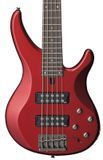
A fifth string does not automatically make a bass more professional, and four strings do not confine an instrument to beginner use. The difference concerns available notes, where phrases sit on the fingerboard, the experience of both hands and control of unwanted sound. A useful choice starts with music you will actually play, rather than the largest feature count within a budget. This guide compares standard E–A–D–G and B–E–A–D–G configurations, practical repertoire, low-B assessment, electronics and ownership costs. Yamaha TRBX304 and TRBX305 provide concrete examples of related designs. This is an analysis of construction and buying criteria using manufacturer information, not a claim of a controlled studio test of individual instruments.

1. What the fifth string adds
A conventional four-string bass uses E–A–D–G from the lowest open string to the highest. A common five-string configuration adds a lower B, producing B–E–A–D–G. That is the arrangement discussed here. Other tunings exist, so the number of strings alone does not establish how an individual instrument is tuned.
Low B provides notes below open E without retuning the familiar upper four strings. Its value also extends beyond the lowest note. Some phrases can move to another fingerboard position, using the additional string for pitches already available elsewhere. This changes fingering and the character of the attack. Before buying, identify where that would help. If the answer is only that it might be useful someday, compare the possibility with the immediate changes in neck geometry and technique. Extended range is meaningful when it solves a musical task. Name a song, transition or key in which the configuration improves your actual workflow rather than describing range as an abstract advantage.
2. List parts rather than genres
Genre names are too broad to settle this decision. Rock includes material comfortably played on four strings and music requiring lower notes. Pop arrangements can change when a singer requests a different key. Take several pieces from your intended repertoire and identify the lowest pitch each part needs.
For each one, note whether you must reproduce an exact arrangement or can use another octave. Separately record situations requiring a tuning change between songs. This reveals whether the fifth string solves a regular problem or adds a theoretical option. If you do not yet have a band, use your lesson programme. Do not base the purchase on one impressive clip featuring extremely low notes. In a performance, the value lies in confidently executing the whole part with other musicians, including rests and transitions. A repertoire list also helps the adviser recommend equipment for a specific job instead of guessing your needs from a broad label such as metal or jazz.
3. Must beginners start with four strings?
Four strings often make an accessible starting point: there are fewer strings to control, and many teaching materials assume the standard arrangement. That does not make four strings a compulsory examination before permission to use five. If your repertoire requires low B, the instrument fits and a teacher supports technique, a considered five-string purchase can be appropriate from the beginning.
Do not confuse future flexibility with too many simultaneous tasks. A new player is learning timing, fretting, attack and muting. The additional string affects the last task even when it is not being played. Try both configurations with very simple music. If you can control notes and rests calmly on five strings, beginner status alone is not a reason to reject it. If the lower range has no clear role and four strings feel natural, that is a complete musical choice rather than a compromise caused by insufficient ambition. A comfortable instrument used regularly is more useful than a supposed advantage you cannot yet connect to your music.
4. Neck width and string spacing
An additional string needs space, but total neck width is not the only contributor to feel. String spacing, neck depth and profile, fingerboard radius and action also matter. Two five-string models can feel more different than closely related four- and five-string versions. String count is therefore not a difficulty rating.
Check first position, a small shift and a familiar working area with the fretting hand. Use your normal fingerstyle or pick technique with the other hand. Assess slap access separately if you use it. Do not force every previous movement distance onto a different geometry, but do not automatically call obvious discomfort useful training either. Record what changed: a wider reach, a closer neighbouring string or a different wrist angle. This supports a choice of actual construction rather than an abstract category. If possible, try another bass with the same string count to establish whether the sensation comes from five strings generally or the dimensions of one particular neck.
5. Equal scale length does not mean identical feel
Scale length is the working string length between nut and bridge. It relates to geometry and, together with other factors, the experience of the strings. It is different from overall instrument length and neck width. An extra string does not automatically mean a longer scale.
TRBX304 and TRBX305 both have a 34-inch scale, listed by Yamaha as 863.6 mm. This makes the other differences easier to examine. Nevertheless, strings, action and construction can change the result even with equal scales. Do not judge all five-string basses from one example fitted with worn or unsuitable strings. When comparing different scales, check first-position reach and fret spacing. The measurement helps explain the design but cannot replace playing a familiar part. Also recognise rounded specifications: a small difference in the written millimetre figure may simply reflect rounding rather than a different instrument. Use the manufacturer's exact version information as the reference for a technical comparison.
6. TRBX304 and TRBX305: the specific comparison
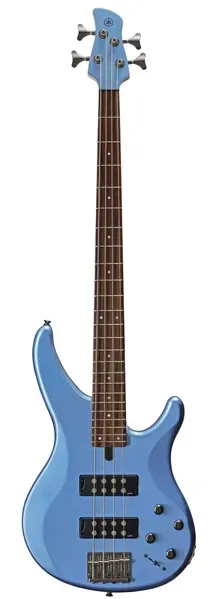
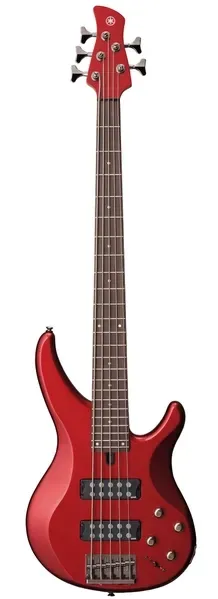
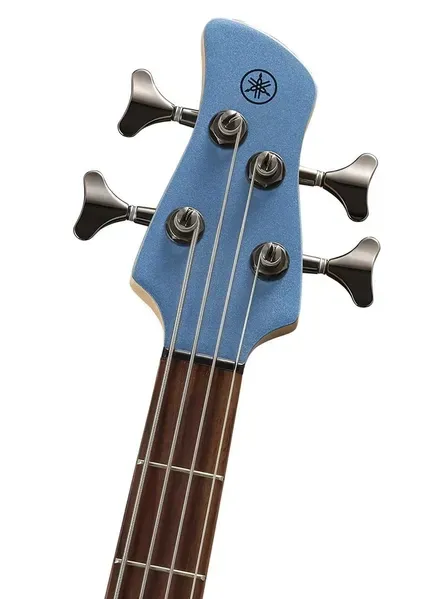
Yamaha lists four strings, a 38 mm nut width and 19 mm bridge string spacing for TRBX304. The corresponding TRBX305 figures are five strings, 43 mm and 18 mm. Both belong to the TRBX300 series and share the same scale. These measurements are more informative than saying that a five-string is simply larger.
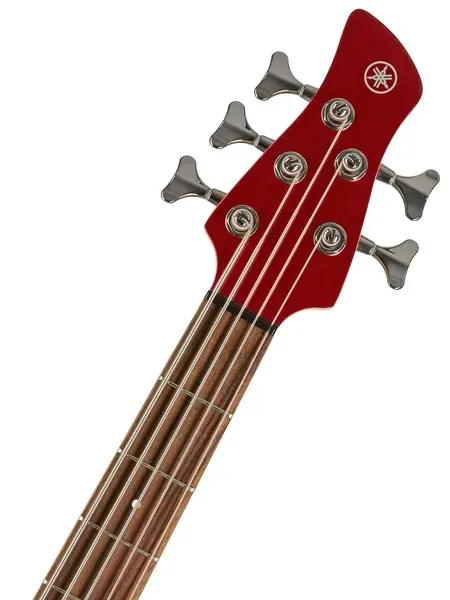
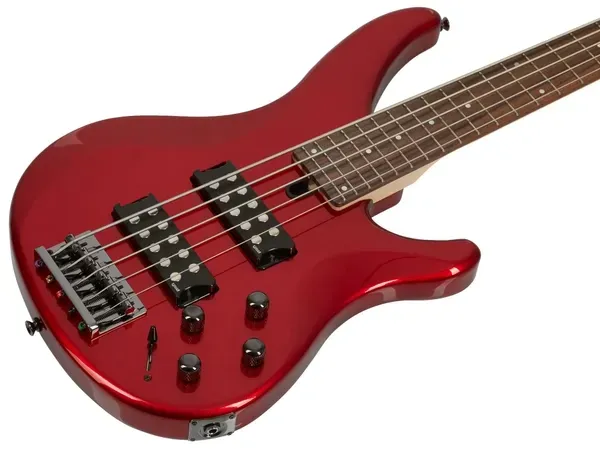
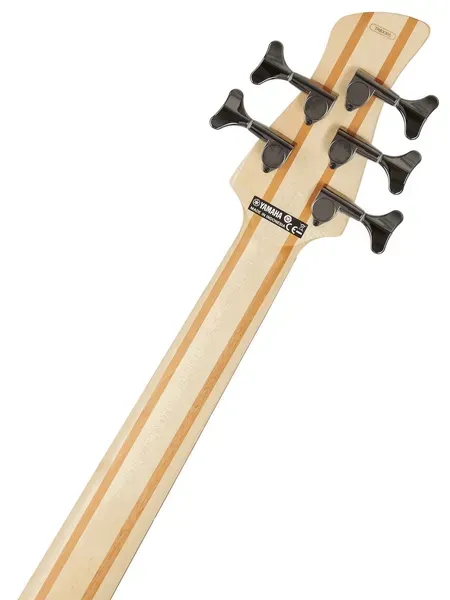
Closer spacing at the bridge can affect familiar picking-hand movements, while a wider neck affects the fretting hand. Assess those separately. The photographs here show TRBX304 Factory Blue and TRBX305 Candy Apple Red. Colour does not explain their technical differences, and separate photographs are not a scale drawing. The pair offers a practical reference for related designs. Check exact version, included accessories and current selling details before ordering. Do not apply one specification to every bass carrying the brand: series differ in geometry and electronics even when a body outline looks familiar. The purpose is to connect measurements to playing observations, not to declare a winner from the table alone.
7. Muting is part of the sound
A bass part includes the silence between notes. On a five-string, the additional low string can respond while you play elsewhere. Muting belongs in the first trial, not only in advanced practice. A familiar four-string technique may need adjustment.
Play a short note, stop it clearly and make several string changes. Listen to what remains after the hand moves. Do not press an unused string hard against the pickup: contact should control vibration rather than create another impact. The appropriate method depends on technique, so discuss it with a teacher. Use a clean sound without long effects for this check. If a rest contains noise, identify its source before blaming the instrument. A clean ending to a simple note reveals control more clearly than a fast passage in which everything merges. Repeat quietly and at your normal working tempo as well. Control should not depend on striking every note as forcefully as possible.
8. How to evaluate low B
One powerful pluck of an open string is not enough. Listen for the beginning, pitch, duration and relationship to the rest of a phrase. A large low-frequency thump does not prove definition. Equally, limited reproduction by a small amplifier does not automatically establish a fault in the bass.
Play several low-string notes with moderate attack, then compare a shared pitch available elsewhere on the neck. Assess character and comfort without requiring complete tonal identity. Repeat a rhythmic pattern with a metronome or familiar accompaniment. You need to hear and stop each note confidently. Use a suitable bass signal chain without extreme low-frequency boost. Worn strings and unknown setup are limitations worth recording. A conclusion should concern the conditions actually tested. If uncertain, ask another player to perform the same phrase; that can help identify the contribution of attack, although it will not replace your own assessment of physical comfort and control.

9. Another way to place familiar phrases
The extra string changes where familiar pitches can be played. Sometimes a phrase sits conveniently around the middle of the neck by using the low string instead of moving towards open E. That can simplify motion, offer another tonal colour or make fingering more consistent. The benefit depends on the part.
Find two ways to play a short phrase and compare movement, articulation, note length and the transition into the next bar. An open string can be an intentional part of the sound, so replacing it everywhere is unnecessary. The useful result is a deliberate option. For recording, note the fingering of a successful take so the attack can be reproduced. Staying in one position should not become a rule detached from musical logic. Also check whether muting remains comfortable in the new arrangement. Less fretting-hand movement can demand more picking-hand accuracy. Evaluate that exchange through the complete phrase rather than one isolated convenient note.
10. Four strings with another tuning
If one lower note is required, a five-string is not always the only solution. Certain repertoire can use an alternative tuning or another arrangement. Retuning has consequences, however: fingering, string feel and setup requirements can change. It is not a universal substitute for an additional string without trade-offs.
Establish the intended tuning and whether the installed set suits it. Substantial changes can require different strings and professional preparation. Do not alter nut slots or other parts experimentally without understanding the requirement. For a live set, consider how quickly and reliably you can move between songs. Frequent use of different low notes may favour a fifth string; an occasional change for one specific piece may have another workable solution. Compare the full rehearsal and performance process. Being theoretically able to produce the pitch does not prove convenience in repeated use. Include the need to return to the original tuning and check it confidently before the following song starts.
11. Active electronics are a separate choice
String count and active or passive circuitry describe different properties. Do not attribute every tonal difference to the fifth string while also changing pickups, circuits and amplification. Separate those variables before drawing a useful conclusion.
TRBX300 instruments provide active tone shaping, two-band equalisation and five-position Performance EQ. Ask for the controls to be explained and begin with moderate settings. Change one parameter at a time. A louder signal often seems more impressive, so compare at similar perceived levels without overloading the input. Check whether the controls remain understandable while you play. For an active instrument, establish power requirements and battery replacement from its instructions. Do not assume every active bass works passively after battery failure; that is a separate circuit feature. If the demonstration uses only one dramatic setting, request a normal working sound too, where note beginnings and rests remain easy to assess.
12. Pickups and picking-hand position
Controls are not the only source of tonal change. Attacking nearer the neck or bridge affects character and feel. If you test one instrument near the neck and the other near the bridge, some difference comes from your own hand. Keep a similar approach for the initial comparison.
Then deliberately explore several useful positions. Is there a comfortable resting point, is string crossing manageable, and do controls or pickup edges interfere? An additional place to rest on a five-string does not remove muting responsibilities. Record a brief phrase and listen to the spaces. Avoid general claims that a particular string count always produces more bass or better definition. Compare the actual models, settings and actions. A suitable instrument lets you control your desired character instead of merely sounding impressive in an adviser's hands. If you use both fingers and a pick, include both: comfort with one does not automatically establish comfort with the other on the same geometry.
13. Weight, balance and the strap
A seated trial does not reveal everything if rehearsals and performances are standing. Use a suitable strap and assess the position without continually supporting the neck. Total weight and weight distribution are different experiences. A five-string is not automatically heavier than every four-string alternative.
Play for several minutes at your usual height rather than lowering the bass purely for appearance. Check first-position reach, upper frets and controls. A slippery strap can change the apparent balance, so keep conditions comparable. For online purchases, asking for the actual example's weight may help, but the figure does not replace a trial. An artist's photograph cannot establish your comfort either. Repeat after a short break and several musical tasks. Notice whether the fretting hand must hold the instrument in place while also playing. That observation is more useful than a first impression that the bass looked compact or felt light for a moment.

14. A fifteen-minute comparison routine
Tune the bass and check a clean signal at a moderate level. Play open strings, notes in different positions and a short rhythm. Follow with a representative passage from your repertoire. Starting with the fastest possible run makes discomfort harder to diagnose.
Use a second block for muting and transitions. End notes clearly and leave rests. On five strings, assess the low string separately; on four, establish whether the required range is available. Use a third block standing with a strap. After the second instrument, return to the first. Record what felt comfortable, what requires adaptation and what is missing. This is not a laboratory test, but a consistent sequence reduces random impressions. If shop conditions limit the trial, account for that uncertainty. Do not replace an unperformed check with a salesperson's confidence. Know which qualities you evaluated personally and which are still supported only by description or manufacturer specifications.
15. Amplifiers and headphones affect the result
The bass is heard through a particular chain. Amplifier, cabinet, interface, headphones and room all shape perception. A small playback system will not necessarily reproduce the lowest register like a suitable stage system. Loudness still cannot replace an assessment of pitch and articulation.
Keep the same chain and similar level for the comparison. Begin without compression, overdrive or extreme equalisation, then test the working sound you need. If home practice will use headphones, evaluate that exact arrangement. Clarify whether an interface or headphone amplifier is needed instead of assuming headphones connect directly to any bass. A fifth string does not solve playback by itself. Reserve budget for a chain through which notes and rests are clear during daily practice. If a rehearsal sound is pleasing but the home sound is very different, investigate equipment and settings first. Another instrument may not resolve unsuitable monitoring or an inappropriate connection path.
16. Record a short comparison
With an appropriate interface, record the same phrase using unchanged settings. Check input level so strong notes do not clip. Do not make one instrument louder for effect. Use clear filenames and note control positions.
Listen for note beginnings and endings, even transitions and the part's place within accompaniment. A beautiful solo tone is not always the useful arrangement tone. Test low B through a working riff rather than only an open note. If a phone records the room, account for its processing and microphone position. Such a file can remind you of character, but is not a precise measurement. Compare the audio with comfort notes because the recording cannot show how playing felt. Neutral labels can help reduce the influence of appearance and price during listening. Afterwards, restore the model information and assess the complete practical result. Recording is supporting evidence, not a replacement for holding and playing the instrument.
17. Strings: compatibility and maintenance
A replacement set must match string count, intended tuning, gauge and appropriate length. For bass guitar is not a complete specification. Sets differ and need to suit the scale and attachment arrangement. If uncertain, check manufacturer guidance or ask a technician about the exact model.
A five-string set includes an additional string, so compare replacement costs using actual available products rather than assuming a universal price difference. Changing gauge or tuning may require a setup check. Worn strings during a shop trial can obscure the instrument's response; ask about their condition. Keep the packaging and tuning notes from a successful set. Do not address every low-B concern solely with a thicker string without checking nut fit, intonation and overall operation. Sensible maintenance begins with an identified cause. If a previous owner used an unusual tuning, find out what changes were made and whether your intended configuration can be restored without additional work or replacement parts.
18. Setup and intonation
Assess the bass at its working tuning. Action, neck relief and saddle position affect feel and note accuracy. String count alone cannot explain a rattle or difficult fretting. Ask for a particular issue to be checked rather than claiming all five-string basses are hard to play.
Play notes across several neck areas and compare with a tuner using normal pressure. Do not respond by randomly adjusting every screw. Setup sequence matters, and one manufacturer's measurements should not automatically be transferred to another design. If you do not service instruments, use a specialist and explain your tuning and technique. Recheck after a string change. Preparation provides a workable foundation for your playing rather than identical sensations for every musician. Record what was altered during servicing; that can help explain later changes and prevent unnecessary repeated adjustments. A clear account of the symptom is more useful than requesting the lowest possible action without discussing attack, noise tolerance or the instrument's design.
19. Checking a used bass
Request an exact model and photographs of neck, frets, bridge, tuners and accessible electronic controls. Ask about repairs and replacements. A modification is not automatically good or bad, but should be understood. A series name does not prove that the factory circuit remains inside.
Try the instrument at normal tuning and check every control. Dropouts or distortion need investigation rather than being dismissed as the character of an active bass. Inspect damage and include probable service costs in the budget. For a five-string, identify the fitted set and assess the low string carefully. Do not judge an offer solely by its logo or discount from an old price. Condition, inspection access and clear selling arrangements matter more than a story about its sound in someone else's band. If identification is uncertain, resolve it before borrowing specifications from a similar-looking instrument online. An incorrect model assumption weakens both comparison and repair budgeting.
20. A complete home and rehearsal setup
A suitable bag, cable for the intended connection, strap and tuner belong beside the bass. Further equipment depends on home, rehearsal or studio use. Do not buy every possible device immediately. Establish what is already available at the rehearsal room and what you personally need.
For an active model, include power and maintenance requirements. Spare strings are useful once their specification is known. Check bag dimensions because overall length and headstock shape vary. With limited funds, compare the total cost of a usable setup for both configurations rather than instrument prices alone. A bass that cannot be monitored properly at home will not reveal its benefits in daily practice. A practical purchase covers the sequence from tuning to storage. Think about transport as well: a simple checklist helps avoid forgetting a cable or tuner and using the beginning of a rehearsal to search for a basic missing accessory.

21. Moving from four strings to five
Begin with familiar music at an unhurried tempo. Your task is to refine string location and muting, not to justify the purchase with the hardest possible part. Keep familiar pitches initially, then deliberately add the low string's possibilities. This separates a new geometry from a new composition.
Use short phrases with clear rests and record yourself. Pay attention to E, which is no longer the lowest outside string; an automatic movement may need correction. Do not change technique, setup and repertoire simultaneously. Choose one task for a session. If a particular part still feels better on four strings, the transition has not failed. Different instruments can remain useful for different music. The fifth string supplies an option, not an obligation to use it constantly. Judge progress through clean notes and stable rhythm rather than how many low notes you played. The new range is successful when it supports the arrangement without distracting from the basic musical role.
22. Common comparison mistakes
Unequal volume, fresh strings against worn strings, solo-tone judgement without the intended part, and generalising from one poor example all reduce the value of a comparison. Begin correcting them through similar conditions and a clear musical task.
Another trap is buying the maximum possibility count without a scenario. If the fifth string remains unused while interfering with your normal work, its presence is not an advantage for you. The opposite mistake is rejecting necessary range because beginners supposedly must use four strings. Both extremes are better addressed through repertoire, a trial and a complete budget. Written observations preserve the reasons for a preference when advertising and videos begin mixing the criteria again. Avoid searching for one universal winner. Establish which compromises you accept knowingly and whether they remain manageable during normal practice, rehearsals and recording. An informed limitation can be more useful than a feature acquired without knowing what it is for.
23. Frequently asked questions
Are five strings only for heavy music? No; range and arrangement determine their use. Can four strings be professional? Yes; string count is not a qualification. Is low B always indistinct? No; assess the instrument, strings, setup, technique and playback chain. Do smaller hands rule out five? No; try the actual geometry and playing position.
Can retuning a four-string substitute? Sometimes, but check strings, fingering and workflow. Are active electronics a quality guarantee? They provide a way to manage the signal, not a universal ranking. Must the fifth string appear throughout every part? No; use it where the music benefits. A rest or familiar octave may be the better decision. If your answer remains uncertain, return to several pieces from the intended repertoire. They offer a more concrete basis than trying to purchase an instrument for every conceivable musical situation at once without knowing which situations actually matter to you.
24. Making the final decision
Return to the song list and identify the tasks each candidate handles without awkward compromises. Compare range, muting, physical fit, tone controls and complete setup cost. Write one specific reason for your preference connected to the music rather than a ranking of string counts.
A four-string suits the job when its range is sufficient and its geometry supports confident playing. A five-string suits it when lower notes or alternative phrase placement are regularly useful and the extra string remains controllable. Yamaha TRBX304 and TRBX305 illustrate how related instruments differ for both hands. A successful purchase is a bass you can tune, play cleanly, stop accurately in a rest and use naturally with other musicians. Check those qualities before colour and the series name settle the decision. Their value remains after the first excitement of ownership because they are practical characteristics you can repeat and assess in everyday use.