ACCESSORIES / THE DETAILS MATTER
A pick costs far less than a pickup set or a pedal, yet it touches the string first. The compact Dunlop Jazz III offers a different point of contact — a good reason to try it with your own hands.
SoundsGood editorial · 5 September 2026
How Jazz III became familiar
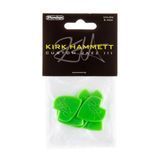
Dunlop connects the Jazz III shape with musicians working in different styles. Its article about pick variety packs mentions Kirk Hammett and Joe Bonamassa, while separate signature variations were developed for John Petrucci. This demonstrates professional use of the shape without implying that every version is identical.
The Jazz III name does not restrict the pick to jazz. Choose it for grip, attack and release from the string. Another player’s preference gives you a useful candidate; your own familiar part supplies the answer.

Shape, thickness and edge are separate variables
A pick's size determines how much material sits between your fingers and its working tip. The compact Jazz III offers less surface than a conventional large pick, changing the grip. One player enjoys having the fingers close to the string; another wants more support. Small does not mean more professional. It simply creates a different geometry of contact.
Thickness affects stiffness but does not describe the entire experience. Two picks marked 1.38 mm can behave differently because of their material and shape. The exposed length, tip contour and edge treatment also matter. Holding less material outside the fingers can change the feel of a familiar pick. When comparing models, control your grip as well as noting the specification.
A pointed tip can make the moment of string release easier to feel, but digging deeply creates extra resistance. A shaped edge can also slide differently when angled. Slow string changes reveal these differences because every contact is audible. A fast passage with heavy distortion can conceal small inconsistencies that become obvious in a clean recording.

What changes in the picking hand
Compare the compact shape with the pick you already use. Leave only a small working section exposed and play slow alternate strokes. Listen for consistent downstrokes and upstrokes, then move between adjacent strings.
If the pick catches, do not immediately add force. Try reducing how deeply the tip enters the strings and changing the contact angle slightly. A smaller shape can take time to get used to; a few awkward minutes do not settle the question.
Do not squeeze harder just to chase speed. A useful test is whether you can repeat a short passage several times with an even attack and without extra tension.
The specific Max-Grip Carbon Fiber version
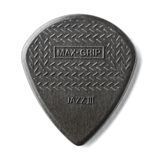
The photograph shows the Dunlop Max-Grip Jazz III Carbon Fiber. Dunlop specifies 1.38 mm thickness and a textured Max-Grip surface. These details apply to this version; other Jazz III and XL picks can use different thicknesses, materials and edges.
| Specification | Detail |
|---|---|
| Model | Max-Grip Jazz III Carbon Fiber |
| Manufacturer code | 471-3C |
| Thickness | 1.38 mm |
| Shape | Compact Jazz III |
| Grip area | Textured Max-Grip |
| Pack size | Check the specific shop listing |
Jazz III is a family, not one specification
Dunlop's official catalogue includes Nylon, Stiffo, Ultex, Tortex, Max-Grip, Primetone and artist variations within the Jazz III family. The differences are not just colours. Material, surface, edge and thickness can change together. To repeat a successful purchase, keep the full model designation rather than relying on a photograph of a familiar outline.
The Max-Grip Carbon Fiber pictured in this article is designated 471-3C and measures 1.38 mm. The red Max-Grip Nylon 471-3N is also 1.38 mm but is a different version. Dunlop specifies 1.5 mm, a raised logo grip and a polished tip for the John Petrucci Ultex Jazz III. These examples show why the Jazz III name alone cannot transfer specifications between products.
Compare materials under consistent conditions: one guitar, one tone setting and one short passage. Listen first to the start of each note, then to mechanical contact noise and the feeling of release. Avoid declaring a material permanently “brighter” after one test. Your angle, attack and the particular edge can change the result. A useful conclusion concerns your own instrument and technique together.

What Max-Grip adds
The Max-Grip texture gives the fingers a more defined surface. Its practical value is easier retention when a smooth pick tends to rotate during playing. A secure grip does not necessarily require maximum pressure. Play a familiar part with a moderate hold and notice how often you need to return the pick to its intended position.
Some guitarists deliberately change the exposed tip, allowing more for strumming and less for short single notes. If you do this frequently, check whether the texture supports those adjustments. A surface that holds one position securely may call for a different finger movement when changing grip. This is a comfort question, not a fault that every player will experience.
Judge the pick over a normal practice session rather than the first thirty seconds. After several songs, it becomes clearer whether you adjust it less often or compensate by gripping harder. If the compact shape constantly makes you search for a stable position, try an XL. The larger outline may provide support while retaining the pointed working tip.
Dunlop Max-Grip Jazz III — official video
Official manufacturer video. Manufacturer page · Watch on YouTube
Regular Jazz III, Max-Grip or XL?
Regular Jazz III shape. A starting point if you want to explore the compact profile and pointed tip. Compare materials without changing amplifier settings so that differences in attack are easier to hear.
Max-Grip. The textured grip area is worth trying if your pick rotates between your fingers. Check the other side of that trade-off too: can you reposition it comfortably when switching between rhythm and lead?
Jazz III XL. Provides more surface area to hold. Try it if you like the pointed-tip idea but the compact body feels lost in your hand. XL describes a larger shape rather than automatically indicating a thicker pick.
Signature versions. Evaluate each one separately. A Kirk Hammett or Primetone version is not simply another colour of Max-Grip: check the profile, edge and thickness first.

Rhythm, lead and acoustic playing
For single notes, compare downstroke and upstroke consistency, string changes and control at low volume. Players often approach Jazz III because they want a more compact movement near the string. The size itself does not create sound technique. If a new pick feels fast in only one lick, also test a slow melody, string skipping and sustained, evenly played notes.
For dense rhythm, play a muted riff and then an open chord without changing the rig. Listen for dynamic consistency and excessive movement between strings. Broad acoustic strumming may suit a larger or more flexible model for some players. That is a valid choice: one musician can prefer different picks for an acoustic song and an electric lead.
When recording acoustic guitar, listen to the microphone capture as well as the sound in the room. Mechanical string contact may be more prominent in the recording. Microphone position changes the result too, so keep it fixed between comparison takes. Predictability matters: can you produce the intended attack several times in succession?
A five-minute comparison
- One string. Play even eighth notes to a metronome. Listen for level consistency rather than chasing maximum speed.
- String changes. Play a familiar riff. Count how often you need to adjust your grip.
- Chords. Play softly, then louder. Check whether you can change dynamics without suddenly tensing the wrist.
- Record. Capture the same passage with both picks and identical settings.
- Go back. Play your old pick again. This helps separate lasting comfort from the novelty of a different feel.
Acoustic strumming and fast single-note lines may call for different picks. A small selection for your own tasks can be more practical than finding one universal choice.
Wear and ordering the same pick again
Contact with the strings gradually changes the working edge. A heavily used pick can feel and sound different from a new example of the same model. Compare materials using samples in similar condition where possible. If a familiar pick starts catching or its attack changes, inspect the tip before attributing the difference to your guitar or amplifier.
Keeping several identical working picks and one less-used reference makes wear easier to recognise. It also helps at rehearsal: losing an accessory need not force a completely different grip before an important part. When ordering, check the model, thickness and quantity. An official photograph showing a pack does not establish that a shop listing sells that same pack size.
Our conclusion: consider Max-Grip Jazz III if you want a compact outline and a clearly textured grip. Try XL if you need more surface for the fingers, and compare other materials through their attack and edge feel. The meaningful result is dependable control across your regular songs, rather than a speed record in the first few minutes.
Check the pack and the full name
Confirm whether the listing sells one pick or a pack. Manufacturers offer different pack sizes, and a shop’s product title does not always state the quantity. Read the description and contents for the particular item.
Check thickness separately: 0.88 mm, 1.38 mm or another figure cannot be inferred from the words Jazz III alone. Save the full name and item code of the version you enjoy so that you can order the same one again.
Common questions
Is Jazz III only for lead playing?
No. Try it on rhythm parts too. Comfort, dynamic control and your preferred attack are the deciding factors.
Does XL mean a thicker pick?
No. XL means a larger shape. Check thickness in millimetres separately for each model.
Will Jazz III make me faster?
A pick can change how contact with the string feels, but it does not replace technique and practice. Compare clean execution at the same tempo.
Find your Jazz III
Compare shape, thickness and pack size. Picks are easy to add to an order of strings or other accessories; check current shipping terms at checkout.
- Official manufacturer or importer warranty
- PrivatBank and monobank instalment options
- Ukraine delivery; free from UAH 4,000
- Equipment selection for your needs
Check the selected product page for current price, stock, warranty terms and instalment eligibility. Payment and delivery terms.