AUDIO EQUIPMENT / IN-DEPTH REVIEW
JBL EON ONE MK2 combines a column array, 10-inch low-frequency section, five-channel digital mixer, rechargeable battery and professional DSP in one transportable enclosure. It targets musicians, presenters and compact events where fast deployment and controlled coverage matter as much as outright output.
SoundsGood editorial team · 9 September 2026
A useful audio-equipment review is more than a list of watts and a Bluetooth version. What matters is how quickly the system becomes operational, whether it stays intelligible at different levels, how bass changes indoors and outdoors, and which features genuinely save time. The discussion below therefore separates published specifications from practical conclusions.
Design and positioning
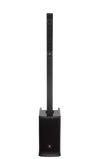
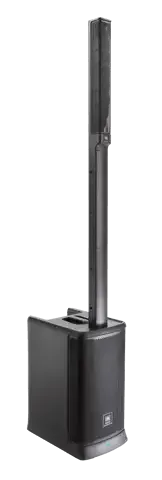
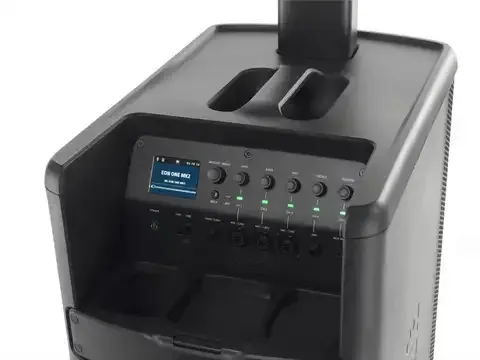
Eight 2-inch drivers form a C-shaped array with 140-degree horizontal dispersion. The column sections store inside the woofer cabinet, so no separate stand is required. At 19.3 kg it is substantial, but that weight includes the battery, mixer and 10-inch low-frequency section.
Sound in real-world use
The defining advantage is even voice and music coverage across a broad audience area. Extension to 37 Hz lets it work without an external subwoofer in many intimate settings, although dance material and larger venues still benefit from dedicated low-frequency reinforcement.
Start an audition with neutral EQ and recordings you know well. Check spoken voice, acoustic instruments, dense electronic bass and music with wide dynamics. Do not judge the product only at maximum level: quiet and medium listening reveal midrange control, tonal realism and long-term treble comfort more clearly.
Use cases
It suits solo performers, small ensembles, ceremonies, lectures, fitness spaces, rental companies and mobile events—especially when mains power cannot be guaranteed.
Placement changes the result as much as rated power. A nearby wall reinforces low frequencies, a corner can create boom, and outdoor use makes bass feel leaner. Keep vents and passive radiators clear, leave space for cooling, and reassess the tonal balance whenever the product is moved.
Connections and setup
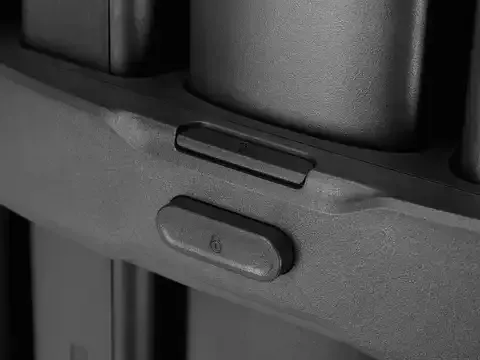
Three XLR/TRS combo inputs, Hi-Z, Bluetooth, phantom power, Lexicon effects and dbx processing cover a typical singer-songwriter or presenter rig. AFS manages feedback, Easy Ducking lowers music under speech, and JBL Pro Connect enables remote control.
Key strengths
- Wide 140° coverage and strong speech intelligibility
- Practical battery operation
- Integrated mixer, Lexicon effects and dbx AFS
- Column sections store inside the cabinet
- JBL Pro Connect control
What to consider
Six hours is a best-case claim, so high-output programmes reduce battery life. A single unit is not a substitute for a subwoofer-based club system, and the tall array requires careful handling in transport.
Core specifications
| Type | Powered column PA |
|---|---|
| Amplifier power | 400 W RMS / 1500 W peak |
| Maximum SPL | 123 dB AC / 119 dB battery |
| Frequency range | 37 Hz–20 kHz (-10 dB) |
| Drivers | 10″ LF + 8 × 2″ HF |
| Dispersion | 140° × 30° |
| Mixer | 5 channels |
| Processing | Lexicon FX, dbx AFS, 8-band EQ |
| Battery life | up to 6 hours |
| Weight | 19.3 kg |
How to evaluate it before buying
Before buying, compare weight, dimensions, power options, required inputs and the actual area you need to cover. In mobile work, ergonomics and battery life may matter more than a few extra decibels. In a fixed system, integration with other components, placement and precise level adjustment become the priorities.
Audition the system with the microphones and backing material you actually use, checking coverage from the sides as well as on-axis. For battery events, run a realistic level test in advance.
SoundsGood practical advice: make a short list of the sources, cables and normal listening levels you actually use. Test with that setup rather than an unfamiliar demonstration track. Check the app, physical controls, inputs and power modes. A focused ten-minute routine quickly reveals whether the product fits everyday work and prevents paying for features that will remain unused.
Why the column-array format matters
EON ONE MK2 should be judged by how it distributes sound, not simply its amplifier rating. The high-frequency array sits above the floor while the low-frequency enclosure forms the base. This creates a compact working setup without a separate speaker stand. Broad horizontal coverage is useful when listeners sit around tables or across a wide audience area rather than directly in front of a cabinet. The published 140-degree figure does not promise identical sound everywhere: distance, walls, people and listening height still matter.
Against a conventional powered speaker, the advantage is integration. Array, mixer, processing and battery are already combined into one system. The trade-off is less freedom to replace individual components. Anyone planning a substantially larger rig should consider signal routing, additional reinforcement and transport in advance rather than expect one column to handle every venue.
Building a practical mixer and DSP workflow
A singer with an electro-acoustic guitar can start with microphone and instrument connections, establish clean input levels without clipping, add backing tracks and only then introduce effects. Reverb can give vocals space, but excessive decay reduces speech clarity. For a lecture or presentation, begin with a dry voice. At a solo performance, add ambience gradually and listen from the audience area rather than judging exclusively beside the controls.
dbx AFS feedback suppression is a safeguard, not a replacement for sensible positioning. Avoid pointing a microphone at the array or repeatedly increasing gain to compensate for poor placement. Easy Ducking can help a presenter by bringing background music down during speech. That behaviour may be undesirable during a musical performance, so check the operating mode before the event. Enable phantom power only for compatible equipment that actually requires it.
AC and battery operation are not identical
JBL publishes maximum SPL figures of 123 dB on AC and 119 dB on battery. Battery operation remains useful for performance; the difference concerns maximum available output and headroom. That reserve matters more for loud dance material than for a quiet ceremony dominated by speech. The claimed battery life of up to six hours should not become a promise for every programme and volume setting.
Plan the complete event, including soundcheck, background music, performance and breaks. Charge beforehand, check battery condition and prepare AC power when the venue allows it. Remember that the control phone or tablet has its own battery. Learn essential physical controls so a lost wireless connection does not interrupt the event. For an important booking, a realistic rehearsal is more valuable than relying on a maximum runtime figure.
Who should choose it?
Regular mobile events are a strong fit, particularly when one person transports, assembles and operates the sound system. At 19.3 kg, staircases, parking distance and a protective cover deserve attention. This is a transportable professional system, not a lightweight travel speaker. Its facilities may be excessive for casual home listening, while one unit may be insufficient for a large, loud dance audience.
Our editorial recommendation is to choose it for the combination of coverage, battery operation and mixing facilities rather than peak watts alone. Audition your own microphone, instrument, backing tracks and likely audience layout. This review analyses design and documentation; it does not claim independent laboratory measurements or a hands-on listening test.
Video
Frequently asked questions
Does JBL EON ONE MK2 work without AC?
Yes. Its replaceable battery is rated for up to six hours depending on level and programme material.
Is an external mixer required?
Usually not for a compact rig; a five-channel digital mixer is built in.
What is the maximum SPL?
JBL rates it at up to 123 dB on AC and 119 dB on battery.
View the product at SoundsGood
Specifications were checked against JBL information and the SoundsGood product page. Actual battery life, output and bass response depend on operating mode, programme material, room conditions and settings.