Choosing a small diaphragm for an instrument task
Small-diaphragm condenser microphones are often used for acoustic instruments, cymbals, ensembles and stereo recording. Their compact shape can make precise placement easier without obstructing the musician. Diaphragm size alone, however, does not establish the sound, pickup pattern or maximum usable level. Compare the frequency response, self-noise, sensitivity and operating conditions of the actual models. A quiet guitar performance and a close position above drums present different priorities, even though both may suit this category.
Decide whether the microphone will provide the main instrument sound, add a particular detail, or capture an ensemble as a whole. A main recording needs a useful balance across registers. A supplementary microphone should contribute something clearly missing from the existing channels. Avoid choosing solely on a promise of extra detail: harsh cymbals or distracting room noise may require a different position. Listen to the instrument in the room before deciding which characteristics the recording should preserve or reduce.
Cardioid, hypercardioid and omnidirectional choices
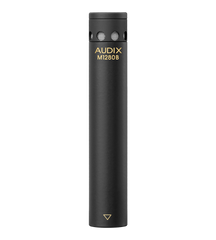
A slim cylindrical microphone is not automatically cardioid. The Audix SCX1 family, for example, includes cardioid, hypercardioid and omnidirectional versions, so the exact model designation matters. A cardioid reduces sound arriving from behind. A hypercardioid has different rejection angles and a rear lobe, requiring another approach to monitor or noise-source placement. An omnidirectional option can suit a balance that includes more of the acoustic environment, provided that environment supports the intended recording.
Consider the tone of off-axis pickup as well as its level. In an ensemble or stereo arrangement, much of the sound does not arrive directly on axis. Rotating the microphone may change the musical balance without changing input gain. If a design supports interchangeable capsules, check which capsules are included and which microphone body they fit. Several patterns being available in a product family does not mean that every package contains all of them or that a switch selects between them.
Stereo pairs and the importance of geometry
Two channels panned left and right are not, by themselves, a carefully designed stereo recording. In an XY arrangement, directional capsules sit close together at a chosen angle, creating the image mainly through level differences. A spaced AB pair also uses differences in arrival time. Choose around the width of the source, the room and the perspective you want. Compare headphones and loudspeakers, listening for a stable centre, believable width and an appropriate balance between the ensemble's outer players.
Check the recording in mono to hear how combining channels changes its tone and body. A matched pair can help provide closely aligned microphone characteristics, but it cannot correct poor geometry. Confirm whether the listing supplies one microphone, a pair, or a kit with a stereo bar. Record distance, spacing, angle and height for repeatable sessions. Check the two input channels too: an unintended filter or pad on only one channel changes the balance before the signals reach the recording software.
Acoustic guitar, piano and drum overheads
For acoustic guitar, begin with a position that captures both string attack and body, then adjust in small steps. Aiming straight into the sound hole simply because it looks like the obvious source can produce excessive bass. Allow for the player's movements and finger noise. A useful position keeps an acceptable balance throughout the performance rather than on a single test chord. If the guitarist also sings, check how voice and guitar spill into both microphones before committing to the arrangement.
On piano, lid position, register balance and room contribution all matter; there is no single location that works for every instrument. Above drums, decide whether the overheads should represent the complete kit or mainly the cymbals. Listen with the close microphones and check the combined snare attack. Brightness alone is not a quality measure, and excessive high-frequency energy can become tiring in a full mix. Try height and angle adjustments before relying heavily on equalisation to repair an unsuitable starting position.
Power, noise and input headroom
Match the microphone's power requirements to the mixer or interface. Many condenser models require phantom power, while some provide an alternative. The current AKG C1000 S, for example, supports battery or phantom operation; earlier generations can differ, so use documentation for the exact version offered. An XLR connector does not prove that an input supplies the required power. When several microphones will operate together, check the interface's capabilities in that configuration as well.
For quiet sources, assess microphone self-noise, preamplifier noise and the room itself. For loud sources, check sound pressure handling and input-stage headroom. A pad and a low-cut filter perform different jobs: reducing the overall level is not the same as removing low-frequency noise. Use each only where appropriate and follow the model's instructions. Mute monitoring when switching power, then test an actual performance. A moving meter confirms a signal but does not establish that noise, clipping and tonal balance are acceptable.
Accessories, care and common buying questions
Is a pair compulsory? One suitable microphone is enough for a single mono channel; a pair is needed for the chosen stereo method or two separate sources. Is a small diaphragm always better than a large one? No: compare specific microphones for the sound and application. Can these microphones work on stage? Yes, where their pattern, mounting and monitoring arrangement suit the conditions. Studio recording is only one of the possible uses.
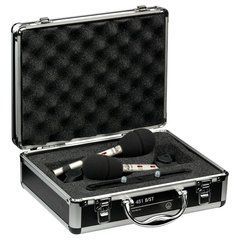
Confirm holders, windscreens, stereo bars, cases and cables before ordering. A tall stand needs a stable base, while a cramped position needs clearance for the connector. Protect capsules from moisture and dirt, and do not test them with a strong breath. Tell SoundsGood about the instruments, recording method, room and interface already in use. A complete selection includes practical mounting and transport arrangements: a missing holder can delay a session even when the microphone itself is the right choice.
SoundsGood supplies sound equipment for educational institutions, studios, concert halls, conference rooms, and public and private organisations. A technical brief can be used to agree on system components, specifications, a commercial quotation, documentation and delivery arrangements.