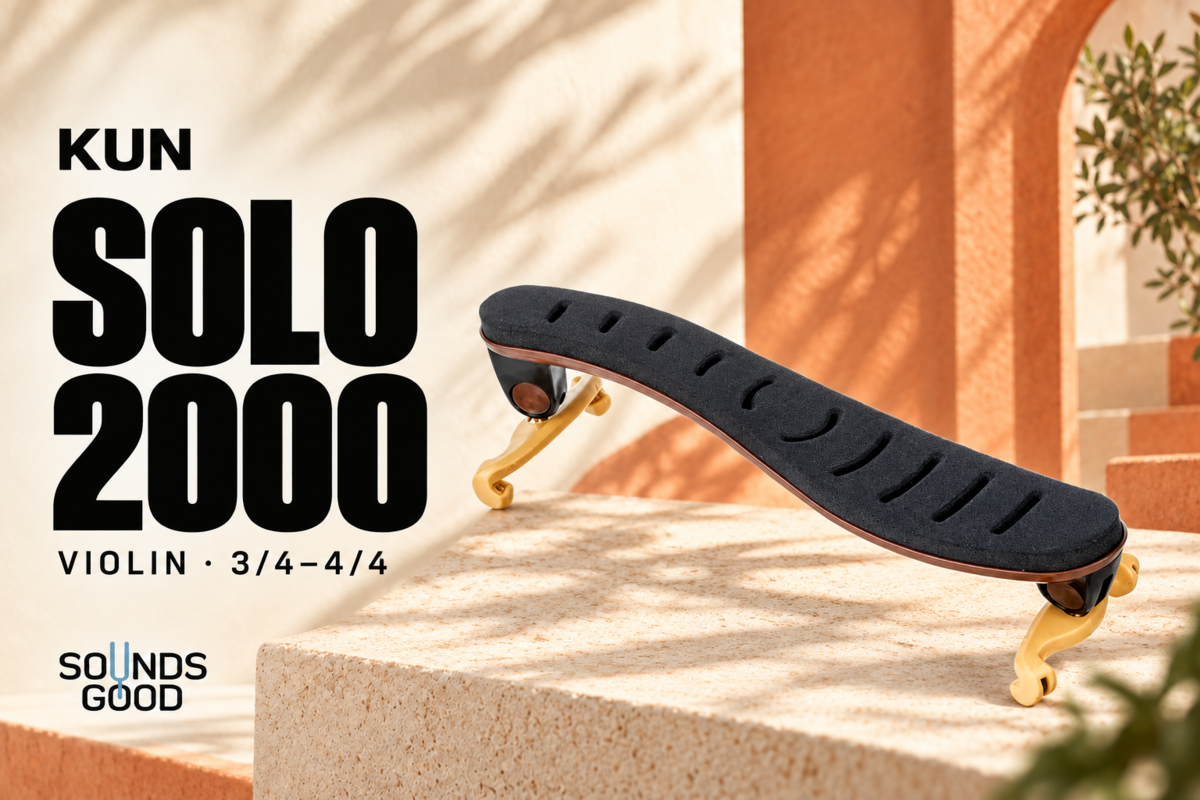
Kun Solo uses its own width-adjustment system and folding ends. We explain how it differs from Original and when it is worth trying.
Specifications
| Model | Kun Solo 2000 |
|---|---|
| Violin size | 3/4–4/4 |
| SoundsGood item number | 397625 |
Why Solo deserves a separate assessment
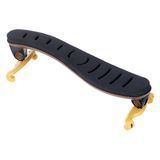
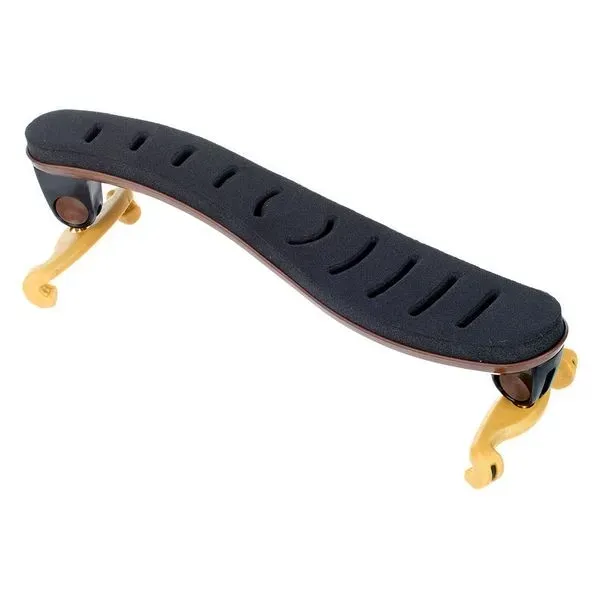
Kun Solo 2000 is recognisable by its contour, two-tone finish and the cut-outs in its pad. Choosing it for appearance alone would miss the point. Its different approach to width adjustment and taller position warrant a separate fitting, even if you have used Kun rests for years. A familiar brand does not guarantee a familiar feel. Before comparing, identify what your current support lacks: a usable position, convenient width adjustment, space in the case or a different shoulder contact shape. You can then relate Solo’s features to a real task rather than a general desire to upgrade accessories.
A different approach to fit
Kun positions Solo as a taller model. It has lever-operated width adjustment, folding ends and one size for 3/4 and 4/4 violins. The pad includes cut-outs. Leave clearance between the adjustment parts and the instrument’s back. The name Solo does not restrict it to soloists: the relevant question is fit.
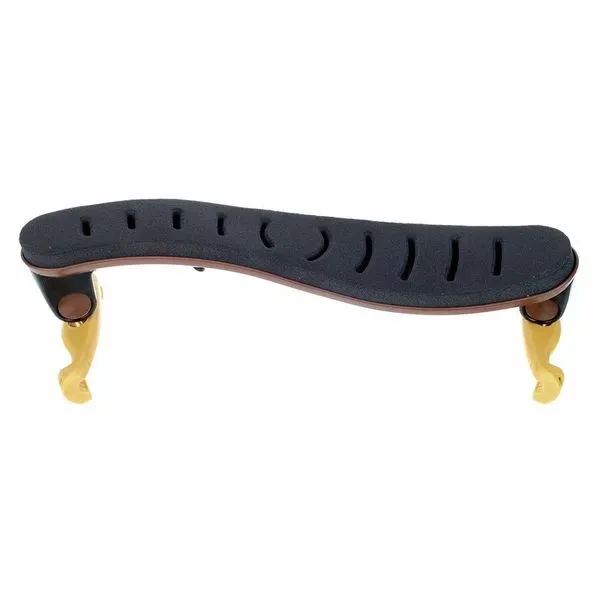
What the adjustment lever changes
Solo uses a lever system for width. Kun’s official instructions explain how to release an end member, move it and check that it locks into the chosen slot, emphasising adjustment at both ends. This does not mean the entire rest contains no threaded components. Do not transfer your Original adjustment routine to Solo simply out of habit. Identify which part changes the setting you need before fitting it. After adjustment, check stability and clearance from the violin’s back. If the position is unsuitable, change it methodically rather than seeking a result through stronger clamping or several simultaneous adjustments.
A taller design still needs a fitting
Shoulder-rest height works together with the chinrest and the instrument’s position. Neck length or another player’s recommendation alone is therefore not enough to select Solo. Begin with your normal playing position and check whether you can reproduce it comfortably. You should not have to adapt to an accessory simply because you have selected it. During the first session, try simple position changes, calm legato and string crossings. If you repeatedly want to reposition the violin, that observation matters more than the rest’s appearance. Discuss it with a teacher: angle or placement may be more significant than additional height.
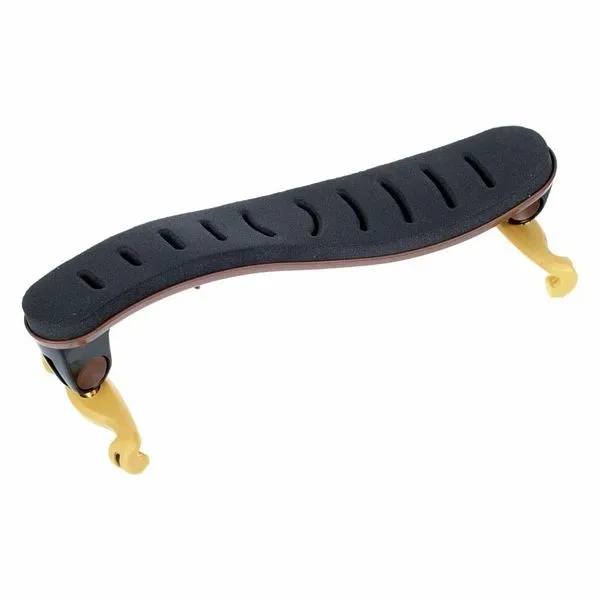
Folding and repeatable settings
Folding ends are useful when they support a simple daily routine. Test Solo inside your own case, not only in your hands: is there a dedicated space, do adjacent items press on the pad, and does the lid close without effort? Photograph a successful setup, then remove, fold and unfold the rest and check how easily you can return to the same fit. If a foot needs replacing, confirm the part and fitting procedure in Solo’s instructions. Its mechanism has its own details; experience with another model is not sufficient evidence of compatibility or correct assembly.
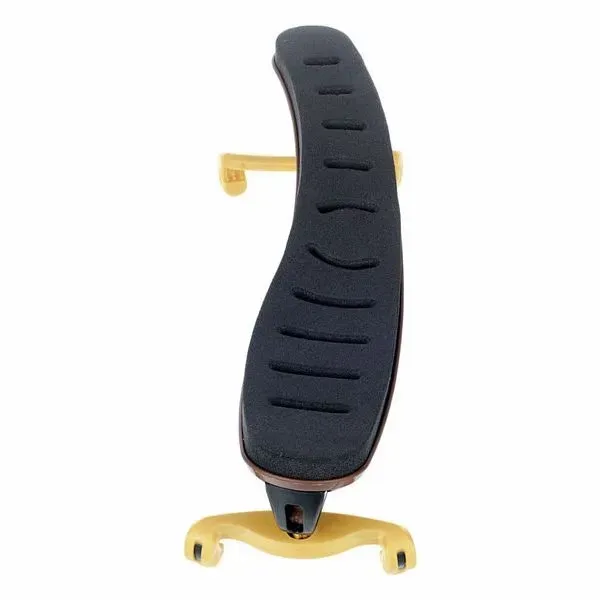
A focused comparison with other Kun models
When comparing Solo with Original, Collapsible or Bravo, divide your requirements into three groups: fit during playing, adjustment operation and storage. First play the same passage with each properly adjusted support. Then assess how conveniently you can make the width or height change you need. Finally, test the case. Avoid reducing everything to a single best-rest ranking: a model that suits another instrument and musician may not suit your requirements. SoundsGood lists Solo 2000 as item 397625. Check that identifier before ordering and keep a short note explaining why this particular design made your shortlist.
Everyday use
Once you find a suitable setup, test repeatability: remove the rest, fold it, unfold it and fit it again. A photograph of the settings off the instrument can be useful. Consider Solo when a taller design suits you and convenient width adjustment matters. Avoid changing both chinrest and shoulder rest during the same comparison, or it becomes harder to identify what changed the feel.
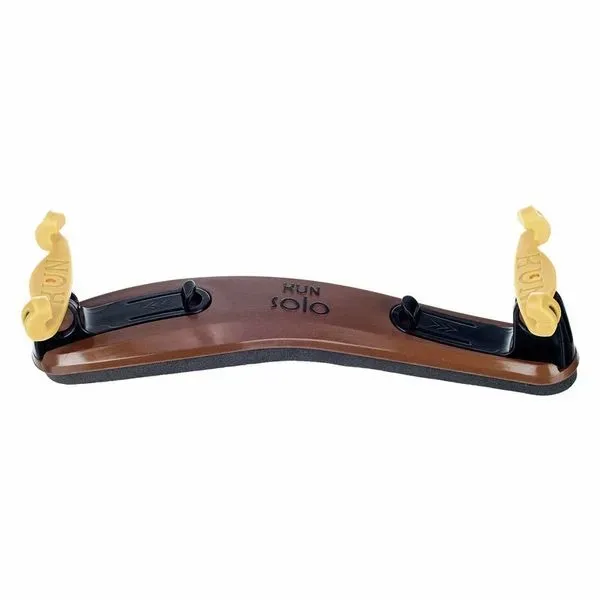
View the product at SoundsGood
Editorial review based on manufacturer documentation. The cover is an illustration; product photographs are from the SoundsGood catalog. Source: manufacturer documentation