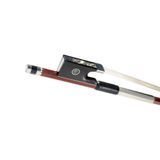
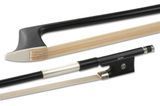
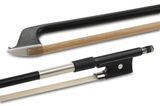
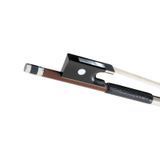
A bow influences how comfortably you start a note, sustain a phrase, cross strings and control short strokes. Choosing one simply as an accessory to the violin, or by looking for the most expensive wood in the description, misses much of the decision. Two similar-looking bows can feel different in the hand, while a familiar bow may require some readjustment after a rehair. This guide covers sizes, balance, stick materials, inspection and a trial sequence using your own instrument. The examples are Dörfler 6, 14A and 18, GEWA Carbon Student and Glasser Fiberglass. The photographs show specific products, and technical details have been checked against manufacturer information. This is not a report of personal listening tests, nor does it declare one material best for every player. The aim is to help you prepare useful questions and make a comparison that explains what you are buying. A student should involve the teacher who knows their right-hand position and current musical tasks. The useful choice connects the product to everyday playing rather than just to a series name.

1. Define the reason for buying
Before searching for a model, describe what needs to change. A first outfit needs a sound bow of the appropriate size for learning the basic movement. When replacing an existing bow, identify the difficulty: an unreliable start to the note, awkward handling near the tip, worn hair or a damaged frog. These point towards different solutions. If the issue is only hair condition, assess servicing first. If a child is moving to another violin size, matching the new outfit becomes central. A spare bow needs familiar handling and readiness for use, while a technical upgrade should relate to particular strokes being studied. Write two or three requirements in ordinary language. Wanting to sustain a note without repeatedly squeezing the fingers is more precise than wanting a professional sound. This helps the teacher and retailer select relevant candidates. Price and series name become useful once the actual playing task is clear.
2. Match size to the outfit and the player
Labels such as 4/4, 3/4 and 1/2 help match a bow to a violin size, but they do not replace a teacher's assessment. A child's age is only an initial guide because arm length, posture and learned movement vary. Do not buy an oversized bow to grow into if it encourages reaching with the shoulder or losing control near the tip. Nor should the correct size be inferred from one photograph. Have the student play a familiar exercise on the appropriate violin while the teacher observes the usable movement. Check the size attached to the exact item reference: one range may contain several versions with similar photographs. A frog close-up cannot establish overall length. If another person places the order, give them the complete model and size in writing. Plan a move to a larger outfit together with the instrument change and teaching advice.
3. Include maintenance in the budget
Compare readiness for use and future servicing as well as the price tag. Ask whether the hair has been prepared, whether the screw works properly and whether any work is likely to be needed soon. This is particularly important with a used bow, whose attractive initial price may become less appealing after a repair assessment. For a student, a reliable working outfit and access to a technician can be more useful than spending the entire budget on decorative fittings. Ask for differences to be explained through construction, equipment and the trial, rather than a vague claim of a higher level. There is no need to assign the bow a fixed percentage of the violin's price. If deciding between servicing an existing bow and replacing it, obtain both assessments. Include suitable rosin and proper storage if these are not already available in the kit.
4. Recognise the main components
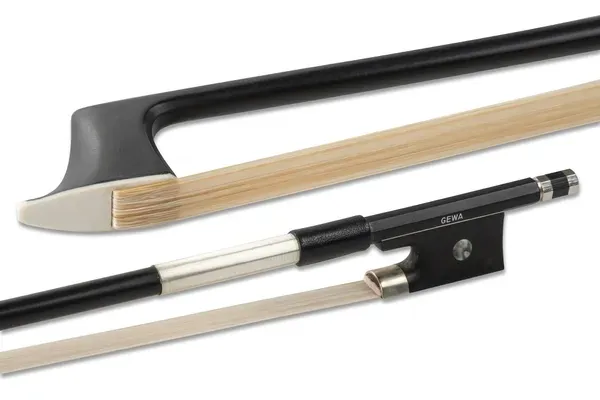
The stick forms the flexible structure, the hair contacts the string, and the frog sits near the player's hand. The screw changes the frog position and hair tension. The head is at the opposite end and deserves careful inspection. Near the grip are the winding and protective pad, while the frog includes fittings and decorative details. Knowing these names helps describe a problem accurately. A screw that is difficult to turn and hair that cannot reach the required tension are different observations. The GEWA and Glasser close-ups help relate these components to your own bow. They are not instructions for dismantling: removing the frog or hair anchoring is unnecessary during selection. Observe condition, check permitted movements gently and ask questions. Naming the actual component makes a consultation more useful and reduces guesswork when describing a change in operation after purchase.
5. Separate weight from balance
Weight describes overall mass, while balance involves its distribution and how the bow feels in movement. Two examples with similar scale readings can therefore handle differently. Do not automatically choose the lowest number if playing requires continual compensation for an awkward feeling. Greater weight does not automatically produce a fuller sound on your violin either. CodaBow distinguishes weight, balance, stiffness and action; these are useful comparison questions rather than a ready-made ranking. Test calm movement through different parts of the length. Is the transition towards the tip comfortable? Do you want to squeeze the fingers unnecessarily? Does control remain predictable? Ask for the actual specimen's weight if it matters, but do not substitute it for playing. A note saying that a quiet change of direction feels easier is more useful than a small numerical difference with no connection to the musical task.
6. Assess flexibility through playing
Stiff, supple and springy are often used as quality judgements, although they describe different responses and require context. A degree of resistance that helps one musician shape a phrase may hinder another player's usual movement. Do not test suitability by bending the stick with your hands or pressing it outside normal playing. That does not reproduce the musical task and may damage the bow. Prepare short exercises involving sustained tone, direction changes, string crossings and a familiar short stroke. Use a comfortable tempo instead of demonstrating an unfamiliar technique solely for the test. If a candidate requires a noticeable change in effort, discuss it with the teacher. Unfamiliar does not necessarily mean unsuitable, but the purchase should account for realistic adaptation. The comparison should show whether the bow helps complete the task, rather than how far it bends or how impressively somebody else can make it bounce.
7. Read the exact wood specification
Wooden bow descriptions may use Brazilwood, Massaranduba and Pernambuco. Do not assume that all brown sticks share one material or identify a species solely from photographic colour. The official Dörfler 6 description places it in the basic Brazilwood range and identifies massaranduba, whereas 14A and 18 are described as pernambuco models. This clarifies the specification, but a wood name alone cannot establish the best fit for your hand. Construction, condition and the trial still matter. When a listing contains conflicting information, confirm the reference and manufacturer details. Similar model numbers do not justify transferring specifications between products. A decorative eye or shiny winding does not identify the stick material either. Confirm the construction, then assess handling. Relate any discussion of material prestige to a difference that you can feel or that the teacher can demonstrate through a familiar exercise.
8. Carbon bows are individual designs
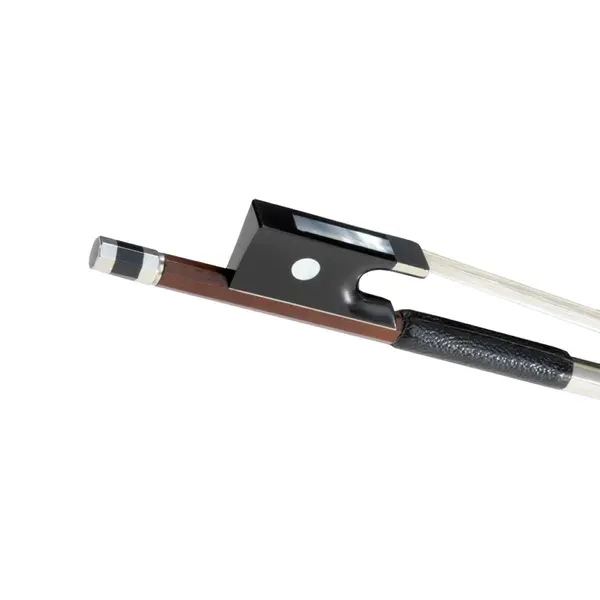
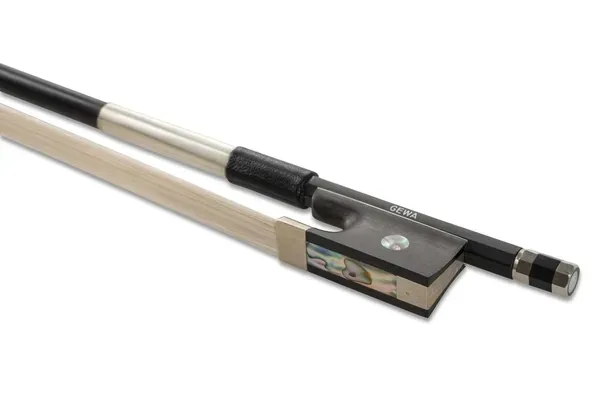
A carbon bow is not one standard product: models differ in construction, balance, fittings and response. Statements that all carbon bows are lighter, louder or easier than all wooden bows do not help selection. The GEWA Carbon Student here is a particular 4/4 version, reference 404.290.080, rather than a representation of every composite bow. Check the note onset, handling near the frog and control in the upper part. Do not confuse stick material with hair material: a black carbon stick can be paired with natural horsehair. It also does not eliminate care of the screw, frog and hair. If buying a spare, check it periodically in use rather than leaving it untouched for years. Its practical value is readiness when the main bow is being serviced. Play your ordinary material with it in advance so that the first real trial does not occur when the main bow is already unavailable.
9. Fiberglass and carbon are different materials
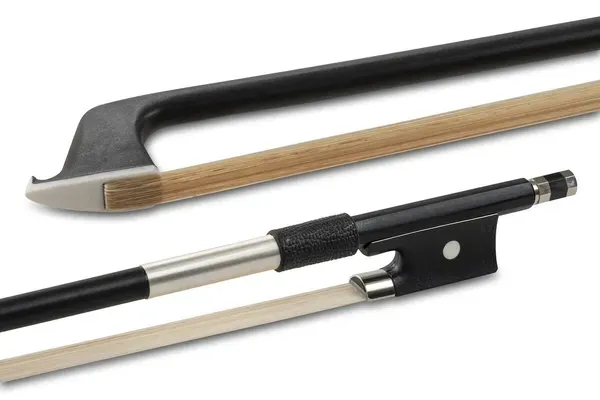
Fiberglass and carbon should not be treated as interchangeable descriptions. The Glasser example demonstrates why the full specification matters. GEWA's official page for reference 404.288 lists a black round stick, synthetic frog and natural hair. Synthetic describes the frog here; it does not mean synthetic hair. Black colour alone does not establish that a stick is carbon either. For a student, assess size, comfort and consistency in ordinary exercises. An abstract durability claim should not be the only reason for choosing it, nor permission for careless handling. The head, hair, screw and fittings remain components requiring attention. Compare this particular Glasser with particular alternatives on the same violin. If a retailer offers another visually similar black bow, confirm the model and construction again before testing it. Similar appearance is not evidence of identical handling or an interchangeable place in the player's outfit.
10. Round versus octagonal sticks
Cross-sectional shape is part of the design, but it is not a universal label for softness, speed or professional quality. Do not accept the rule that an octagonal stick always offers better control without trying it. In the Dörfler ranges discussed here, the A suffix helps distinguish versions: 6 is officially round and 6a octagonal, with the same distinction between 14 and 14a. Model 18 is described as octagonal without needing that suffix. Even a familiar naming convention must therefore be checked for the individual model. Shape does not reveal every aspect of material distribution, adjustment and playing response. Set the same musical tasks for both candidates and note the results before letting the specification explain them. There is no reason to reject a comfortable bow simply because a favourite performer uses a different shape. Their technique, violin and repertoire may differ from yours.
11. Dörfler 6 as a wooden reference point
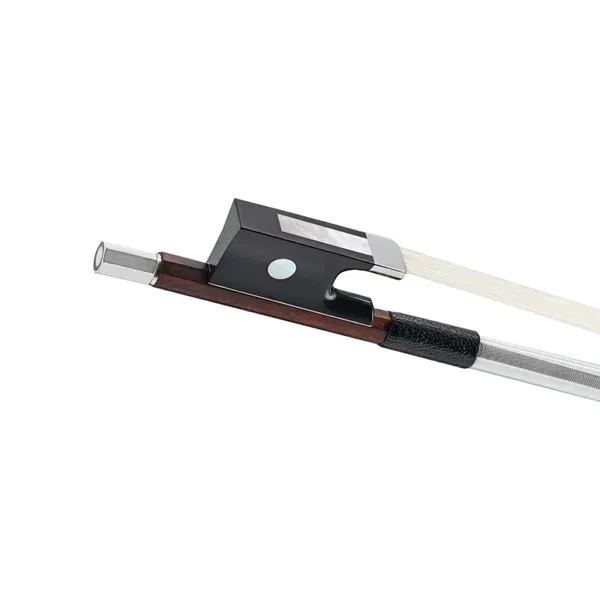
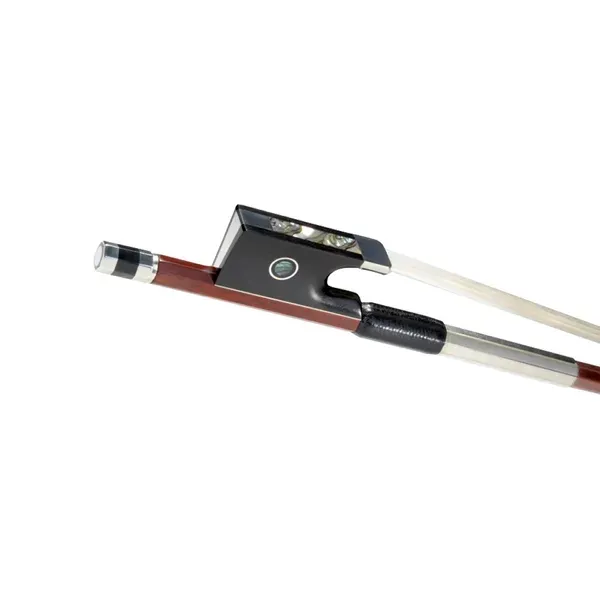
Dörfler 6 provides an example of a basic wooden bow. For the illustrated 4/4 version, the exact size, round stick and correct series identification are important. The manufacturer specifies an ebony frog, Metal Blanc winding and massaranduba in the basic model description. These details establish what is being compared but do not promise ideal balance for every student. Use it as a starting point in a trial with open strings, a familiar melody and a controlled change of direction. Then return to your own bow to test the first impression. Do not transfer conclusions from a full-size version to a child's fractional size without checking. Catalogue images may be shared across a range and do not necessarily convey scale. Record the full reference of the version tried, especially if the purchase will happen later or be placed by another family member.
12. Comparing Dörfler 14A and 18
Both models are described by the manufacturer as pernambuco bows with octagonal sticks, but their frog and button details differ. The 14a specification includes an ebony frog with slide and eye and a one-piece button with eye. Model 18 has a selected pernambuco stick, a frog with heel plate, Parisian eye and three-part button. Decorative details do not automatically establish a better sound for your playing. Test any useful difference in sustained notes, quiet starts and a familiar short stroke. If the teacher prefers one, ask which student task it makes easier. The official specification is used here for Dörfler 18 because a retailer's descriptive paragraph may conflict with its specification table. Base the decision on the correct product and its behaviour rather than assuming that a larger series number is automatically the best choice for the current stage of learning.
13. Identify GEWA Carbon Student by its reference
SoundsGood lists the model as GEWA Carbon Student 4/4 Round Stick. The current official page uses the shorter name Carbon, round stick, with the matching reference 404.290.080. This illustrates why the item number can be more reliable than an abbreviated heading. The manufacturer lists natural hair, an ebony frog with slide, mother-of-pearl eye, nickel-silver fittings and a GEWA stamp. The photographs show the head and grip area in detail. The next step is to assess the actual specimen rather than stop at a materials list. Check finger placement near the protective grip and whether holding it requires an unwanted posture change. Photographic hair colour is not a quality measurement because lighting varies. Keep violin, strings, room and exercises unchanged when comparing with a wooden candidate. Separate any experiment with different rosin or instrument adjustment so that the cause of a perceived change remains understandable.
14. Consider Glasser Fiberglass separately
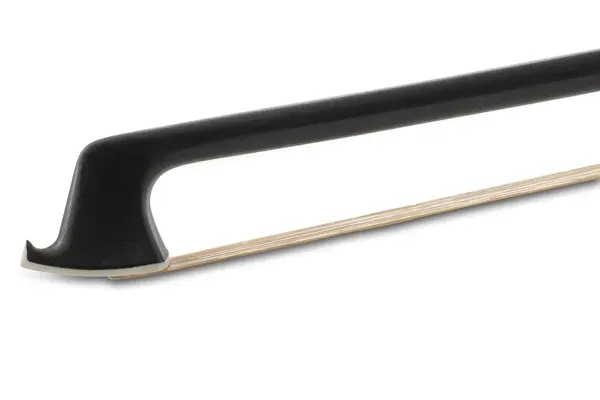
For Glasser Fiberglass 4/4, reference 404.288, the official GEWA specification confirms US manufacture, a black round stick, nickel-silver winding, synthetic frog and natural hair. Preserve the complete description: changing a single component material creates a different impression of the construction. The frog photograph shows fittings different from GEWA Carbon, despite the visual similarity of their black sticks. Apply the same simple trial tasks to this candidate. Is note onset comfortable, is a direction change stable, and can you use the required length calmly? For a school spare, ask about servicing and clear size identification. Do not assume that every manufacturer service programme is automatically available through every Ukrainian retailer; confirm the actual arrangement. Maintaining the product in working condition matters more than a general reputation for durability. Have the teacher check its preparation before giving it to a student so that it enters ordinary practice with clear guidance.

15. Inspect before playing
Examine the bow in good light. Look at the head, visible cracks, tip plate, frog, winding and finger grip. Ask about a repair mark or unexplained break in the material before the trial. Do not test a suspicious area by pressing it. Sight along the stick without bending it by hand, and take geometry concerns to a specialist. Check whether the screw works without unusual resistance and whether the frog has obvious unwanted movement. Do not unscrew the mechanism until components separate. Ask who checked a new bow's readiness, or when a used one was last serviced. This does not replace professional diagnosis, but it highlights questions that should not be ignored because the price is attractive. Begin comparisons with a sound candidate: the unusual behaviour of a damaged example cannot reliably describe the model's normal playing properties or support a fair comparison with an undamaged bow.
16. Hair condition matters more than photographic colour
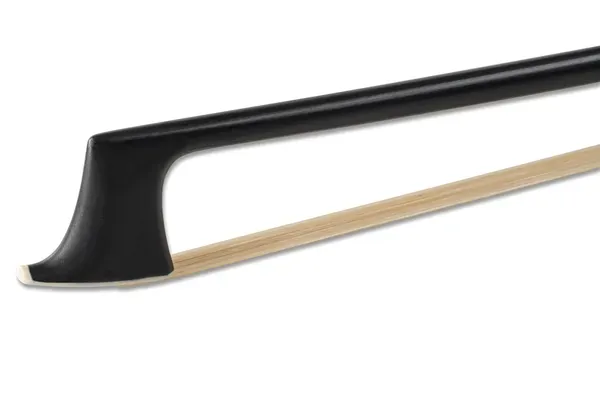
Look at the evenness of the hair ribbon, obvious losses, dirt and irregular areas. Do not run fingers over the working surface to test smoothness. Colour in a photograph is an unreliable quality indicator, and natural or white does not describe the present condition after extended use. If a familiar bow now needs increasing amounts of rosin without a clear result, have its hair and adjustment assessed. Avoid one universal rehair calendar because use and condition vary. Confirm that both candidates are properly prepared before comparing them. New unprepared hair and old dirty hair create different conditions, making a conclusion about stick material premature. Include possible servicing in a used bow's budget. Sometimes restoring a familiar bow to normal condition is the useful first step before evaluating replacements. Ask what improvement servicing is expected to provide and how long it will take, so that lessons and any need for a spare can be planned.
17. Tension is not a fixed number of screw turns
Do not memorise one turn count as correct for every bow. Starting position, hair length and conditions can differ. Ask the teacher to demonstrate suitable working tension for your bow and how to assess it. Do not try to straighten the stick to obtain a stronger feeling. If the hair cannot reach the required state or will not loosen normally, do not force the screw towards its limit. Establish the cause first. Yamaha notes that hair responds to humidity changes, which helps explain why a familiar assembly may need attention at different times. During purchase, watch the adjustment and repeat it under supervision. Learn to return the bow to its storage condition afterwards. Leaving playing tension overnight because another lesson is due in the morning is not a useful shortcut. A child should understand the purpose of the action instead of reproducing a number of turns without checking the result.
18. Prepare rosin consistently
Rosin helps the hair interact with the string, but the amount should not be determined by a desire to produce more dust. Ask whether a new bow has been prepared and follow the teacher or technician's guidance. Do not compensate for every weak note onset by continually adding more. Movement, hair condition or adjustment may be involved. A freshly over-rosined candidate and a neglected one do not provide comparable conditions. Arrange similar preparation without introducing several unfamiliar products at once. Show a child how to hold the rosin without striking it with the bow head. Do not scrape the hair with random objects following a short online video. If a new outfit produces almost no sound, have it prepared by someone competent before judging it. Record any preparation performed before the trial, so that a later comparison can reproduce the conditions instead of unknowingly testing a different state of the hair.
19. Organise a fair trial
Bring your own violin and familiar outfit where possible. Keep strings, adjustment and room unchanged to compare the bows themselves. Select a few short passages you know well and agree the sequence with the teacher. Play your existing bow, try the candidate, then return to the original. This tests the initial impression. Do not compare one example after a long warm-up with another at the end of a tiring day. Take brief pauses to avoid letting fatigue dominate. If recording is permitted, keep the phone in one place without changing distance between candidates. The recording is supporting information rather than a laboratory measurement. Your hand's experience and the teacher's observations remain important. Note model names and references before starting. For each candidate, record one useful quality and one unanswered question. A focused comparison of a few relevant bows is more informative than rushing through many with no consistent method.
20. Start with a sustained note and a quiet onset
Begin with slow even bowing on a familiar open string. Listen to the beginning, middle and direction change while noticing unnecessary hand tension. Do not immediately aim for maximum volume. A calm exercise reveals control through different parts of the bow. Then play a short phrase more quietly than usual, staying within established technique. Compare the predictability of the onset and your ability to repeat it. One successful note is not sufficient if the result cannot be reproduced. Ask the teacher to listen from a short distance and identify the actual difference. Their observation may differ from what is heard beside the ear. Easier handling for the player and a smoother direction change for the listener are separate useful findings. Repeat after returning to the original bow to see whether the difference persists rather than simply reflecting gradual warm-up during the trial.
21. Add crossings and short strokes
After the sustained note, try familiar string crossings and short separated notes. Choose a tempo that allows control instead of hiding errors through speed. Assess whether the onset remains consistent and whether the hand position must continually be rediscovered. Test advanced strokes only when they are already part of your practice. If spiccato has not yet been learned, a teacher's impressive demonstration does not prove that the bow is the best first-year choice. Ask how its characteristics will support the student's next tasks. An experienced player can add a regularly difficult passage without changing the entire technique during the trial. Return to a basic exercise afterwards to separate overall handling from one lucky attempt. A useful advantage repeats across several necessary actions. If the difference only appears in an unfamiliar technique, leave that question open for discussion instead of immediately making it the decisive purchasing criterion.
22. Reassess comfort after several minutes
An attractive first impression should be checked after ordinary short practice. Notice any desire to grip the frog excessively, raise the shoulder or alter the hold simply to keep control. Stop if there is discomfort and discuss technique with the teacher rather than forcing adaptation. The bow and the player's skill work together, so a movement explanation may matter more than another model. At the same time, do not dismiss discomfort because of brand authority or a high price. Repeat after a short break and compare with a familiar option. Adults should listen to a child's own experience instead of judging only appearance. Describe where control becomes difficult and during which exercise. A medical diagnosis is not needed to recognise an uncomfortable task. If adaptation is proposed, ask what it involves and why it is reasonable. That is more useful than an indefinite promise that an expensive purchase will eventually feel right.
23. Assess a used bow and its service needs
With a used bow, history, condition and access to a specialist inspection matter. Ask about head or frog repairs, rehairs and screw function. Photographs cannot reliably settle every question, even when the exterior looks tidy. An old stamp alone does not establish origin or high value. If authenticity or collectable status affects the price, obtain an appropriate expert assessment. For a student purchase, sound condition and understandable use remain central. Have a technician assess required work and whether the expense is justified. Do not accept an undefined repair solely because the initial price is low. Confirm trial and return arrangements rather than assuming that every seller offers the same terms. A promising bow may require time and service, while a student needs a working outfit for the next lesson. If the purchase depends on successful repair, clarify the agreed work and who will evaluate the outcome before relying on a future improvement.
24. Maintain the result of a good purchase
After playing, loosen the hair, remove rosin dust from the stick carefully with a suitable dry cloth and avoid touching the working hair with your fingers. Store the bow in its intended case fitting, checking that it is secure and does not press against the instrument. Do not leave it on a chair, music stand or table edge where it can be knocked. Before travelling, check closure and remove loose objects that could strike the head. Avoid household solvents and do not attempt to correct the stick's curve through home heating. Unusual screw behaviour, hair that will not loosen or a suspicious crack needs a specialist. A student benefits from a brief finishing sequence: care, loosening, securing and case check. If several people share an outfit, agree who performs the final check. Clear responsibility prevents a tensioned bow being left behind because everyone assumes somebody else has already handled it.
25. Make the final decision
Return to the original reason for buying and compare it with the trial. Does the size fit the outfit? Are material and reference confirmed? Is the mechanism sound? Does the benefit repeat in relevant exercises? If one candidate sounds preferable while another handles more comfortably, discuss that trade-off with the teacher. Do not rush because of an attractive photograph or a larger series number. For a first bow, choose a clear, reliable working tool; for an upgrade, seek an improvement you can explain. Before payment, confirm the model, size and condition of the specimen actually tried. Keep the reference and maintenance advice. For a remote order, clarify what is supplied and how to inspect it on arrival. The useful outcome is confident practice with understood behaviour. Materials, shape and fittings matter through their combined work with your hand and violin, rather than as separate promises on a product page.
Featured products
- Dörfler 6 4/4
- Dörfler 14A 4/4
- Dörfler 18 4/4
- GEWA Carbon Student 4/4 — 404.290.080
- Glasser Fiberglass 4/4 — 404.288