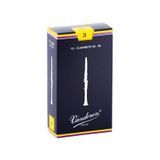

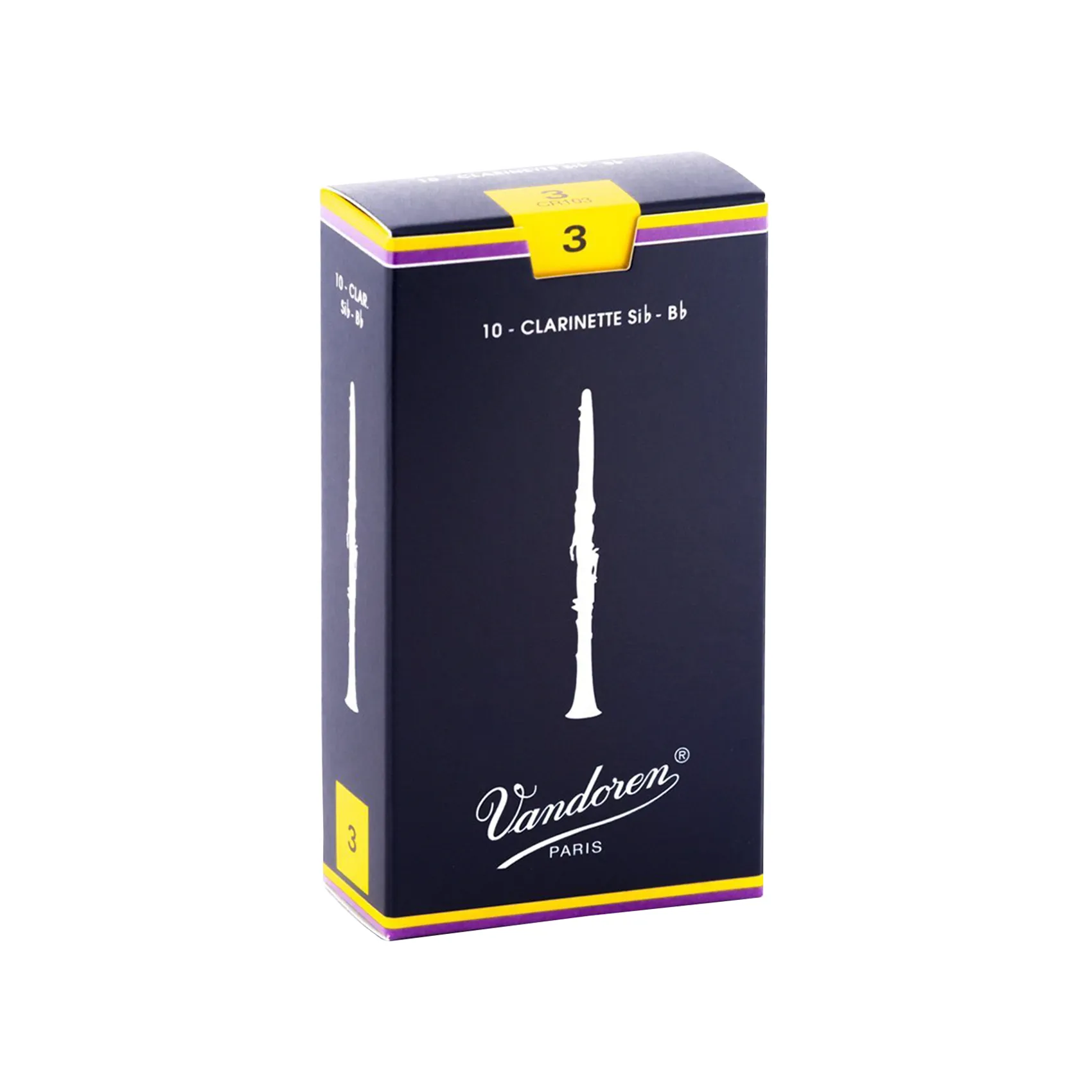
Inside the blue Vandoren box: Traditional versatility, quiet attacks, wide intervals and strength selection, using the CR103 strength 3 as an example.
Key details
| Series | Vandoren Traditional |
|---|---|
| Instrument | B♭ clarinet |
| Example strength | 3 |
| SoundsGood item code | Vandoren-CR103 |
A familiar series with a clear purpose
Traditional provides a familiar reference point in the Vandoren range for many clarinetists. The manufacturer presents it as suitable for different styles and emphasizes response across the registers, flexibility and clarity. This does not mean that one strength suits every player. A familiar series is useful because it allows consistent evaluation of changes in mouthpiece, strength or technique. If you already use Traditional, identify the specific task you want to improve before moving to a different series simply because it has a newer name or more expensive packaging.
Quiet attacks as a useful test
Vandoren specifically mentions pianissimo attacks, including in the upper register. Test this within a range you can control: begin quietly in the middle register and work upward gradually. The note should begin predictably, without a sudden increase in lip pressure or an unwanted accent. This trial is more informative than immediately aiming for maximum volume. If quiet entrances are unstable, check alignment, the condition of the reed edge and the instrument seal. Moving to a higher strength alone does not guarantee that the underlying problem will disappear.
Legato, staccato and wide intervals
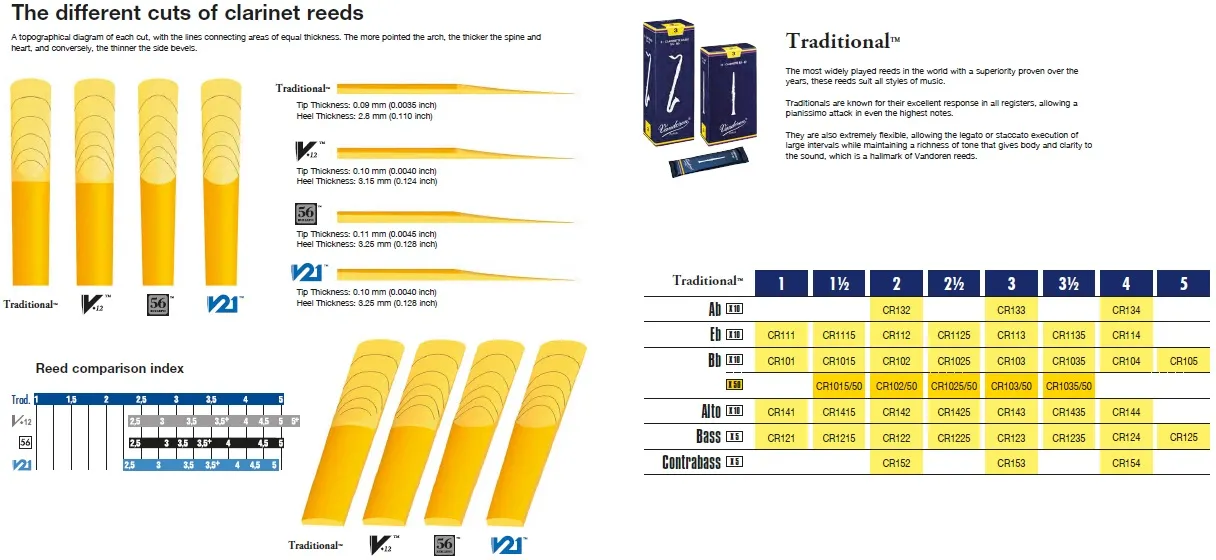
The manufacturer associates Traditional flexibility with wide intervals played both legato and staccato. Choose a familiar study that crosses registers for your own comparison. Play the phrase smoothly, then repeat it with a separate attack on each note. Evaluate tonal continuity and whether resistance changes enough to make you adjust the embouchure substantially. On clarinet, these transitions also depend on finger and air coordination. The reed should support your technique, and your assessment should distinguish its behavior from an occasional execution error rather than attributing every uneven note to the reed.
Strength 3 and neighboring options
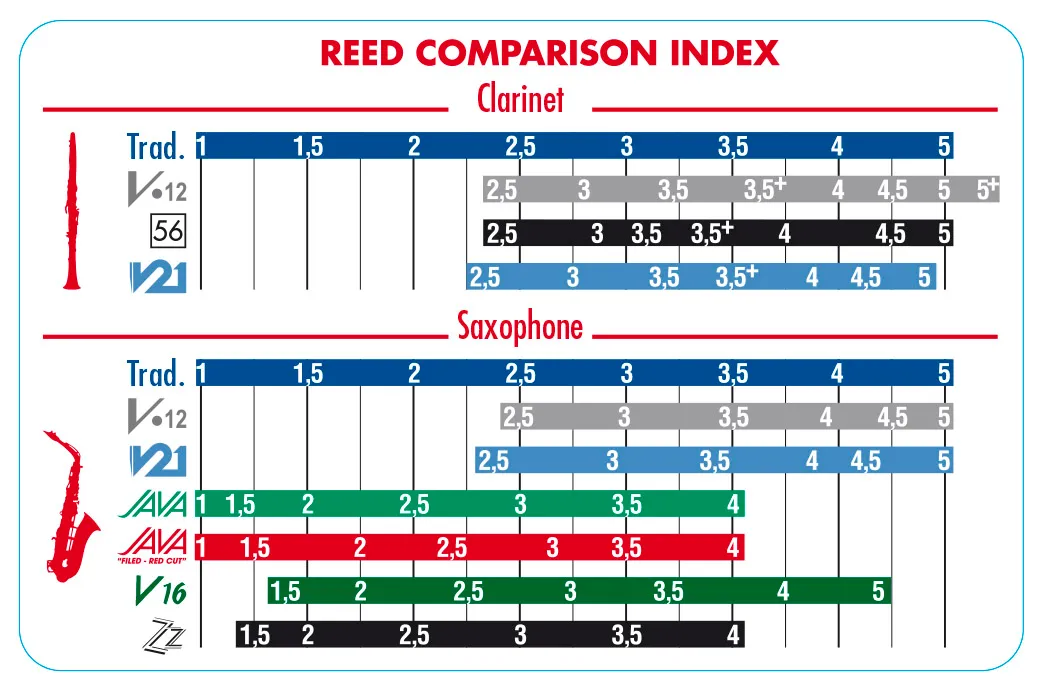
CR103 in this review identifies a Traditional B♭ clarinet reed in strength 3. It is a specific product example, not an automatic choice for either a student or a professional. Match your initial strength to the mouthpiece and, when learning, your teacher’s advice. Different series can give different resistance at the same printed number, making the official comparison chart useful when moving from V•12 or V21. Choose an option that supports both quiet entrances and the required dynamics without rapid fatigue. A larger number does not improve tone by itself.

Reading the packaging and product listing
On the blue box, check Clarinette Si♭ – B♭, strength 3 and the CR103 reference. These distinguish the required product from bass clarinet, E♭ clarinet and other reed types. The official CR103 reference covers a box of ten; another package size has a separate reference. The retailer may sell reeds individually, so verify the sale unit and minimum quantity before payment. This review combines a photograph of the selected product with an official series image that may show another strength. The specific product listing remains the reference for your order.
How to compare reeds
Compare reeds on the same mouthpiece, with the same ligature and in a familiar room. First check alignment and inspect the tip for damage. Play sustained notes, several quiet attacks, slow legato across a register change and a short passage you know well. Repeat that sequence on the other reed. Record both your impression of the tone and the effort needed to start notes, sustain phrases and change dynamics. Recordings made from the same distance can help: a louder take is easily mistaken for a better one. Avoid judging an entire series from a single specimen, because natural cane varies. If the same difficulty persists with several undamaged reeds, ask a teacher to help check the mouthpiece, instrument sealing and playing setup.
Preparation, rotation and storage
Moisten the playing surface evenly with clean water before playing and allow the cane to adjust; there is no single preparation time that suits every reed and environment. Begin with a short, gentle trial. Afterwards, remove the reed carefully, remove excess moisture without pressing on its delicate tip, and place it in a suitable holder that supports its flat surface. Avoid leaving a wet reed clamped to the mouthpiece inside a closed case. Rotate several prepared reeds and note when each entered use, making gradual changes easier to recognise. Keep them away from heat and abrupt humidity changes. A split tip or distortion is a reason to replace a reed; trimming or sanding without experience can damage its profile. Judge service life by condition and reliable response rather than a promised number of days.
When Traditional is a good choice
Consider Traditional for varied daily work when you need controlled attacks, changes of articulation and a familiar baseline for further comparisons. There is no reason to abandon a series that works well simply because other profiles exist. Repeated difficulty with a particular task, however, is a useful reason to test a neighboring strength or another design under consistent conditions. Evaluate several reeds over practice sessions and record both quiet and louder passages. A convincing choice combines comfort for the player with the sound quality required from the listener’s perspective.
View the product, sale unit and availability at SoundsGood
Editorial review based on manufacturer documentation, without a claim of personal testing. The cover is an illustration; packaging photographs and diagrams come from the catalog and manufacturer.