Explore Vandoren ZZ for alto saxophone: quick response, the heart and tip relationship, strength selection and checking the correct product reference.
Key details
| Series | Vandoren ZZ |
|---|---|
| Instrument | Alto saxophone |
| Example strength | 2.5 |
| SoundsGood item code | Vandoren-SR4125 |
The purpose behind ZZ
According to Vandoren, the ZZ jazz series was introduced in 2002. Its central idea is fast response while retaining tonal expression. The manufacturer emphasizes the relationship between the heart and tip as a defining aspect of the design. For a player, this suggests testing how the reed reacts to a short air impulse, a change of articulation and movement between registers. The Jazz label does not restrict it to improvisation. Evaluate the reed against your actual part and familiar mouthpiece rather than choosing solely by a genre description.
What quick response means in practice
A useful response test alternates short notes with sustained tones. Play the phrase at a moderate dynamic, then repeat it more quietly without changing the tempo. Listen for notes beginning on time without exaggerated tongue movement. Test a gentle unaccented entrance separately: a reed that feels satisfying with sharp articulation may behave differently in a ballad. A suitable choice lets you control how the note starts. Do not automatically blame the model for excess noise or instability; first check placement, the condition of the tip and the air supply.

Tone in recordings and ensemble work
Vandoren describes ZZ as having a rich and colorful sound. Turn that description into a practical test by recording the same melody on your usual reed and on ZZ from the same distance. Avoid playing louder merely to make the new option seem more convincing. Listen for continuity through a crescendo and for articulation remaining clear against accompaniment. Ensemble work also requires blending with other voices. A solo feature and a section passage can place different demands on the setup, so include both situations in your evaluation before drawing a conclusion.
Choosing the strength
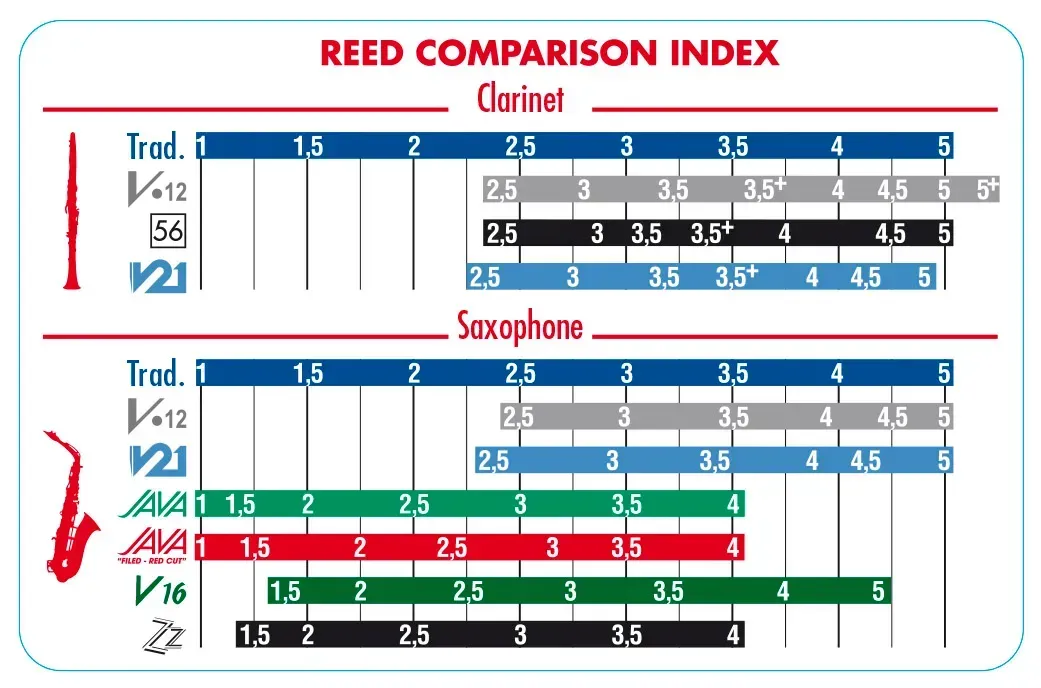
SR4125 identifies an alto saxophone ZZ reed in strength 2.5. When moving from another series, use the comparison chart to select a starting point for trials. A higher number does not indicate greater musicianship: excess resistance can make quiet attacks harder and reduce endurance. A reed that is too soft for your setup can also limit control. Consider quiet entrances, normal dynamics, accents, upper-register work and session length together. Changing the mouthpiece at the same time makes it much harder to distinguish the contribution of each component.

Finding ZZ in the SoundsGood catalog
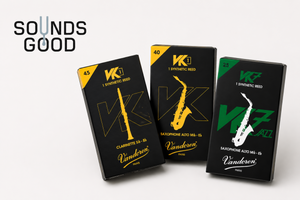
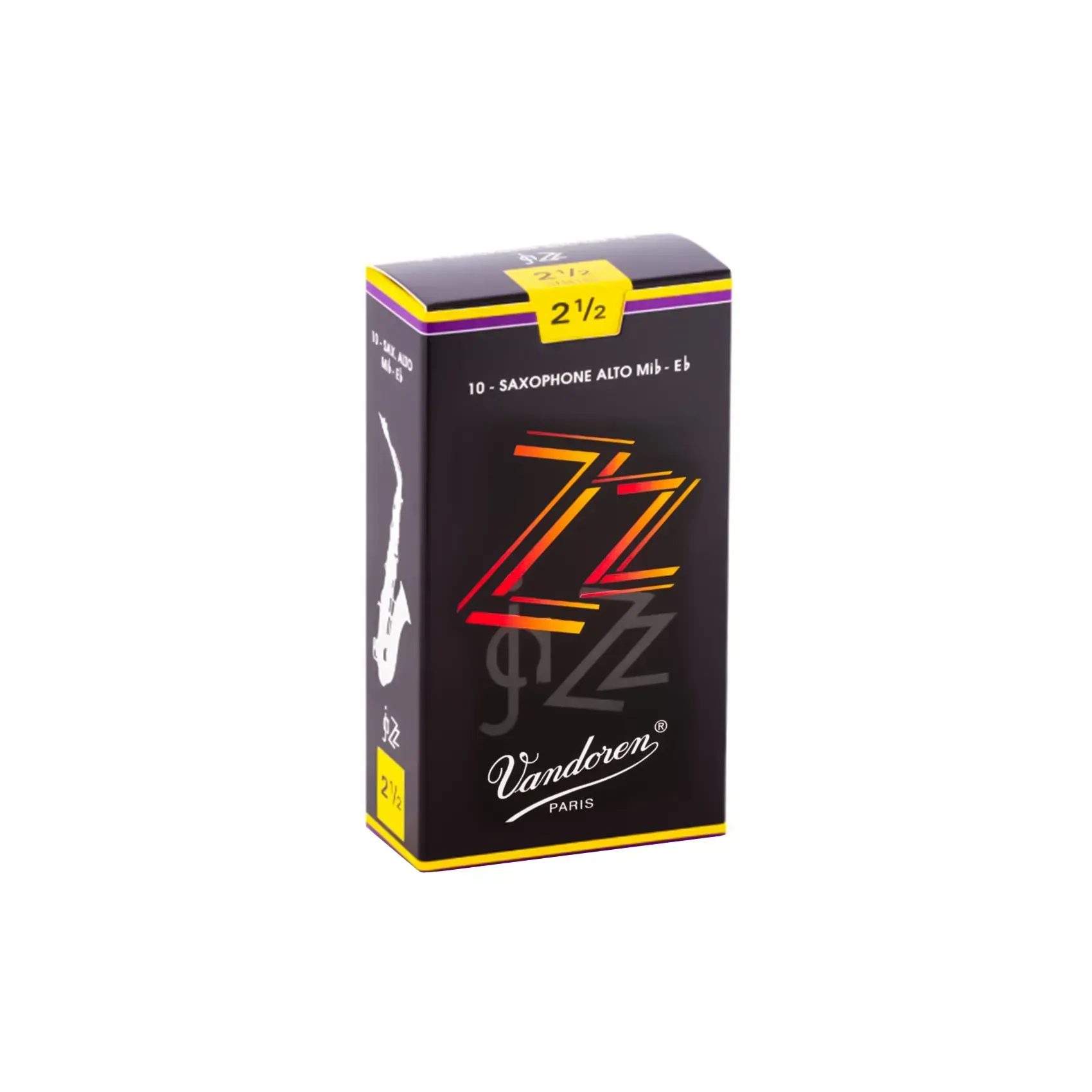
The selected SoundsGood listing uses the name Vandoren JAZZ SR4125. The official catalog identifies SR4125 specifically as the ZZ alto saxophone reed in strength 2.5. Check the reference, instrument and strength when reviewing your order. The photographs show the ZZ branding, and the manufacturer lists ten reeds per box for this code. Individual sale units and minimum order quantities are set by the retailer. Confirm those details on the product page before payment so that an individual reed price is not mistaken for the cost of a complete box.
How to compare reeds
Compare reeds on the same mouthpiece, with the same ligature and in a familiar room. First check alignment and inspect the tip for damage. Play sustained notes, several quiet attacks, slow legato across a register change and a short passage you know well. Repeat that sequence on the other reed. Record both your impression of the tone and the effort needed to start notes, sustain phrases and change dynamics. Recordings made from the same distance can help: a louder take is easily mistaken for a better one. Avoid judging an entire series from a single specimen, because natural cane varies. If the same difficulty persists with several undamaged reeds, ask a teacher to help check the mouthpiece, instrument sealing and playing setup.
Preparation, rotation and storage
Moisten the playing surface evenly with clean water before playing and allow the cane to adjust; there is no single preparation time that suits every reed and environment. Begin with a short, gentle trial. Afterwards, remove the reed carefully, remove excess moisture without pressing on its delicate tip, and place it in a suitable holder that supports its flat surface. Avoid leaving a wet reed clamped to the mouthpiece inside a closed case. Rotate several prepared reeds and note when each entered use, making gradual changes easier to recognise. Keep them away from heat and abrupt humidity changes. A split tip or distortion is a reason to replace a reed; trimming or sanding without experience can damage its profile. Judge service life by condition and reliable response rather than a promised number of days.
Making the decision
Include ZZ on your shortlist when your repertoire contains detailed articulation and rapid changes of character. The practical aim is to find a reed that does not require a new strategy for every entrance. Compare it with JAVA or Red Cut using identical excerpts, but resist choosing a winner in the first few minutes. Prepare several reeds consistently and repeat the trial on different days. If ZZ provides the control you need without unnecessary fatigue and sounds convincing on recordings, that is stronger evidence than any general description of its tone.
View the product, sale unit and availability at SoundsGood
Editorial review based on manufacturer documentation, without a claim of personal testing. The cover is an illustration; packaging photographs and diagrams come from the catalog and manufacturer.