The YTS-26 in detail: nickel-plated keywork, Front F, low-register checks and a practical comparison with the Yamaha YTS-280.
Key specifications
| Model | Yamaha YTS-26 |
|---|---|
| Type | Tenor saxophone |
| Key | B-flat (B♭) |
| Finish | Gold-lacquered body; nickel-plated keywork |
| Auxiliary keys | Front F |
| Specified mouthpiece | Yamaha 4C |
| SoundsGood item number | 34349 |
Starting directly on tenor
The YTS-26 is a student B-flat tenor saxophone. It deserves attention from someone choosing the tenor voice for lessons, rather than simply a larger instrument instead of an alto. Starting on tenor is possible, but first check that you can support the body and reach the keys comfortably. For someone who does not yet play, this need not become a sound-production examination: let a teacher demonstrate the basic position and help adjust the strap. Then compare the feel of alto and tenor. Base the decision on the music you want to play and your comfort, rather than the idea that a larger saxophone is automatically more serious.
Recognising the standard YTS-26
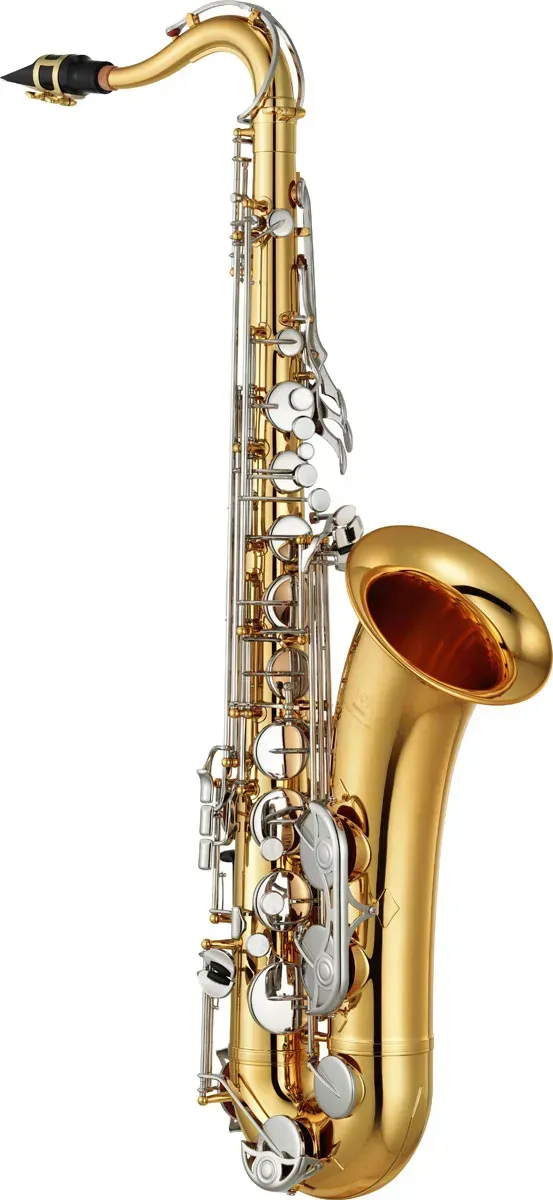
A visible YTS-26 characteristic is its gold-lacquered body paired with nickel-plated keywork. The catalog photograph clearly shows the colour contrast. That distinguishes its appearance from an all-gold YTS-280, but colour determines neither tone nor mechanical condition. The specification identifies yellow brass for the main metal components and polyester key buttons. Inspect free lever movement and unwanted contact between parts as well as the decorative surfaces. When buying from photographs, the full YTS-26 designation and the item number on the order are more reliable than a general description such as student Yamaha.

Front F and the difference from the 280
Yamaha lists Front F among the YTS-26 auxiliary keys. The separate high F-sharp key specified for the YTS-280 is not listed here. Establish this before buying, particularly when comparing retailers’ generic specification tables. Front F is not another name for high F-sharp. The absence of that dedicated lever does not confine the instrument to the first exercises; it describes a particular fingering configuration. Discuss the teaching programme and your preferences with a teacher. If the extra key matters to you, include the 280 in the initial comparison rather than try to address that difference with accessories after purchase.

Neck fit and low notes during a trial
Yamaha highlights an updated neck receiver and a low B–C-sharp connection. Both matter to the instrument’s operation, but assess them with the saxophone assembled. Ask the seller to demonstrate neck installation with the octave mechanism moving freely. Then try a quiet low-note start, repeat it several times and move to an adjacent note without sharply increasing finger pressure. A beginner benefits from hearing a teacher repeat the same test. This helps separate early sound-production difficulties from a possible adjustment requirement. Bending levers yourself to improve response is not the next step; that belongs in a technical inspection.

Keeping a learning setup manageable
The specification lists a Yamaha 4C mouthpiece, and the overview identifies a TSC-23 hard case. Confirm the retailer’s actual package separately, especially where instruments arrive from different regions. A first tenor needs a suitable reed and moisture-removal equipment, not just a body and mouthpiece. Ask for a demonstration of the basic assembly and packing sequence. An organised setup saves time before a lesson: every part has a place, the reed is protected and the saxophone fits without force. Later accessory changes can follow repertoire needs, informed by experience with a stable starting configuration.

A useful playing trial
Prepare a short programme to compare two saxophones: sustained middle-register notes, a slow scale, a few quiet low-note attacks and a familiar melody. Begin at a comfortable tempo rather than at the limit of your technique. Keep the same mouthpiece and a sound reed when they are compatible with both instruments. Changing several components together makes the result difficult to interpret. Record both trials from the same distance without reverb or automatic gain, if your recorder lets you disable it. Note how the keys feel separately: a listener will not hear an awkward little-finger movement, although it can matter greatly in daily practice. Finish by repeating the opening passage to distinguish the attraction of something new from a repeatable improvement.
Choosing between YTS-26 and YTS-280
Both models occupy the student segment, so their numbers alone do not establish a quality ranking. Compare auxiliary-key configuration, keywork finish, case, supply arrangements and the feel of the actual examples. If you already own a sound YTS-26, moving to a 280 should address an identified need. For a first purchase, try both in sequence rather than assume they are identical or fundamentally different from one photograph. Write down three priorities beforehand, such as playing comfort, a particular fingering option and total setup cost. These keep the decision grounded in your own requirements.
Checks to make with the seller
Before paying, confirm the complete model designation, finish and contents of the particular package. Ask the seller to demonstrate how the instrument fits in its case, where the neck and mouthpiece are stored and whether closing the lid puts pressure on the keys. For a remote purchase, photographs of the actual instrument and confirmation of a mechanical check before dispatch are useful. Consult the product listing for price and availability, which can change independently of this review. Budget for reeds, an appropriate swab and a comfortable strap or harness. With a first instrument, lessons and a sound initial setup offer practical value from the first week; avoid spending the entire budget on a more expensive body alone.
View the product, price and availability at SoundsGood
Editorial review based on Yamaha documentation. The cover is an illustration; instrument and detail photographs come from the SoundsGood catalog and manufacturer materials.