V21 combines the shape of 56 rue Lepic with a V•12 profile. Explore the design, wide-interval testing and choosing a strength for your mouthpiece.
Key details
| Series | Vandoren V21 |
|---|---|
| Instrument | B♭ clarinet |
| Example strength | 3 |
| SoundsGood item code | Vandoren-CR803 |
Shape and profile: two different ideas
The official V21 B♭ clarinet description explicitly combines the shape of 56 rue Lepic with a V•12 profile. Shape refers to the reed geometry, while profile concerns how thickness is distributed along its working section. This combination should not be interpreted as simply adding two tones together. V21 is a separate design with its own resistance and response. Experience with either related series can help frame your expectations, but it cannot replace a trial: V21 need not behave exactly like your familiar V•12 or 56 rue Lepic reed.
The manufacturer’s tonal description
Vandoren emphasizes warmth, depth, immediate response and accessibility across registers. For a practical decision, translate these descriptions into specific tasks. Play a long tone with a smooth dynamic change, followed by a melody spanning several registers. Listen for tonal continuity and control when moving from a quiet sound to a fuller one. Warmth need not mean muted articulation, and depth cannot be measured by the strength number alone. Recording the result is useful because it reduces the influence of the physical vibration you feel while playing the instrument.

Wide intervals as a central trial task
V21 documentation specifically highlights wide interval leaps with an even, rich tone. Choose an excerpt from your repertoire that moves quickly from the low register to the upper register. Repeat it slowly and legato, then at performance tempo with the required articulation. Watch for a tendency to clamp the reed before the upper note. Keep the mouthpiece, ligature and reed position consistent for a fair comparison. If the transition feels easier, check that the advantage remains after longer playing and across several reeds, rather than relying on one successful attempt.
Choosing a V21 strength
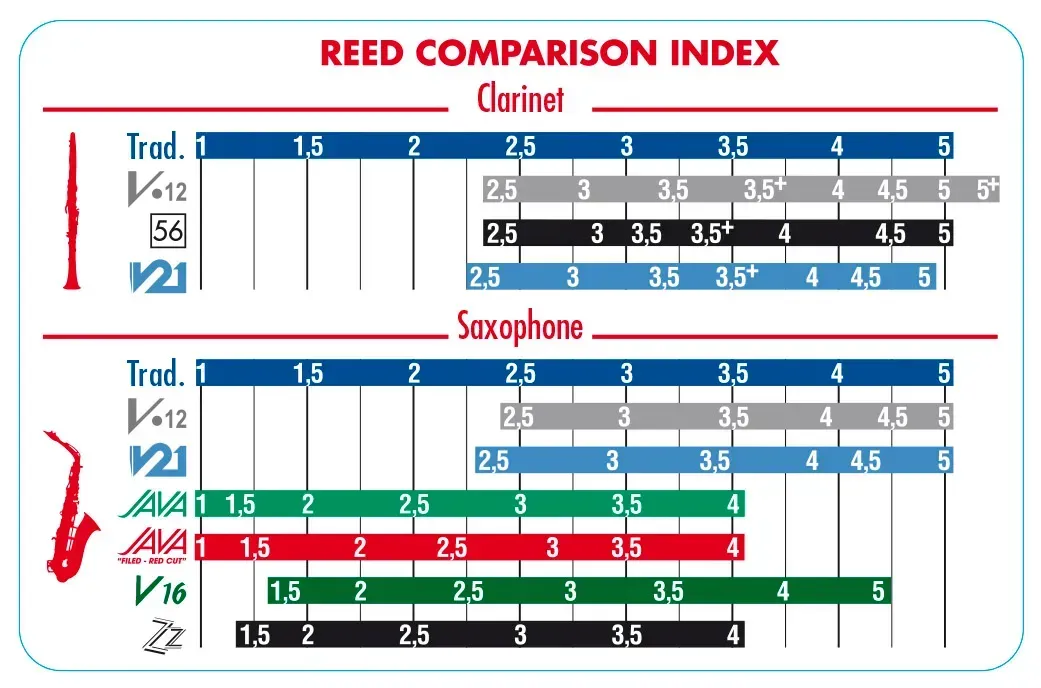
The official V21 B♭ clarinet range runs from strength 2.5 to 5 and includes the intermediate 3.5+ option. This review uses CR803, strength 3, as its example. An intermediate step can help refine a setup, but its availability does not mean it should be your starting point. First compare your familiar reed with the official chart and check the suggested range for your mouthpiece. During the trial, assess quiet attacks, comfort in long phrases and control during accents. Choose by the working result rather than a desire to progress toward harder reeds.

Distinguishing the different V21 products
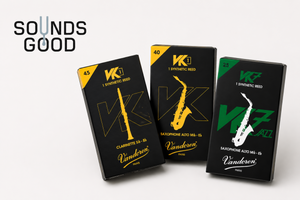
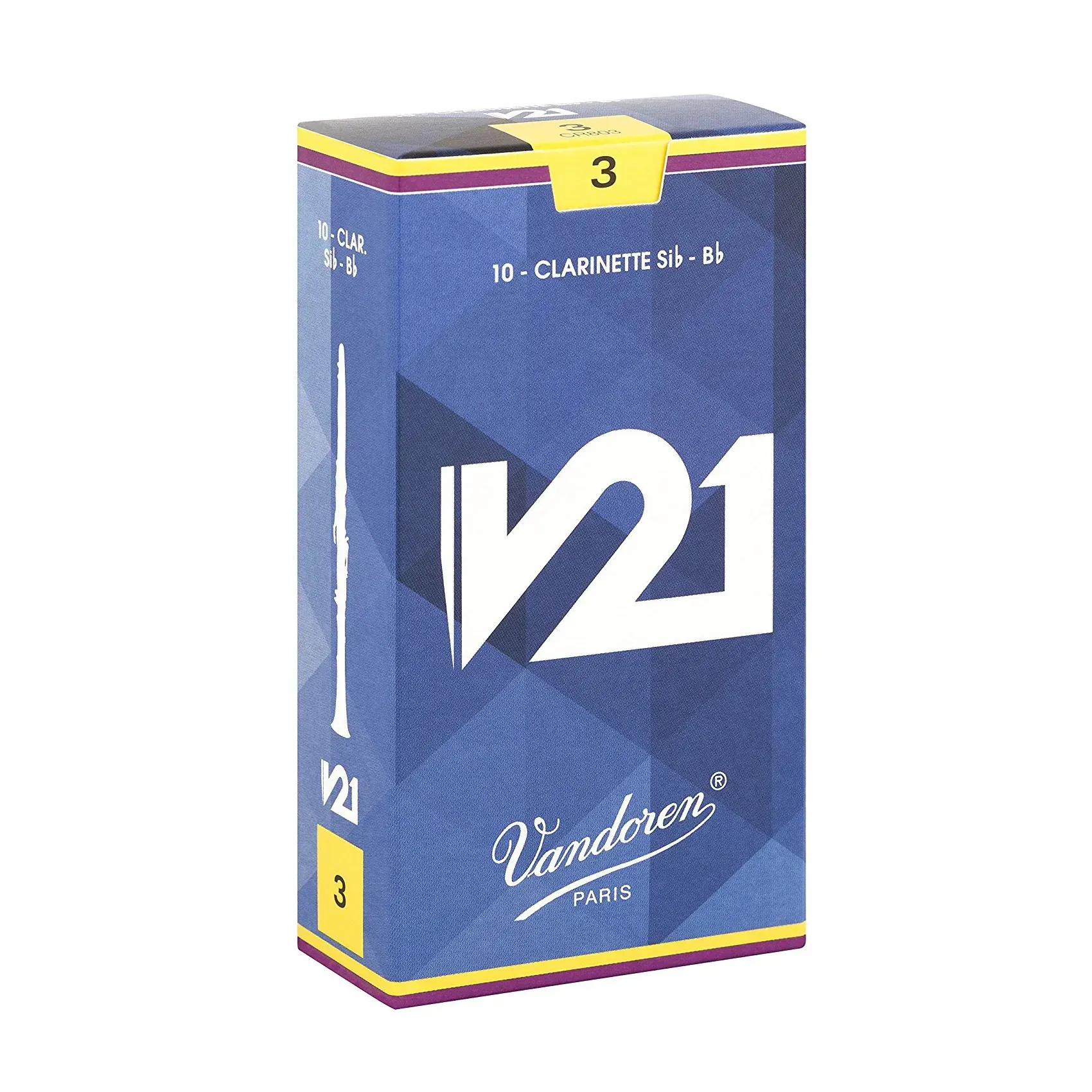
The V21 name appears on reeds for several instruments and systems. This review concerns the standard B♭ clarinet series with reference CR803; German and Austrian system versions require separate checking. Verify the instrument, strength and code on the box rather than relying on the large V21 name alone. Official CR803 packaging contains ten reeds, although a store may sell individual units. The link leads to the specific SoundsGood product. Before ordering, confirm the sale unit and quantity because the box photograph does not determine what your order contains.
How to compare reeds
Compare reeds on the same mouthpiece, with the same ligature and in a familiar room. First check alignment and inspect the tip for damage. Play sustained notes, several quiet attacks, slow legato across a register change and a short passage you know well. Repeat that sequence on the other reed. Record both your impression of the tone and the effort needed to start notes, sustain phrases and change dynamics. Recordings made from the same distance can help: a louder take is easily mistaken for a better one. Avoid judging an entire series from a single specimen, because natural cane varies. If the same difficulty persists with several undamaged reeds, ask a teacher to help check the mouthpiece, instrument sealing and playing setup.
Preparation, rotation and storage
Moisten the playing surface evenly with clean water before playing and allow the cane to adjust; there is no single preparation time that suits every reed and environment. Begin with a short, gentle trial. Afterwards, remove the reed carefully, remove excess moisture without pressing on its delicate tip, and place it in a suitable holder that supports its flat surface. Avoid leaving a wet reed clamped to the mouthpiece inside a closed case. Rotate several prepared reeds and note when each entered use, making gradual changes easier to recognise. Keep them away from heat and abrupt humidity changes. A split tip or distortion is a reason to replace a reed; trimming or sanding without experience can damage its profile. Judge service life by condition and reliable response rather than a promised number of days.
Who benefits from trying V21
V21 is particularly interesting for repertoire featuring wide leaps, sustained phrases and an even tone across registers. Players familiar with V•12 and 56 rue Lepic can compare all three on one mouthpiece, noting effort as well as sound. No design removes the need for individual matching. If V21 makes the required transitions easier, retains quiet attacks and remains comfortable through the end of rehearsal, its design is serving your setup. That combination of observations provides a practical reason to choose it rather than relying only on the connection between the three series.
View the product, sale unit and availability at SoundsGood
Editorial review based on manufacturer documentation, without a claim of personal testing. The cover is an illustration; packaging photographs and diagrams come from the catalog and manufacturer.