
Exploring YTS-480 keywork and neck features, differences from the YTS-280 and how to assess an upgrade through your own repertoire.
Key specifications
| Model | Yamaha YTS-480 |
|---|---|
| Type | Tenor saxophone |
| Key | B-flat (B♭) |
| Finish | Gold lacquer |
| Auxiliary keys | Front F; F♯ |
| Specified mouthpiece | Yamaha 4C |
| SoundsGood item number | 32097 |
An upgrade needs a specific purpose
The YTS-480 is a B-flat tenor in Yamaha’s intermediate class. Consider it when basic skills are established and you have clear requirements for practice or ensemble work. Start by identifying the change you want: more comfortable left-hand mechanics, a different response or scope to experiment with necks later. Prepare a short passage from your repertoire for each question. If the sole reason for buying is that your current model is called student, first check its condition and adjustment. A sound lower-series instrument provides a fairer baseline than a saxophone that has needed a technician’s attention for some time.

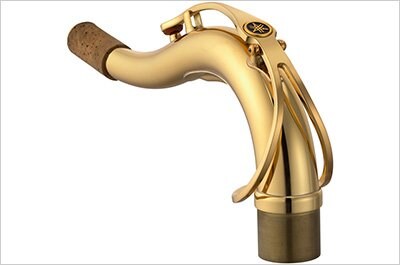
The 480 neck and octave system
Yamaha describes compatibility with selected Custom Z and Custom EX necks for the 480 series. These are sold separately, and exact model and part compatibility need checking. This is useful to a player who already recognises preferred resistance and can compare setups methodically. There is no need to replace the supplied neck during a first acquaintance. Assess quiet attacks, the middle register and octave transitions with a familiar mouthpiece first. When trying another neck later, keep the remaining components unchanged and record the result. That evaluates the neck change rather than a chance combination of a new reed, room and setup.
Little-finger movement, Front F and high F-sharp
The model provides Front F, high F-sharp and a left-hand seesaw mechanism. Compared with the 280, the feel of the little-finger table is one reason to try the 480 carefully. Do not start at maximum passage speed: slow movement reveals whether the hand must shift and where an awkward transition occurs. Return to your normal tempo and repeat the same pattern several times. If the difference appears only in a special exercise and not in actual music, decide how important that criterion is for you. Comfort should be assessed by the daily player, not solely by an experienced adviser with differently shaped hands.
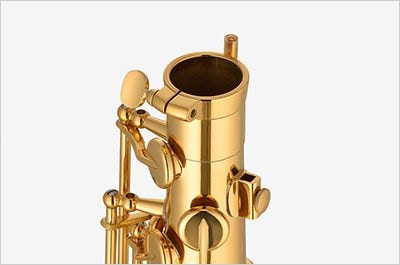
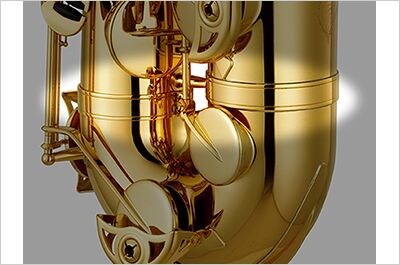
Finish and adjustable key guards
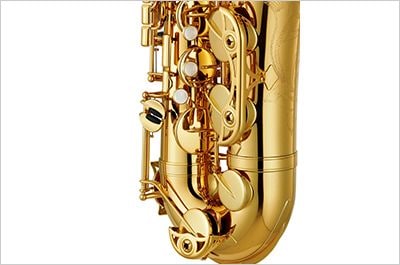
The standard gold-finished YTS-480 has a hand-engraved bell. Separate key guards include adjustable stoppers. Close-ups explain the construction, but key-opening adjustment is better handled by a technician because changing a stopper affects mechanical operation. During an ordinary trial, check for rattles, moving parts touching guards and uneven key return. Do not confuse the standard gold instrument with the two-tone SGLK version also seen in current Yamaha material. This review concerns the model in the SoundsGood listing; confirm the suffix and finish of the particular order before paying.
Trying it for ensemble and solo playing
For ensemble work, prepare a phrase requiring a gentle entrance after a rest and a passage with dynamic changes. Add a solo melody with sustained notes and a controlled release. This reveals more than one impressive phrase at full volume. Ask a colleague to listen from several metres away or record from a fixed position. A model number cannot supply a desired tone on its own: player, mouthpiece and reed work with the instrument. Make conclusions specific: is a quiet entry easier to repeat, a transition more comfortable or a familiar phrase more controllable? A second trial can test those observations.
A useful playing trial
Prepare a short programme to compare two saxophones: sustained middle-register notes, a slow scale, a few quiet low-note attacks and a familiar melody. Begin at a comfortable tempo rather than at the limit of your technique. Keep the same mouthpiece and a sound reed when they are compatible with both instruments. Changing several components together makes the result difficult to interpret. Record both trials from the same distance without reverb or automatic gain, if your recorder lets you disable it. Note how the keys feel separately: a listener will not hear an awkward little-finger movement, although it can matter greatly in daily practice. Finish by repeating the opening passage to distinguish the attraction of something new from a repeatable improvement.
When the 480 makes sense over the 280
The YTS-480 makes sense when its additional features address your playing tasks and you can feel the difference between sound instruments. If the 280 is comfortable and serves the programme, an upgrade need not follow a fixed number of study years. If keywork changes and configuration options produce a useful result, the 480 becomes a reasoned candidate. Leave budget for a good strap, reeds, lessons and servicing. Use the supplied 4C as a baseline if appropriate, then make later changes one at a time. The purchase can then extend your setup in a clear way instead of beginning an unfocused search for accessories.
Checks to make with the seller
Before paying, confirm the complete model designation, finish and contents of the particular package. Ask the seller to demonstrate how the instrument fits in its case, where the neck and mouthpiece are stored and whether closing the lid puts pressure on the keys. For a remote purchase, photographs of the actual instrument and confirmation of a mechanical check before dispatch are useful. Consult the product listing for price and availability, which can change independently of this review. Budget for reeds, an appropriate swab and a comfortable strap or harness. With a first instrument, lessons and a sound initial setup offer practical value from the first week; avoid spending the entire budget on a more expensive body alone.
View the product, price and availability at SoundsGood
Editorial review based on Yamaha documentation. The cover is an illustration; instrument and detail photographs come from the SoundsGood catalog and manufacturer materials.